Most Minnesota HOA boards assume reserve studies are optional. That's technically true. But here's the hard truth: Minnesota law requires something harder to deliver without one. Your association must maintain "adequate replacement reserves" and review them every three years. Understanding HOA Reserve Study requirements in Minnesota means recognizing that if you can't prove your reserves are adequate, you're exposed. If a major repair hits and your funds fall short, homeowners will remember that your board chose to skip the planning step.
This guide walks through Minnesota's actual requirements under MCIOA, what boards must do to remain compliant, and how to approach reserve planning in a state where the law offers flexibility but holds you accountable for the outcome.
Key Takeaways
- HOA Reserve Study Requirements in Minnesota do not mandate a formal study, but MCIOA requires associations to maintain adequate replacement reserves and conduct a three-year reevaluation of those reserves.
- Associations governed by Chapter 515B must include reserve allocations in their annual budgets and disclose the status of reserve funding to homeowners.
- Minnesota's climate, especially freeze-thaw cycles and snow load, accelerates wear on roofs, pavement, siding, and other common elements.
- Boards that skip reserve planning risk special assessments, deferred maintenance, and declining property values.
- A reserve study provides the financial roadmap boards need to meet MCIOA's adequacy standard and avoid surprises.
Minnesota Common Interest Ownership Act (MCIOA) Reserve Requirements
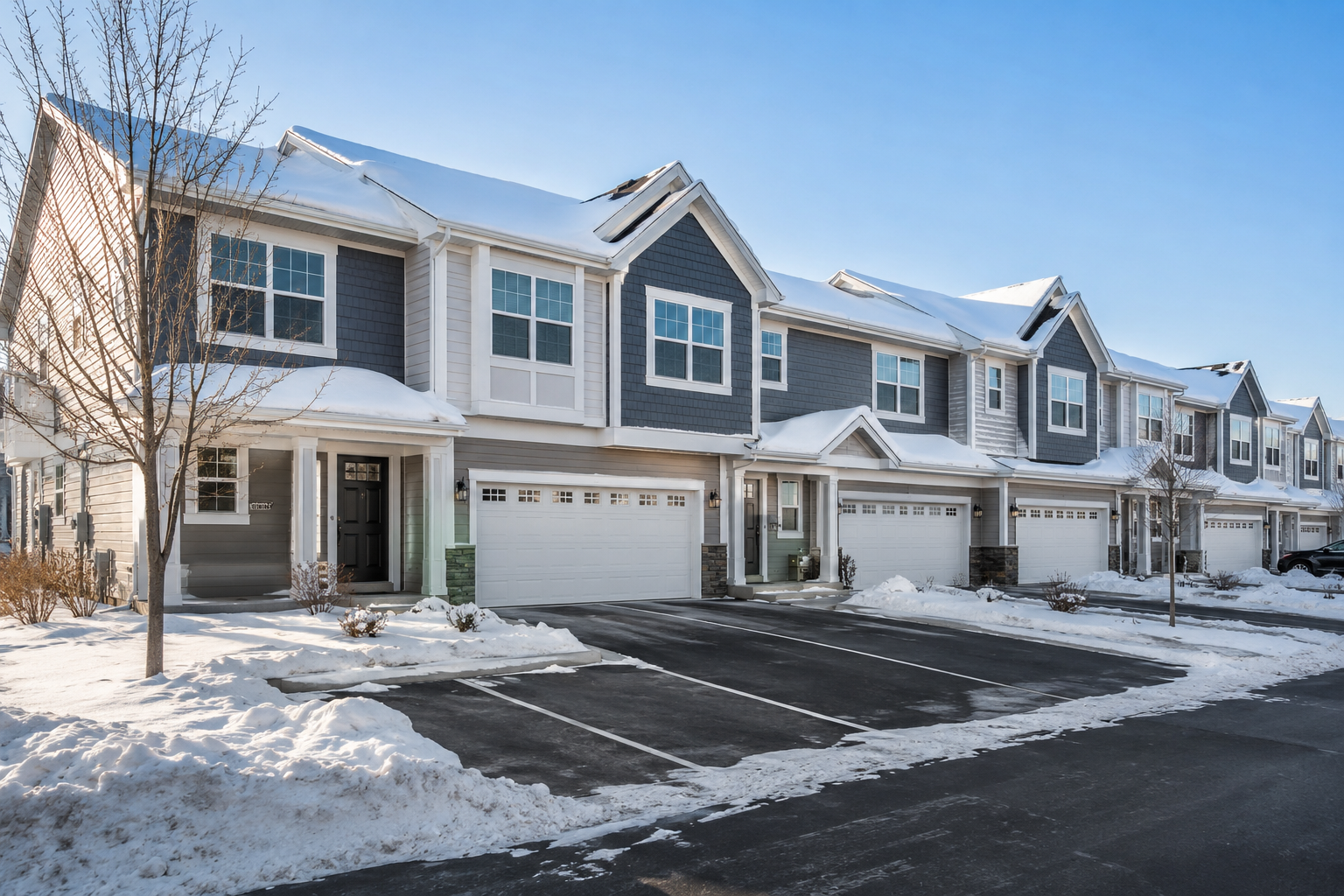
Minnesota's reserve requirements live in Chapter 515B of the state statutes, the Minnesota Common Interest Ownership Act. MCIOA governs most condominiums and planned communities formed after 1994. Section 515B.3-1141 is the key provision. It states that the association's annual budget must include "adequate replacement reserves" for capital expenditures and deferred maintenance of common elements.
The law also requires a three-year reevaluation of those reserves. That means every three years, your board must assess whether your reserve funding still matches the actual condition and replacement timeline of your community's assets. MCIOA does not tell you how to perform that review. It does not require a professional reserve study. But it does require that the review happen and that your reserves remain adequate.
If your association was formed before MCIOA took effect, you may be governed by older statutes or solely by your governing documents. Most pre-MCIOA associations are not subject to the three-year review rule. Even so, your declaration or bylaws may impose reserve funding obligations of their own. Boards should confirm which laws apply to their community and consult their attorney if the governing structure is unclear.
Whether Reserve Studies Are Legally Required in Minnesota
Reserve studies are not legally required in Minnesota. MCIOA does not use the term "reserve study" anywhere in its text. What the law does require is that your association maintain adequate replacement reserves and review them every three years.
That creates a practical problem. How do you prove your reserves are adequate without a structured analysis of your assets, their condition, their remaining useful life, and their replacement cost? Most boards can't answer that question with a spreadsheet and a guess. Understanding what a reserve study actually is helps clarify why it's the tool that provides the answer. It inventories your common elements, projects when each component will need repair or replacement, estimates the cost, and calculates the annual funding needed to cover those expenses without a special assessment.
So while Minnesota law does not mandate a reserve study by name, it mandates the outcome a reserve study is designed to produce: adequate reserves backed by defensible analysis. Boards that skip the study often find themselves unable to meet the adequacy standard or defend their funding decisions when homeowners ask hard questions.
Reserve Components Typically Included in Minnesota Studies
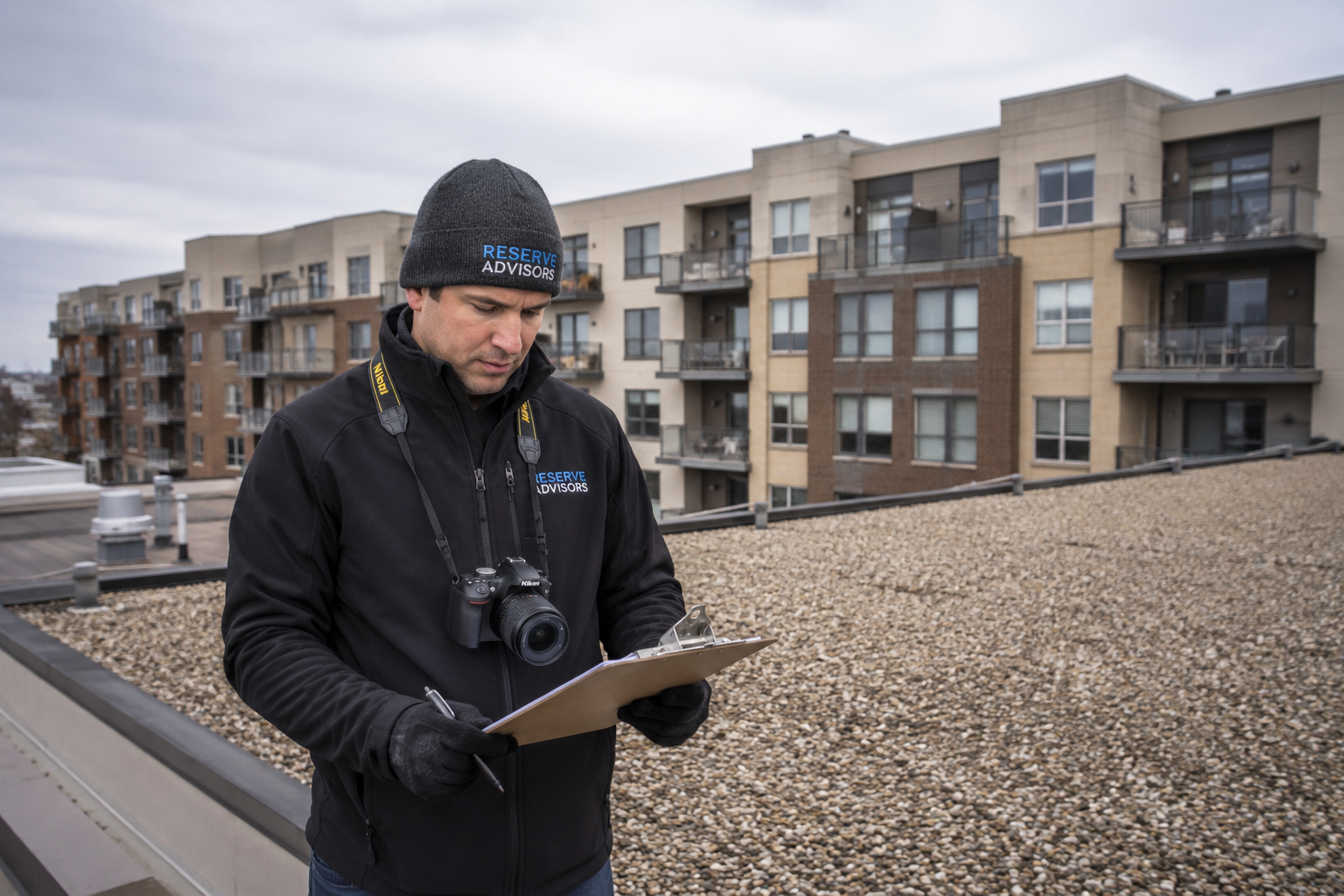
A Minnesota reserve study should cover all major common elements for which the association is responsible for maintenance, repair, or replacement. The specific list depends on your community's type and amenities, but most studies include the following reserve components:
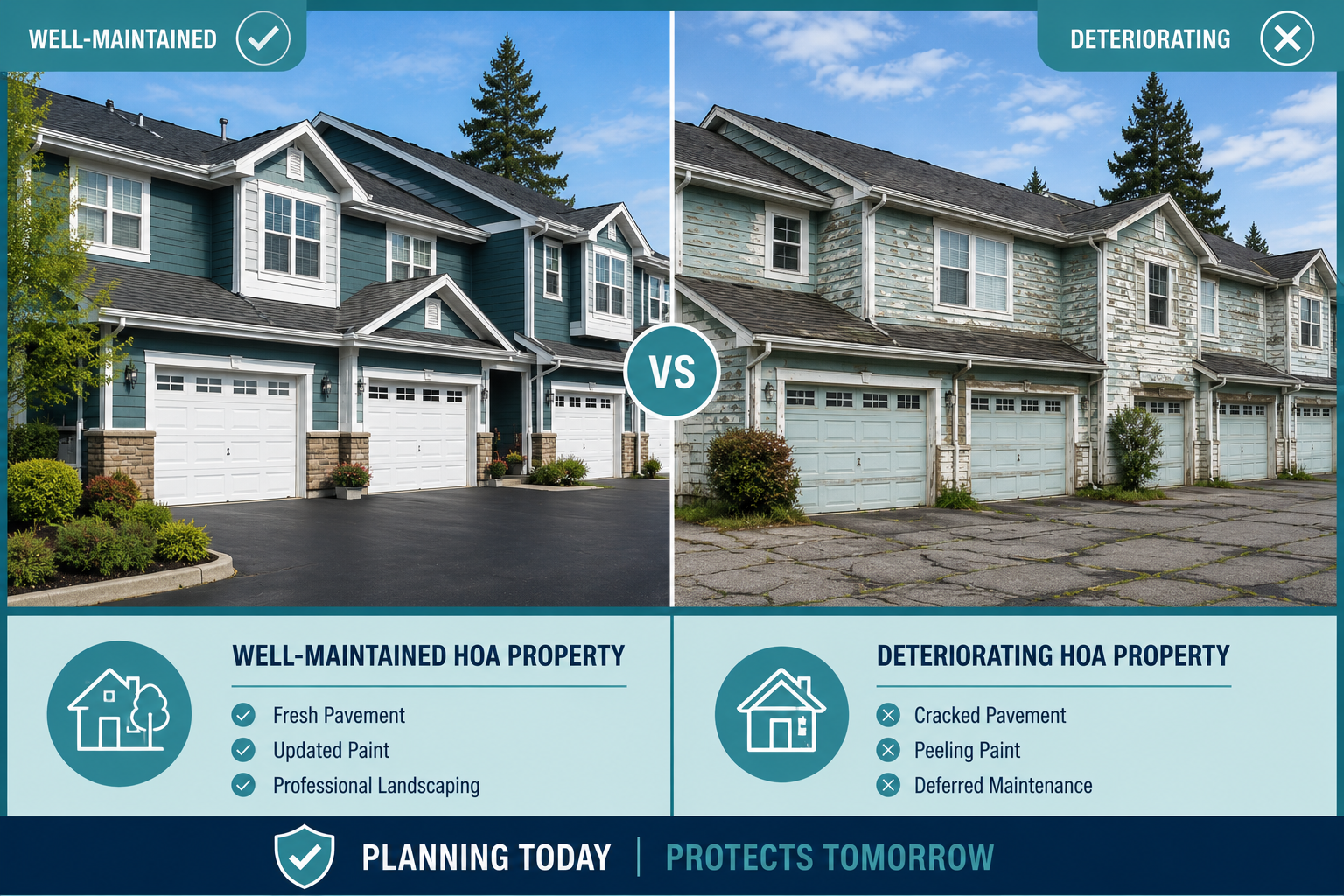
Roofs. Minnesota's freeze-thaw cycles and heavy snow load shorten roof lifespan. Asphalt shingles that might last 25 years in a warmer climate often need replacement closer to 20 years here. Flat roofs on condos face even more stress from ice dams and ponding water.
Pavement. Driveways, parking lots, and roads take a beating from plowing, salt, and temperature swings. Cracks widen every winter. Sealcoating and resurfacing are not optional maintenance; they are capital projects that should be funded through reserves.
Siding and exterior paint. Wood siding, fiber cement, and stucco all degrade faster in Minnesota's climate. Paint fails. Caulking cracks. Water gets behind the surface and causes rot or mold. Exterior work is expensive and often needs to be done on a set schedule.
Mechanical systems. Boilers, water heaters, HVAC systems, and elevators all have predictable lifespans. Elevators in particular are costly to modernize or replace, and many Minnesota condo associations underestimate the expense.
Concrete and masonry. Sidewalks, retaining walls, and building foundations crack as water freezes and expands. Tuckpointing and concrete replacement are recurring needs in older communities.
Amenities. Pools, clubhouses, fitness centers, and playgrounds all require periodic renovation or replacement. These components are easy to overlook because they are not structural, but they still represent major capital expenditures.
A good reserve study does not just list these components. It assigns each one a current condition rating, an estimated remaining useful life, and a replacement cost. That data drives the funding plan.
Benefits of Well-Funded Reserves and Risks of Underfunding
Well-funded reserves give your board financial stability and credibility. When a major repair comes due, the money is already there. No emergency meeting. No special assessment. No angry homeowners. The project is completed on schedule, and the community remains in good condition.
Adequate reserves also protect property values. Buyers and lenders look at reserve funding when evaluating a condo association. A community with strong reserves signals competent management and low financial risk. A community with weak reserves raises red flags. Some lenders will not approve a mortgage if the reserve funding falls below a certain threshold, as outlined in their mortgage eligibility requirements.
Underfunded reserves create the opposite outcome. Boards delay maintenance because they cannot afford it. Roofs leak longer. Pavement cracks widen. Siding rots. By the time the board can no longer ignore the problem, the repair cost has doubled, and the only option is a special assessment.
Special assessments are not just expensive; they are divisive. Homeowners on fixed incomes struggle to pay. Some refuse and fall into collections. The board's reputation suffers, and volunteer board members burn out or quit. The risk most boards overlook is that underfunding does not save money; it just shifts the cost to a worse time and a more expensive fix.
Whether Minnesota Associations Can Waive or Reduce Reserve Funding
MCIOA allows associations to waive reserve funding, but only under specific conditions. Section 515B.3-1141 permits the membership to vote to waive or reduce reserve allocations for a given fiscal year. The vote must take place at a meeting with a quorum present, and the decision must be documented in the meeting minutes.
Boards cannot unilaterally decide to skip reserve funding. The membership must approve it. Even if the vote passes, the waiver only applies to that year's budget. The following year, the board must again include adequate replacement reserves unless the membership votes to waive them again.
Some boards treat the waiver provision as a way to keep assessments low. That is a short-term strategy with long-term consequences. Each year you waive reserve funding, you fall further behind. The gap between your actual reserves and your funding needs widens. When a major expense finally arrives, the special assessment will be larger and harder to absorb.
Minnesota associations that repeatedly waive reserve funding should ask themselves whether they are meeting MCIOA's adequacy standard. If your reserves are not adequate, a waiver does not make you compliant. It just delays the reckoning.
How Often to Conduct or Update a Reserve Study in Minnesota
MCIOA requires a three-year reevaluation of reserves. That does not mean you must commission a full reserve study every three years, but it does mean your board must review your reserve funding and confirm it still aligns with your community's needs.
Most reserve professionals recommend a full reserve study every three to five years and an update in the years between. A full study includes a site visit, a physical inspection of all reserve components, and a complete recalculation of funding needs. A reserve study update uses the prior study's data, adjusts for inflation and any completed projects, and recalculates the funding plan without a new site visit.
For Minnesota associations, a three-year cycle works well. Conduct a full study in year one. Update it in year four. Conduct a new full study in year seven. That schedule keeps your data current, satisfies MCIOA's review requirement, and costs less than commissioning a full study every time.
Boards should also update the reserve study anytime a major change occurs. If you complete a large capital project ahead of schedule, if a component fails earlier than expected, or if your community adds new amenities, your funding plan needs to be recalculated. A reserve study is not a static document. It is a living financial tool that should reflect your community's actual condition.
Minnesota-Specific Climate Factors Affecting Reserve Planning
Minnesota's climate is hard on buildings. Freeze-thaw cycles happen dozens of times each winter. Water seeps into small cracks, freezes, expands, and turns a minor defect into a major failure. Pavement that might last 20 years in a temperate state often needs resurfacing after 12 to 15 years in Minnesota. Roofs age faster. Siding cracks. Concrete spalls.
Snow load is another factor. Flat and low-slope roofs on condos and townhomes must be able to support heavy snow accumulation. If the roof structure was not designed with enough capacity, or if snow removal is inconsistent, the risk of collapse or structural damage increases. Reserve planning should account for the cost of snow removal, roof reinforcement, and earlier-than-average roof replacement.
Ice dams are a recurring problem. When heat escapes through the roof, it melts snow that refreezes at the eaves, creating a dam. Water backs up under the shingles and leaks into the building. Ice dam damage is not always covered by insurance, and prevention requires better insulation, ventilation, and sometimes roof redesign. Those costs belong in your reserve study.
Minnesota associations should also plan for shorter lifespans on exterior paint, caulking, and sealants. Temperature swings cause materials to expand and contract. That movement breaks down adhesion and leads to premature failure. Communities that assume a 10-year paint cycle often find they need repainting every 7 or 8 years.
The bottom line: national averages for component lifespan do not apply in Minnesota. A reserve study prepared by a professional familiar with Minnesota's climate will use local data and realistic replacement timelines. That is the only way to produce an accurate funding plan.
Step-by-Step Guide for Minnesota Boards to Prepare for Their First Reserve Study
Step 1: Confirm which laws and documents govern your association. Review your declaration, bylaws, and articles of incorporation. Determine whether your community is governed by MCIOA or by pre-MCIOA statutes. Since reserve study requirements vary significantly by state, identify any reserve funding or disclosure obligations in your governing documents.
Step 2: Gather your community's financial and maintenance records. Collect recent budgets, financial statements, and records of completed capital projects. Note what work has been done, when it was done, and how much it cost. This history helps the reserve analyst understand your community's maintenance patterns.
Step 3: Inventory your common elements. Make a list of all assets the association is responsible for maintaining. Include roofs, pavement, siding, mechanical systems, amenities, and any other components that will eventually need repair or replacement. If you are not sure what counts as a common element, check your declaration.
Step 4: Request proposals from reserve study providers. Look for firms that specialize in reserve studies and have experience with Minnesota associations. Ask for references and sample reports. Compare pricing, but do not choose based on price alone. A cheap study that uses generic data or skips the site visit will not give you the accuracy you need.
Step 5: Schedule the site visit and walk the property with the analyst. The reserve professional will inspect each component, assess its condition, and estimate its remaining useful life. Board members should attend the walkthrough and point out any known issues or recent repairs. Following a step-by-step guide for conducting a reserve study ensures you don't miss critical details.
Step 6: Review the draft report and ask questions. The reserve study will include a component inventory, a funding analysis, and a recommended contribution level. If any assumption looks wrong, speak up. If a component is missing, ask why. This is your chance to make sure the study reflects your community's actual needs.
Step 7: Present the reserve study to your board and membership. Share the findings at a board meeting and summarize the results in your next newsletter or annual meeting. Transparency builds trust. Homeowners are more likely to support reserve funding if they understand what it pays for and why it matters.
Step 8: Adjust your budget to meet the recommended funding level. Use the reserve study's funding plan to set your annual reserve allocations. If the recommended contribution is higher than your current funding, phase in the increase over two or three years to avoid a sudden spike in assessments. Integrating this data with your HOA budget planning template helps make the transition smoother.
Step 9: Schedule your three-year reserve study update. Add a reminder to your board calendar. MCIOA requires a three-year reevaluation, and even if your association is not subject to that rule, regular updates keep your funding plan accurate. Following best practices for managing reserve funds will help your board stay on track between updates.
Boards that follow this process end up with a reserve study they can actually use. It becomes the foundation for long-term planning, annual budgeting, and honest communication with homeowners. This approach also helps address many of the common challenges volunteer boards encounter when managing community finances.
Understanding HOA Reserve Study Requirements in Minnesota gives your board the clarity to move from reactive crisis management to proactive financial planning. The three-year review cycle mandated by MCIOA exists because reserves need regular attention. Communities that treat reserve planning as a one-time task end up back in the same funding gap within a few years.
Frequently Asked Questions
Are reserve studies legally required for HOAs in Minnesota?
No, but MCIOA requires associations to maintain adequate replacement reserves and review them every three years. A reserve study is the most reliable way to meet that standard and defend your funding decisions to homeowners and lenders.
How often do Minnesota HOAs need to review their reserve funds?
MCIOA mandates a three-year reevaluation of reserves. Most boards conduct a full reserve study every three to five years and update it in between.
What percentage of an HOA budget should go toward reserves?
It varies by community, but most well-funded associations allocate 15% to 30% of their annual budget to reserves. Your reserve study will calculate the exact amount your community needs.
What does a reserve study actually cost in Minnesota?
A full reserve study for a small to mid-size Minnesota association typically costs between $2,000 and $5,000. Updates cost less, usually $800 to $1,500. Solume clients can integrate reserve study data directly into their financial dashboard to track funding progress without additional software costs.
Is conducting a reserve study worth it if Minnesota doesn't require one?
Yes. The study provides the data you need to demonstrate your reserves are adequate, avoid special assessments, and plan capital projects without financial surprises.
Can Minnesota HOAs use reserve funds for operating expenses?
No. Reserve funds are restricted for capital expenditures and major repairs of common elements. Using reserves for operating expenses violates MCIOA and most governing documents.
What happens if our Minnesota HOA skips the three-year reserve review?
You fall out of compliance with MCIOA's three-year reevaluation requirement. If a dispute arises or a lender reviews your financials, the lack of a current review can create liability for the board.
What components should be included in a Minnesota HOA reserve study?
Roofs, pavement, siding, mechanical systems, elevators, concrete, and amenities. Any common element the association must repair or replace should be included. Solume's reserve tracking tools help boards monitor each component's timeline and funding status in real time.
If your Minnesota board wants a clearer way to manage reserve planning, track capital projects, and keep homeowners informed, explore your options with Solume. Self-managed communities and volunteer boards use Solume to turn reserve planning from a compliance task into a practical tool for long-term financial stability. You can schedule a 15-minute call to see if Solume is a good fit for your community.