A treasurer in a 38-unit condo association spent three weekends every January reconciling dues against a spreadsheet she'd inherited from the previous board. One missed payment, one transposed digit, and the year-end numbers didn't match the bank. That's the reality for most volunteer boards. It's exactly why HOA accounting software exists: to take the guesswork out of running a community when nobody on the board is an accountant. This article breaks down what these tools do, how they differ from general bookkeeping, and what features actually matter for a self-managed HOA.
Key Takeaways
- HOA accounting software automates dues collection, payment processing, and financial reporting in ways that general business tools like QuickBooks were never designed to handle.
- Unit-based dues tracking and bulk invoicing are the core features that separate HOA-specific platforms from generic accounting software.
- The accrual method of accounting gives boards the most accurate and GAAP-compliant view of their association's financial health.
- Self-managed communities and small associations often see the biggest returns, with some platforms offering flat pricing instead of per-unit fees.
- Software that separates reserve and operating funds helps boards plan for deferred maintenance and reduce the risk of unexpected special assessments.

What HOA accounting software is and how it differs from general bookkeeping tools
Here's the hard truth: QuickBooks was built for businesses that sell products and invoice clients. It wasn't built for an association that bills the same dues to 80 homes on the first of every month. HOA accounting software is purpose-built homeowners association accounting that tracks money at the unit level. Each home has its own ledger, its own payment history, its own late fees. A generic tool treats every owner as a separate customer you set up by hand, which is where errors creep in. Boards moving away from spreadsheets often start by reviewing solid bookkeeping practices for small HOAs before choosing a platform.
The reason this matters: associations operate under fund accounting rules, separating operating money from reserve money. According to the Community Associations Institute, associations are expected to maintain reserves for major repairs. Mixing those funds into one bucket undermines long-term planning. A software designed for community association work handles this split automatically. Many boards assume their spreadsheets are "close enough." In reality, the moment an owner disputes a balance or a state audit requests records, generic bookkeeping falls apart. Condo accounting software and HOA platforms close that gap by speaking the language of community finance from the start.
Core accounting features (accounts receivable, accounts payable, reconciliations, ledgers)
Strip away the marketing and every HOA platform comes down to four jobs. Accounts receivable tracks what owners owe you: dues, assessments, fines, and the late fees that pile up when payments slip. Accounts payable handles what the association owes vendors: landscapers, insurers, the pool company. Good software keeps both sides tied to a general ledger so every dollar has a trace.
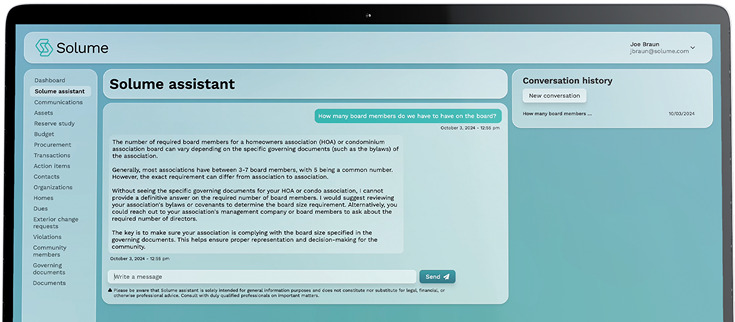
Bank reconciliation is where most volunteer boards lose hours. The software pulls transactions through bank integration and matches them against recorded payments, flagging anything that doesn't line up. Here's what happens without it: a treasurer manually compares a paper statement to a spreadsheet, misses a duplicate charge, and the books drift further from reality each month. The right financial management tools built for boards close that gap by handling the matching automatically.
Clean ledgers feed clean financial reporting, which is what your auditor and homeowners both want. The American Institute of CPAs publishes accounting guidance through AICPA that underpins how associations present financials and approach tax preparation. Associations also need to understand IRS guidance on homeowner association taxation when filing their annual returns. Accrual-based bookkeeping gives the most accurate picture. It records income when it's owed rather than when it lands, so the board sees real obligations, not just cash on hand.
Automated dues billing, invoicing, and online payment collection
Dues collection is the heartbeat of an HOA, and it's also where manual systems waste the most time. Automated bulk billing lets an HOA board generate invoices for every unit in one click, on a schedule, with the correct amount applied to each home. No more building 60 separate invoices by hand. The system sends reminders, applies late fees per your governing documents, and updates each owner's ledger the moment a payment clears.
Online payments change the collection rate. When owners can pay via ACH or credit card on their phones, fewer checks are lost, and fewer payments arrive late. Payment processing that posts automatically means the treasurer isn't keying in deposits one by one.
This is one area where Solume provides an automated dues collection system for self-managed boards, offering flexible payment options so owners can pay how they prefer and the books update automatically. The downstream effect of automated bulk billing and faster dues collection is steadier cash flow. That keeps the operating account healthy and reserve contributions on track.
Benefits of HOA accounting software over manual/spreadsheet methods
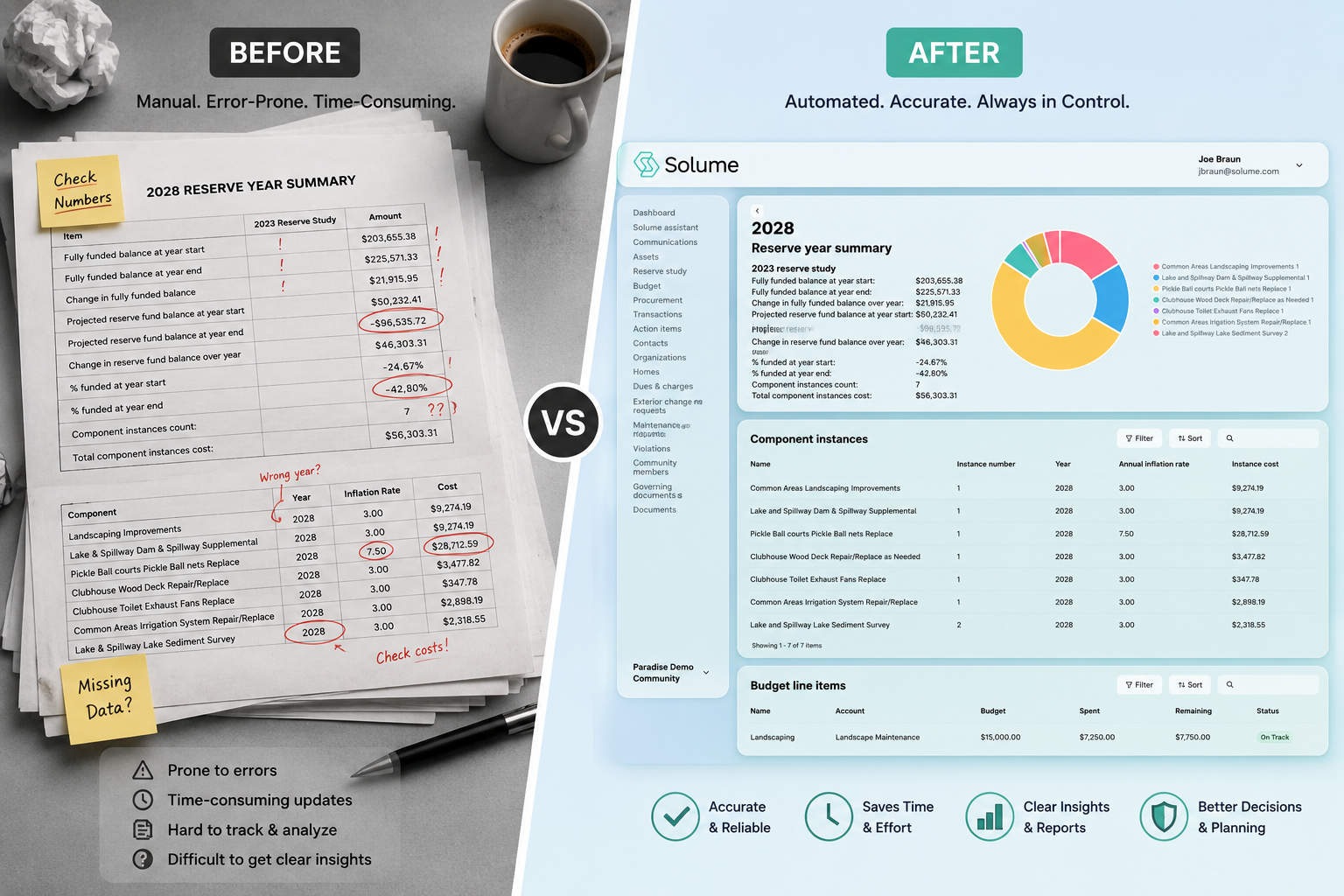
Spreadsheets don't fail loudly. They fail quietly, one wrong formula at a time, until a board discovers the reserve balance was overstated by $12,000 and a roof project has to wait. That's the risk most boards overlook when they cling to a familiar Excel file.
The first benefit is time. Volunteer board members are retirees and people with full-time jobs, not full-time bookkeepers. Automating bookkeeping, dues collection, and bank reconciliation gives those hours back. The second benefit is accuracy. Software enforces the math, so balances reconcile, and reports tie out. Boards that want to plan ahead can start from a step-by-step HOA budget template and let the software fill in the actuals.
The third benefit is continuity. Boards turn over. When the treasurer who built the spreadsheet moves away, the institutional knowledge often leaves too. A proper system keeps every record in one place, ready for the next volunteer. The fourth is real-time financial visibility. Anyone with access can pull a current balance instead of waiting for a quarterly handoff. For a self-managed HOA, that mix of speed, accuracy, and continuity is the difference between scrambling and steady.
Key features to look for when choosing HOA accounting software
When comparing HOA accounting software, start with the basics that generic tools skip. Unit-based dues tracking is non-negotiable. So is automated bulk invoicing, online payments with ACH and credit card support, and configurable late fee rules that match your CC&Rs.
Then look at the financial backbone: fund accounting that separates operating and reserve money, solid financial reporting with balance sheets and income statements, and budgeting tools that build next year's numbers against this year's actuals. Bank integration for clean bank reconciliation saves the most effort over time, so weigh it heavily.
Past accounting, look at the platform as a whole. An all-in-one platform that combines homeowners association accounting with vendor management, communication, and maintenance tracking reduces the number of logins a small board has to juggle. Check whether it supports reserve planning and flags state HOA laws relevant to you. Finally, confirm pricing. Some HOA management software charges per unit, which punishes growth, while flat pricing serves small communities far better. If you're weighing options, our rundown of the best HOA management software for self-managed boards breaks down the tradeoffs. The right key features to look for depend on your size, but compliance support and reserve tracking belong on every board's list.
Transparency and trust for boards and homeowners
Most disputes between boards and homeowners aren't about stolen money. They're about money being unexplained. When an owner can't see where their dues go, suspicion fills the gap. Financial transparency is the cheapest fraud prevention a board has, because open books make hidden problems hard to keep hidden.
The mechanism is simple. When every transaction posts to a shared ledger and homeowners can view current financial reporting, there's nowhere for an inaccurate or fraudulent entry to live unnoticed. This same visibility supports day-to-day fraud prevention. A homeowner doesn't have to file a records request and wait sixty days to understand the budget. They log in and look.
This matters for the HOA board's fiduciary duty too. Directors are legally responsible for managing community funds prudently, and transparent records are the proof they're doing it. A board that publishes clear financials builds trust, and trust reduces friction at every annual meeting. Solume supports this with financial transparency tools that give homeowners visibility into the numbers, turning an opaque process into an open one. Financial transparency isn't a feature; it's how a community stays stable.
Support for self-managed and volunteer-run boards
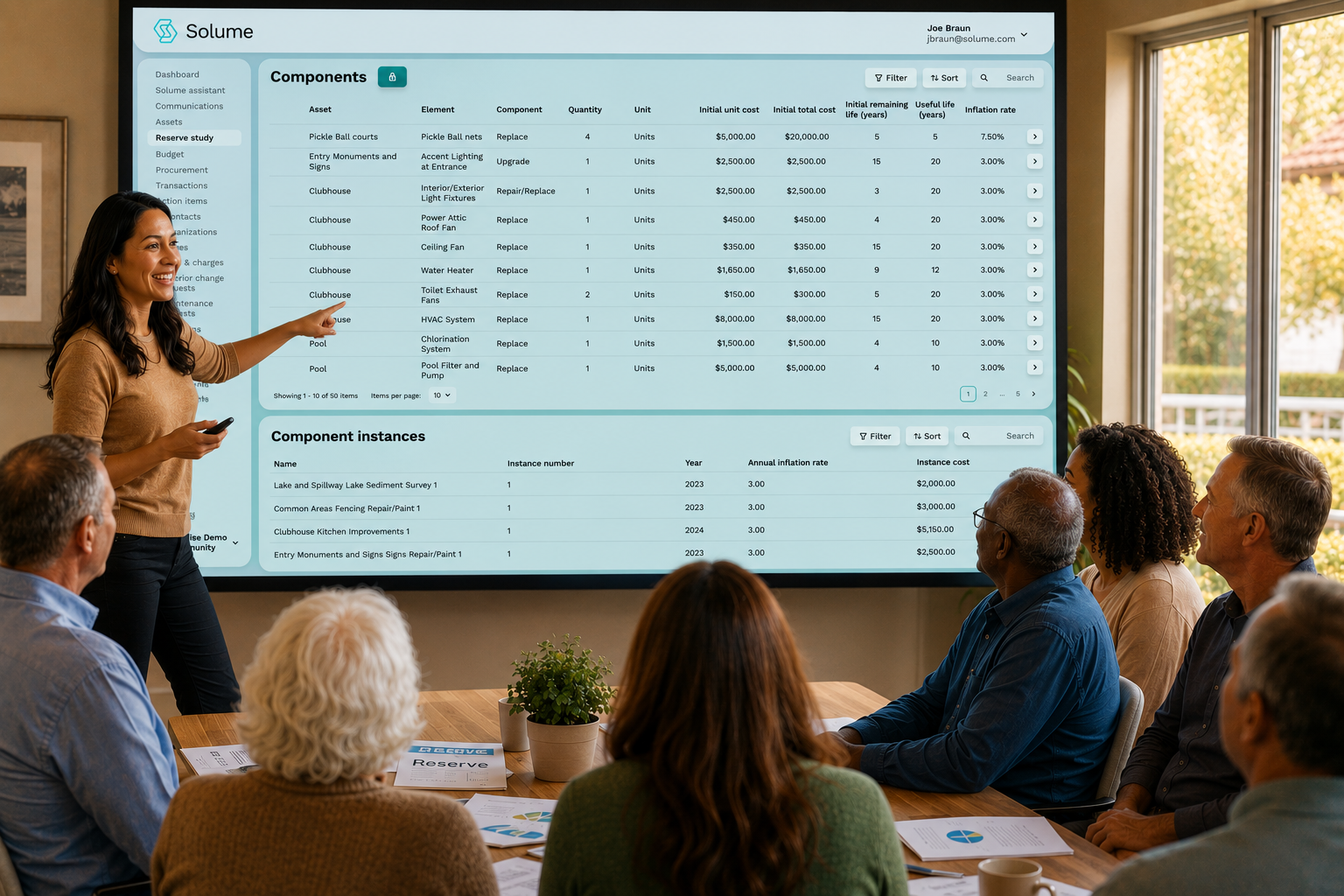
A self-managed HOA runs on people who already have day jobs. They didn't sign up to become accountants, and most of them shouldn't have to. The software has to do the heavy lifting that a management company would otherwise charge thousands a year to handle.
Many boards assume "our management company does this," so they don't need tools. In reality, that's an argument for the opposite. If software handles dues collection, financial reporting, and compliance tracking, the board can reinvest the management fee into the community itself. Plenty of self-managed boards run cleaner books than the companies they fired.
Reserve fund tracking and long-term capital planning integration
In 2021, the Champlain Towers South collapse in Surfside, Florida killed 98 people, and underfunded reserves and deferred maintenance were central to the failure. That tragedy reshaped reserve law across the country. It's the clearest possible argument for treating reserve planning as more than a line item.
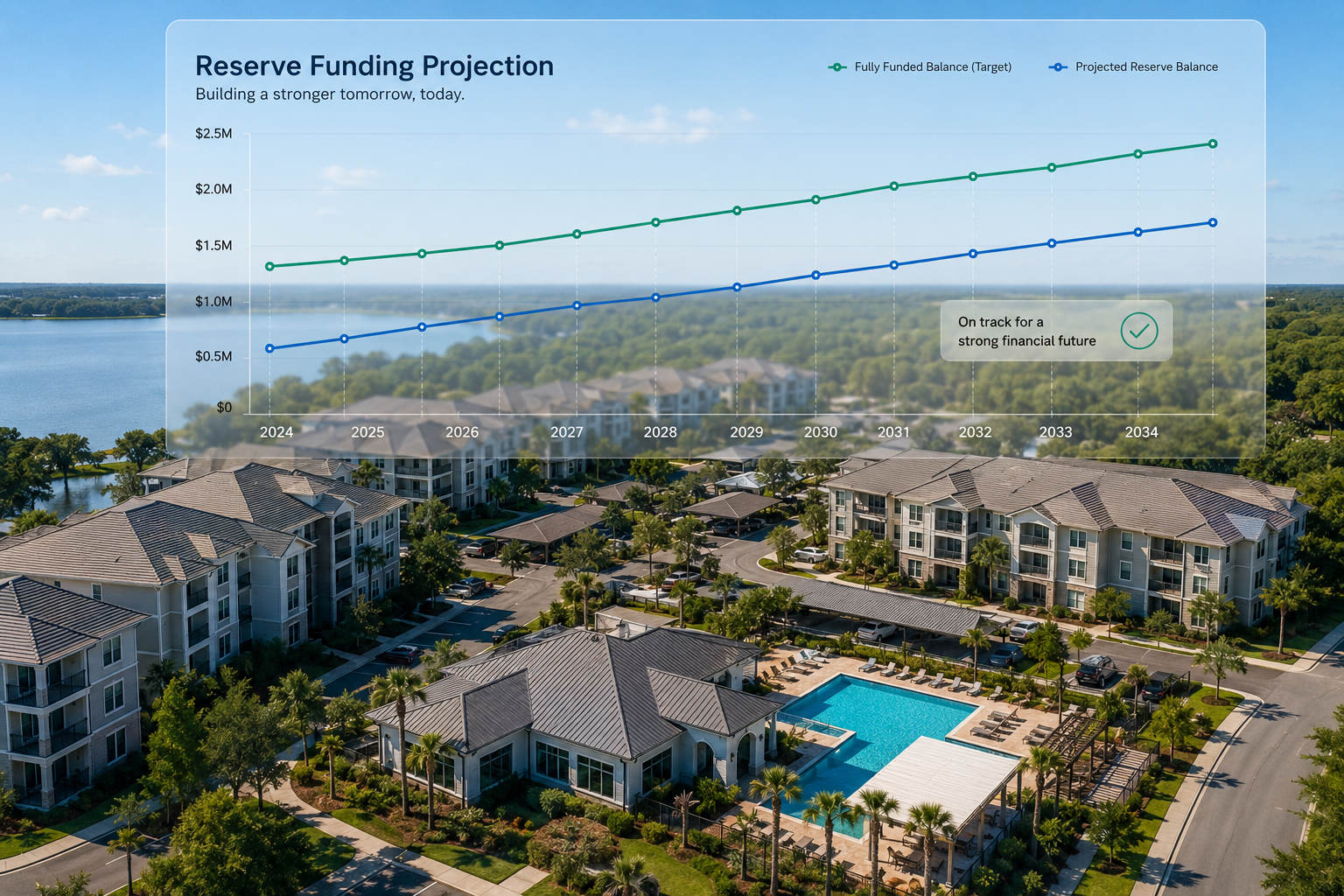
A reserve study projects when major components like roofs, elevators, and roads will need replacement and how much the association should set aside each year. Most HOA management software ignores this, treating long-term capital planning as someone else's problem. The result is communities that look fine on a monthly basis and then face a $40,000 special assessment when the roof fails.
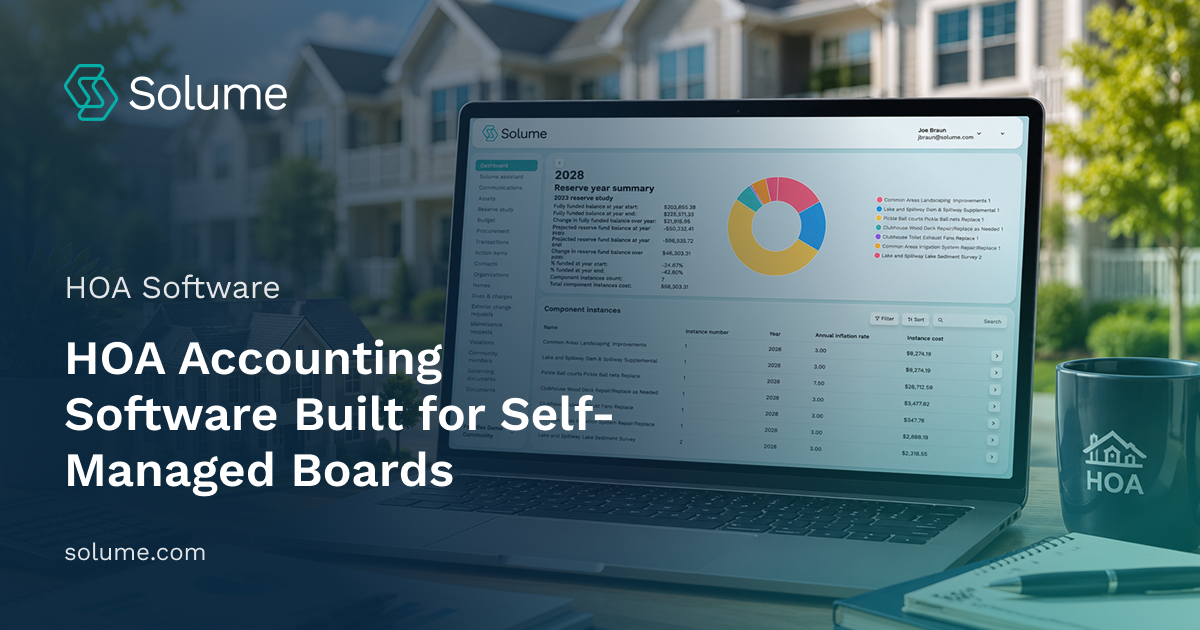
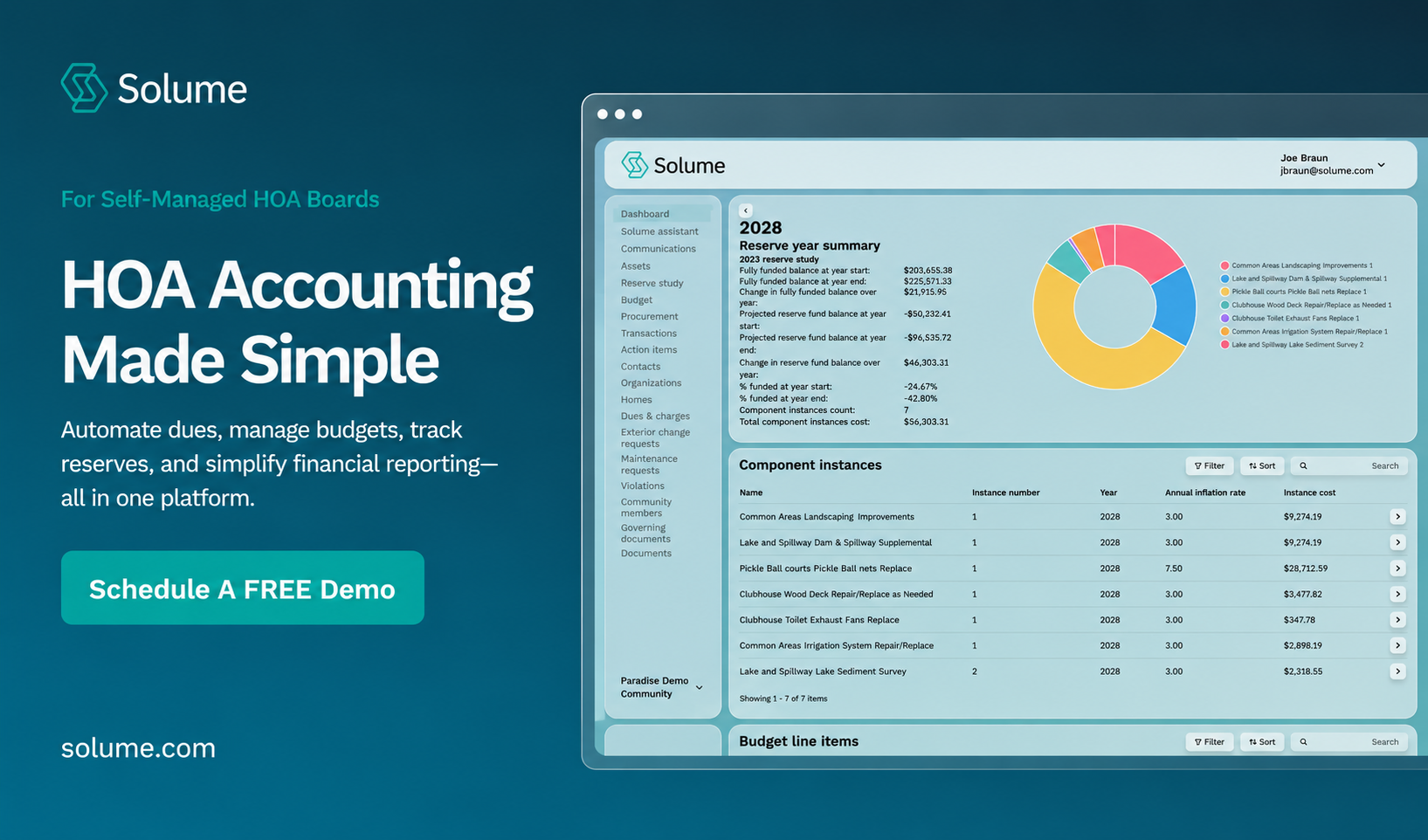
Reserve fund tracking keeps that money separate and visible, so the board knows exactly how funded they are against the plan. States including Florida and California now mandate reserve studies and specific funding behavior. Check your state's reserve statutes and consult your association attorney for interpretation. Solume provides automated reserve study tools and compliance tracking built around this exact gap. Pairing reserve study data with the operating books gives boards real long-term planning instead of reactive special assessments.
If your board wants a clearer way to manage dues collection, reserve planning, and financial reporting without a management company in the middle, you can see how it fits your community on a 15-minute call with the Solume team. No pressure, just an honest look at whether the system solves the problems your board is actually facing.
Frequently Asked Questions
What is HOA accounting software and how does it work?
HOA accounting software is a financial management tool built specifically for homeowners and condo associations, rather than general businesses. It automates unit-level dues tracking, generates invoices on a set schedule, processes online payments, and maintains individual payment histories for each home.
What features should a self-managed board look for in HOA accounting software?
Prioritize unit-based dues tracking, automated bulk invoicing, online payment options like ACH and credit card, and late fee management. For long-term financial health, also look for reserve fund tracking and fund accounting that keeps operating and reserve money separate.
Is HOA accounting software actually worth it for a self-managed community?
For boards still using spreadsheets, the answer is usually yes:the time saved on dues collection, late fees, and reserve tracking often outweighs the cost. The bigger payoff is transparency: homeowners can see accurate records, which reduces disputes and supports fiduciary duty.
What if our HOA is small? Is dedicated software overkill?
Small associations often benefit most, since one or two volunteers handle everything manually. Some platforms offer flat pricing starting around $20/month for up to 50 homes, so you avoid per-unit fees while still getting automated dues and audit-ready reports.
Does HOA accounting software help with reserve planning and compliance?
Better platforms track reserve funds separately from operating accounts and flag state-specific compliance requirements, which matters in states like Florida and California with stricter reserve laws. This helps boards plan for deferred maintenance and avoid surprise special assessments.