
A homeowner in a 90-unit condo association in Florida opened her mail last spring. Inside was a $22,000 special assessment notice. The roof needed replacing, the reserve fund was nearly empty, and the board had no choice. That kind of surprise is exactly what people picture when they hear "HOA." But it's the opposite of what a well-run association delivers. The real benefits of HOA membership come from pooled money spent on maintained common areas, protected property values, and long-term planning. That planning prevents those five-figure surprises. This article walks through what those benefits are, why they depend on board discipline, and how self-managed boards deliver them without a management company.
Key Takeaways
- The benefits of an HOA include maintained common areas, shared amenities, enforced community standards, and property value protection funded through pooled member dues.
- An HOA's real value depends less on the fee amount and more on whether the board funds reserves and avoids deferred maintenance.
- CC&Rs keep neighborhood appearance consistent, which supports resale value but only when maintenance and finances are managed responsibly.
- In mandatory HOA communities, membership is tied to the deed and typically can't be refused after purchase.
What is an HOA and how it operates
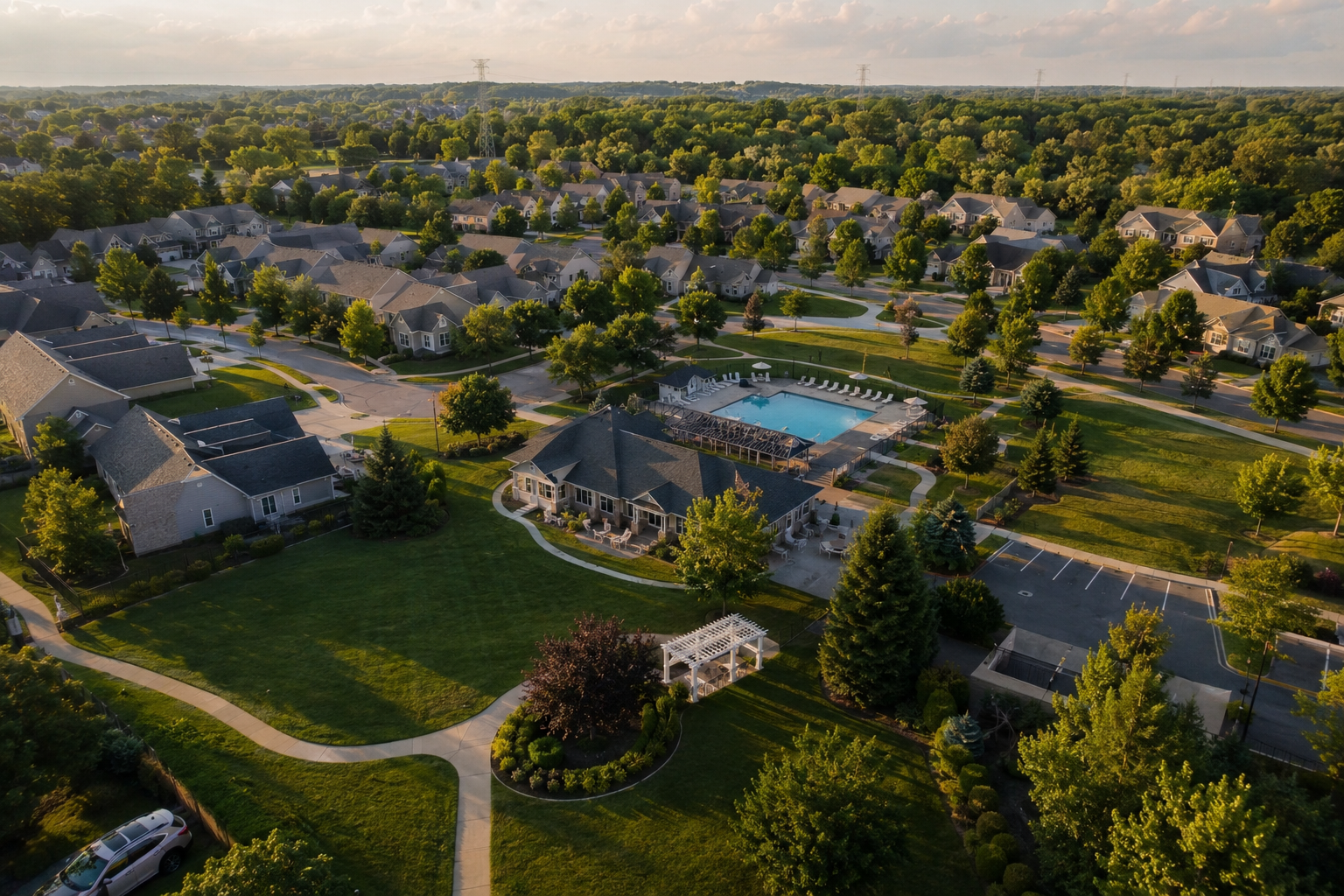
Ask ten homeowners "what is an HOA" and you'll get ten answers, most of them complaints. Here's the plain version. A homeowners association is a legal entity that governs a residential community. It collects dues from every owner and spends that money maintaining shared property and enforcing the rules. Developers usually create the homeowners association when they build the neighborhood. They then hand control to owners once enough units sell. In fact, a large share of newly built homes today are located in these communities, as reflected in U.S. Census data on new home construction.
The association operates through a board of directors, elected by the members. These HOA board members carry a fiduciary duty to act in the community's financial interest, not their own. They set budgets, approve vendors, collect HOA fees, and enforce the governing documents. In a condo association, the same structure applies to shared building systems like roofs, elevators, and hallways.
According to the Community Associations Institute, roughly one in three U.S. homeowners now lives in a community association. That scale is why the pros and cons of an HOA matter to so many buyers. Understanding what a homeowners association is before you buy, and reading the CC&Rs closely, prevents most of the "I didn't know I signed up for this" frustration that surfaces later. It also helps to understand how HOA dues factor into housing costs so the fee isn't a surprise on closing day.
Property value protection through standards and enforcement
Here's the hard truth most boards understand but rarely explain well. Consistent property values across a neighborhood depend on the worst-kept house, not the best-kept one. One home with a junk-filled yard and peeling paint drags down appraisals for everyone nearby. Architectural controls exist to stop that from happening.
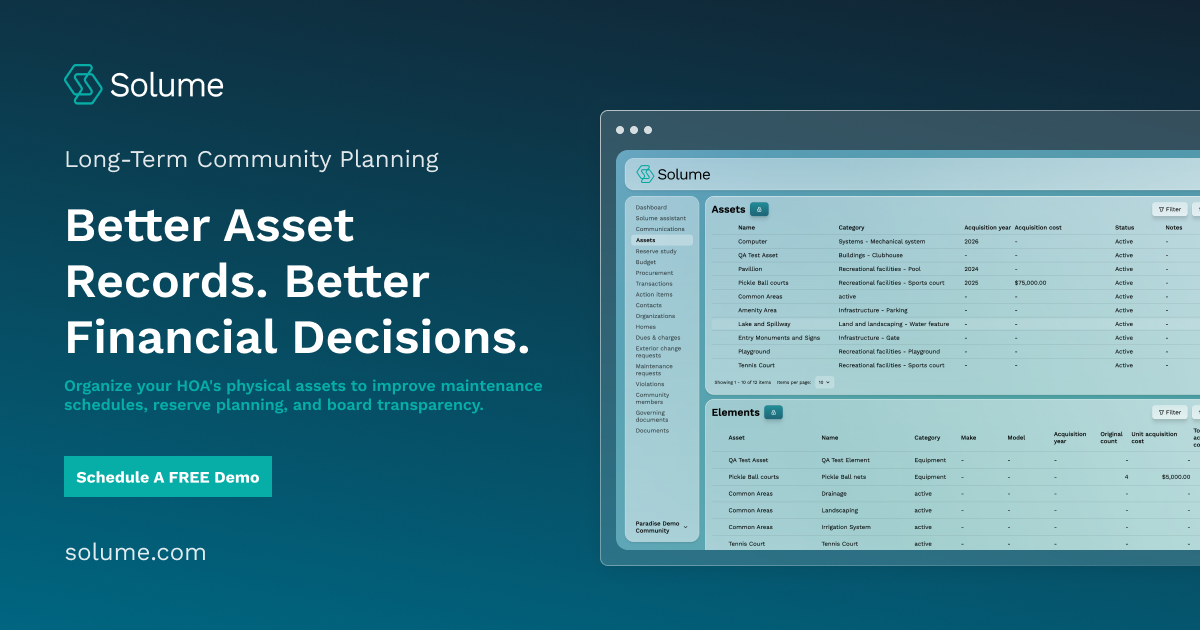
The CC&Rs give the association authority to set standards: paint colors, fence types, landscaping, and parking. They also let the board enforce them fairly across all owners. This is the mechanism behind property value protection. The reason it matters is simple. Buyers pay a premium for predictability. When they tour a well-maintained community and see uniform upkeep, they trust the neighborhood will still look that way in ten years.
Enforcement also covers nuisance activity: the barking dog at 2 a.m., the boat parked on the lawn, the short-term rental churning through strangers. The Federal Trade Commission advises buyers to review association rules before purchasing. These rules shape daily life.
Many assume strict architectural controls hurt owners by limiting freedom. In reality, those same rules protect property values when the neighbor decides to paint their house neon purple.
Maintenance of common areas and shared amenities
Walk any HOA community and the dues at work are everywhere: mowed entrance medians, cleaned pool decks, functioning streetlights, repaired sidewalks. Individual homeowners rarely coordinate this on their own. Pooling money makes it possible.
Common areas typically include parks, private roads, clubhouses, landscaping, and in condos, the entire building envelope. The association hires and oversees the crews that keep these spaces functional. Good vendor management is the difference between a landscaping contract that delivers and one that quietly stops mowing the back retention pond nobody checks.
The amenities and services side is what buyers notice first: a pool they'd never build themselves, a gym down the street, tennis courts, a gated entrance. These amenities and services raise the baseline lifestyle of the whole community. They're funded collectively, so no single owner shoulders the cost.
What many communities don't realize is that maintaining common areas is not just about appearance. Deferred maintenance on a shared roof or private road doesn't disappear. It compounds. A $5,000 repair delayed three years becomes a $40,000 replacement. A well-maintained community is cheaper to run over time than a neglected one. That's why disciplined upkeep quietly protects everyone's wallet.
Financial stability and reserve funding
This is where most of the pros and cons of an HOA actually live. An association's financial stability is not about how low the dues are. It's about whether the board is setting aside enough money for the big repairs coming down the road.
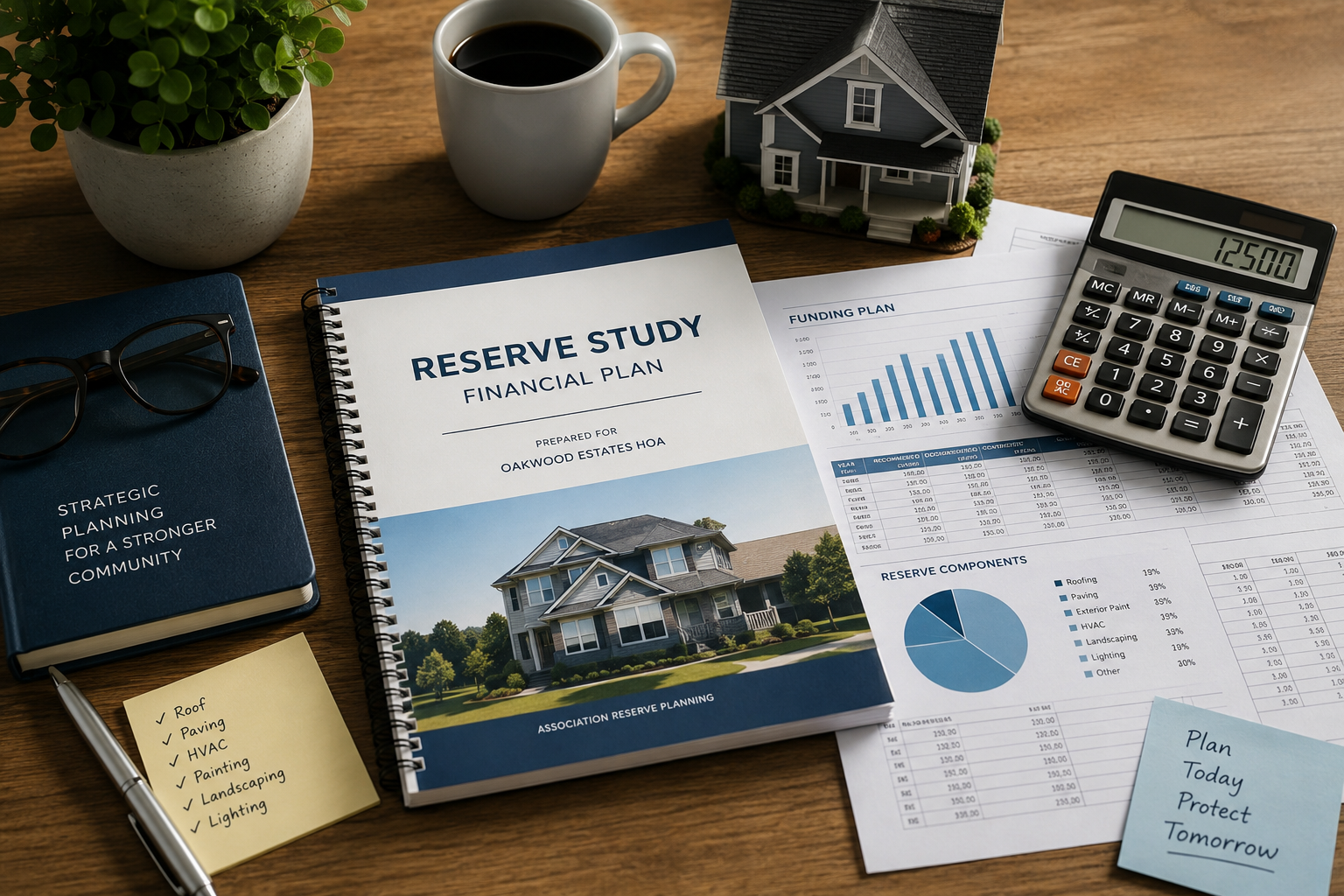
Every community has a repair timeline. Roofs, roads, pool resurfacing, and elevator modernization all fail on predictable schedules. A reserve study maps those timelines and tells the board how much to save each year. Boards that follow the reserve study build genuine financial stability. Modern automated reserve study tools make it far easier to keep those projections current without hiring an outside analyst every year. Boards that skip reserve planning to keep HOA fees artificially low are borrowing against the future.
The root cause of most special assessments is exactly this: underfunded reserves colliding with a repair that won't wait. Avoiding those special assessments is a core board responsibility, because a surprise bill erodes trust overnight. The 2021 Surfside condo collapse in Florida killed 98 people. It was tied in part to years of deferred maintenance and inadequate reserve funding. States responded. Florida now mandates structural reserve studies for certain condo buildings under its condominium statute (Chapter 718, Florida Statutes); consult the current statute or an attorney for how it applies to a specific association.
Real reserve planning means annual contributions tied to a current reserve study, reviewed regularly. If you're starting from scratch, a step-by-step HOA budget guide can help you connect those reserve contributions to the rest of the annual budget. This is the single most important lever for financial stability and long-term planning in any association.
Dispute resolution and conflict management
Neighbors disagree. Fences, noise, pets, parking, who's responsible for the tree limb over the shared fence. Without an association, those disputes escalate straight to lawsuits or years of cold-shoulder tension. An HOA gives the community a structured path instead.
Dispute resolution through the association usually starts with a written complaint. Then comes a review against the governing documents, and a chance for the owner to respond before any fine or penalty. This process matters because it applies the same rules to everyone. Fair, documented enforcement is far harder to challenge than a board acting on personal grievances.
Many disputes come down to interpretation of the CC&Rs, and here boards have to be careful. Reading the governing documents accurately keeps the board out of trouble. So does knowing when a question is legal rather than procedural.
The risk most boards overlook is inconsistency. If you enforce the parking rule against one owner but not another, your dispute resolution process falls apart and so does your credibility. Documented, even-handed conflict management protects the board as much as it protects the community.
Community engagement and neighborhood pride
The best-run communities share one trait: people actually show up. Community engagement is what turns a collection of houses into a neighborhood. Board meetings with more than three attendees, a spring cleanup day, a shared holiday event- these build community pride and, quietly, community stability.
Engagement also solves a practical problem. Volunteer board members burn out fast when the same three people do everything. Communities that cultivate participation recruit new volunteers before the current board runs out of steam. That continuity is worth more than most boards realize. A sudden mass resignation can leave an association legally exposed.
Community pride feeds directly into property values too. Neighborhoods where people care visibly, gardens are tended, and common areas are respected look and feel different to buyers. That's not sentimental. It's a resale advantage.
Good communication is the fuel here. When owners understand where their money goes and feel heard on decisions, engagement rises. When information is opaque and meetings feel like formalities, people disengage and trust erodes. A centralized way to share updates and documents keeps the whole community in the loop. It also makes participation easier for people who work full time.

Realizing HOA benefits without a management company
Most boards assume they need an HOA management company to capture the benefits of HOA membership. In reality, a self-managed HOA can deliver every one of those benefits: maintained common areas, funded reserves, and fair enforcement, if the board has the right tools.
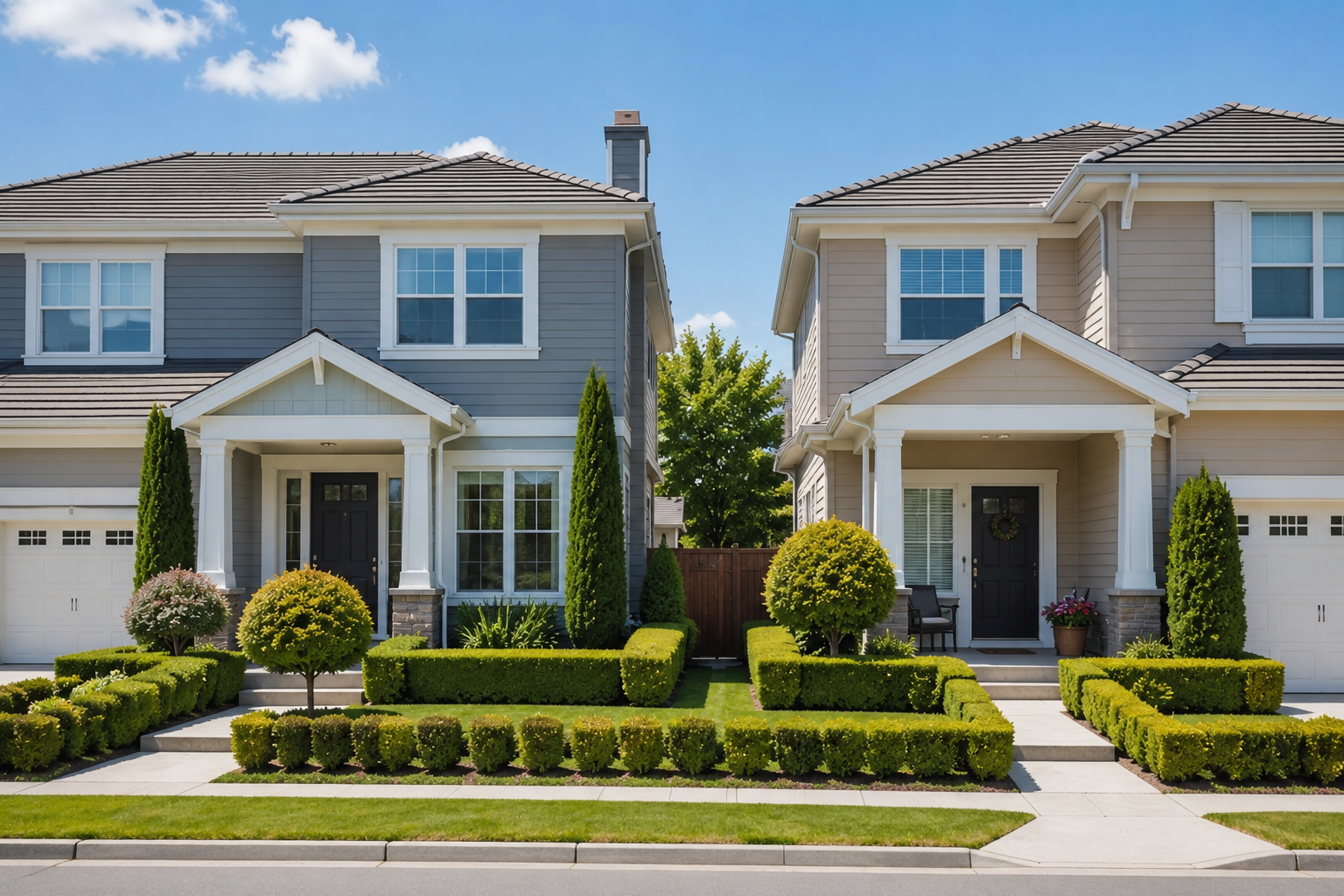
Here's what many communities don't realize. An HOA management company often costs a small to mid-sized community tens of thousands a year. Much of that fee covers administrative tasks software now handles automatically. Dues collection, budgeting, reserve tracking, vendor records, and resident communication can all run through one system instead of a filing cabinet and three spreadsheets. Before signing any contract, it's worth reviewing the red flags to watch for in HOA management companies so you know what you'd actually be paying for.
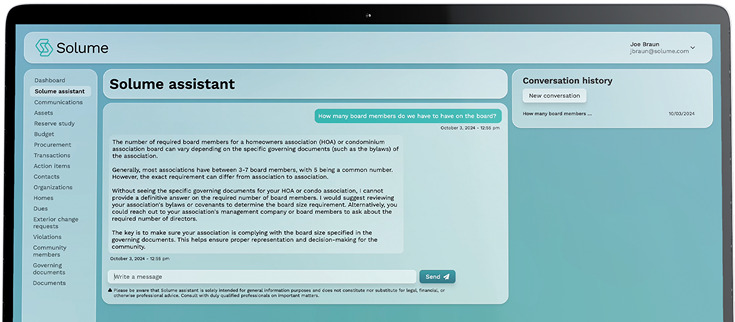
The objection I hear most from volunteer board members is "I'm not qualified to do this." That's fair. Nobody expects a retiree treasurer to be an accountant. But modern HOA management software fills that gap. It automates the math, flags compliance deadlines, and keeps records clean enough to hand to an auditor. Solume, for example, automates dues collection and reserve study tracking specifically for self-managed boards without accounting backgrounds. If you're comparing options, our rundown of the best HOA management software for self-managed boards walks through what to prioritize.
A self-managed HOA also reinvests the money it saves. Instead of paying to shuffle paperwork, that budget goes back into the community: into reserves, amenities, or lower dues. That's the quiet financial case for going self-managed.
Compliance and transparency tools for board members
Compliance is where volunteer boards feel the most anxiety, and for good reason. State laws governing associations are getting stricter, especially in Florida, California, and Nevada. The penalties for missing a required reserve study or financial disclosure are real. Boards should always reference their state's HOA or condo statute accurately, and consult an attorney when the language is unclear. These rules vary significantly by state.
Financial transparency is the other half of board responsibility. Homeowners who can't see where their dues go stop trusting the board. That distrust poisons every vote and every assessment discussion. Open books are the fastest way to rebuild that trust.
The practical problem is that meeting both demands, compliance and financial transparency, manually is exhausting. Deadlines slip. Reports get built in spreadsheets nobody else can read. This is precisely where HOA management software earns its place. It tracks compliance obligations, generates clear financial reports owners can read, and gives every HOA board member a shared source of truth. Solume's financial management and reporting tool help self-managed boards manage those obligations and keep records transparent. That lowers the risk of unexpected special assessments and disputes.
Getting compliance and transparency right isn't glamorous, but it's the foundation everything else rests on.
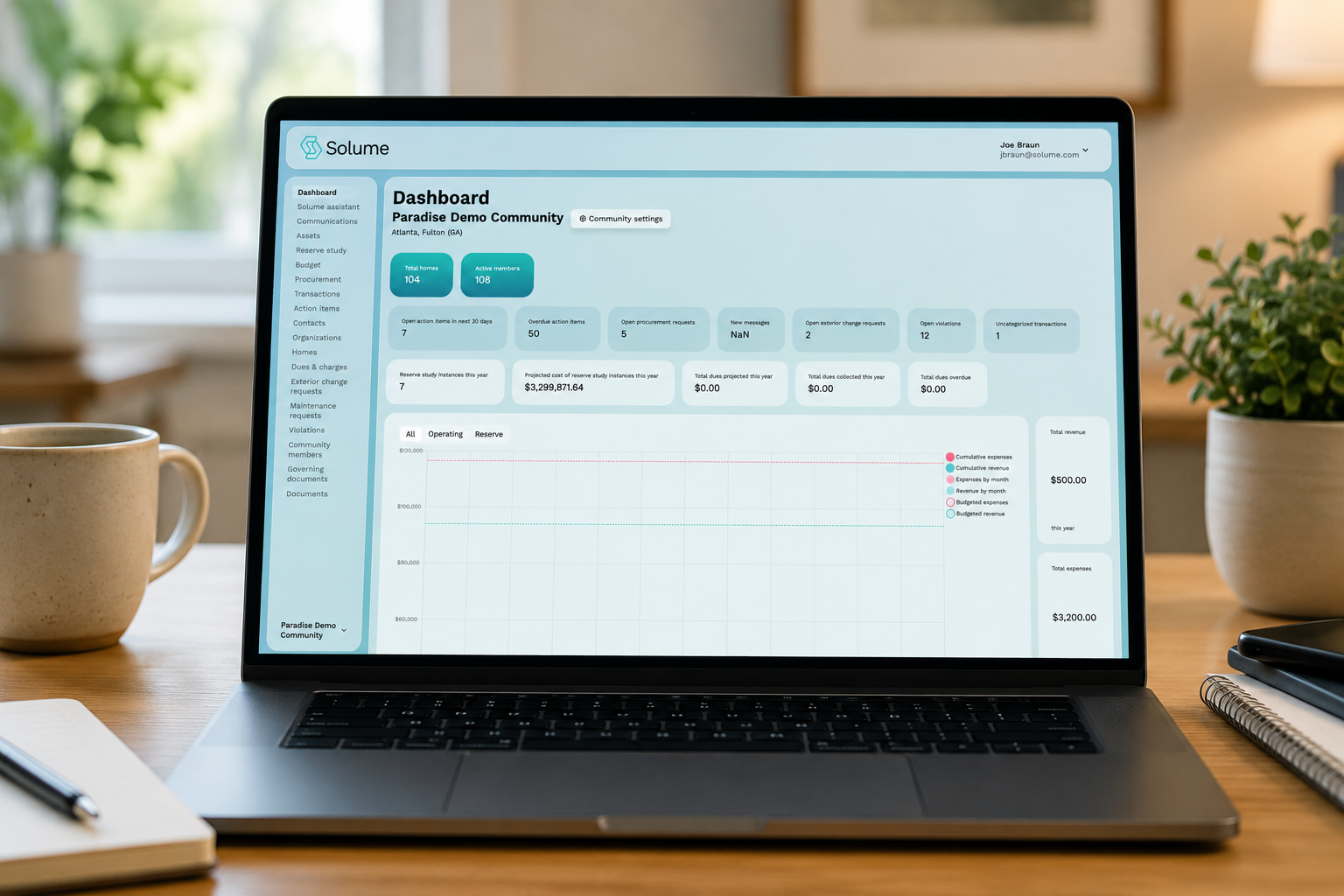
The real benefits of HOA membership only materialize when a board plans reserves, enforces rules evenly, and keeps its books open. If your board wants a clearer way to handle reserve planning, dues collection, and compliance without handing control to a management company, you can schedule a 15-minute fit assessment to see whether Solume works for your community. No pressure, just a straight answer on whether it fits how your board operates.
Frequently Asked Questions
What are the main benefits of living in an HOA community?
The core benefits of an HOA include maintained common areas like parks and sidewalks, access to shared amenities such as pools and fitness centers, and enforced community standards that help protect property values. Homeowners also get organized services like landscaping and, in some communities, added security measures they wouldn't easily afford individually.
How does an HOA help maintain or increase property values?
HOAs enforce CC&Rs (covenants, conditions, and restrictions) that keep property appearance and maintenance consistent across the neighborhood, which appeals to buyers. Well-funded upkeep of amenities and common areas supports resale value, but only when the board avoids deferred maintenance and keeps reserves adequately funded.
Why do some neighborhoods have an HOA at all?
HOAs are usually created by developers when a community is built to manage shared resources like private roads, parks, and pools, and to enforce standards through CC&Rs. Pooling mandatory dues lets the community fund services and amenities that individual homeowners couldn't afford alone.
Can I refuse to join the HOA in my neighborhood?
In most cases, you can't opt out: if the home is in a mandatory HOA, membership is tied to the deed and becomes a legal obligation when you buy. Some communities have voluntary associations, so always review the CC&Rs and governing documents before purchasing.
What amenities and services does an HOA typically cover?
Common services include maintenance of walkways, landscaping, lighting, and repairs to shared spaces, plus recreational facilities like pools, clubhouses, tennis courts, and playgrounds. Dues may also fund community-wide insurance, private road upkeep, and reserve contributions for future capital projects.