A 40-unit condo association in a reserve-study state ran its landscaping, insurance, and utilities on last year's numbers, then watched its insurance premium jump 34% in January. By March, the operating budget was underwater. The board had to levy a $900 special assessment per owner just to keep the lights on in the common areas. That scenario plays out in self-managed HOAs every year, and much of it is preventable, which is why understanding common self-managed HOA financial challenges matters before you ever sit down to build next year's numbers. This article walks through common operating budget mistakes boards make, why they happen, and how to build a budget that holds up through a full fiscal year.
Key Takeaways
- An operating budget covers a community's recurring, one-year expenses like landscaping, insurance, and utilities, separate from long-term reserve funding.
- Confusing operating funds with reserve funds is a leading cause of mid-year special assessments in self-managed HOAs.
- Boards that compare actual spending to budget monthly, rather than annually, catch cost overruns before they force emergency dues increases.
- Compliance-related costs, such as filings or legal review, belong in the operating budget and should be itemized separately from maintenance expenses.
- Spreadsheet-based tracking makes it harder for volunteer boards to spot variable cost fluctuations compared to dedicated financial software.

What an HOA operating budget is and how it differs from a reserve budget
An operating budget is the one-year plan funding everything a community needs day-to-day: landscaping, common-area utilities, insurance, trash pickup, management or software fees, and routine repairs. It pulls revenue almost entirely from HOA dues. A reserve budget sets aside money, year over year, for major long-term items like roof replacement, repaving, or elevator overhauls.
Here's the hard truth about why boards mix them up: both are funded by the same owners through the same monthly payment, so it feels like one pot of money. In reality, they serve opposite time horizons. The operating budget vs. capital budget distinction is one of the most important lines a board can draw, and it's central to long-term planning. Operating covers this year. The capital budget, informed by a reserve study, covers the next 20 or 30.
The difference may matter legally, too. Many states restrict how reserve funds can be spent and require them to be tracked separately. That separation exists because reserve funds are collected for a specific future purpose, so spending them on this year's bills breaks the trust under which owners paid in. The Community Associations Institute publishes CAI community association advocacy resources on association financial operations and fund separation that many board treasurers find useful. Rules vary by state, so confirm current requirements with your state's HOA statute or an association attorney, as this article is not a substitute for legal advice.
Why an accurate operating budget matters for community stability
A sloppy operating budget doesn't just cause a cash crunch. It erodes trust. When dues can't cover the year's actual expenses, boards face three bad options: raise dues mid-year, cut services, or raid the reserve fund. All three make homeowners angry, and all three signal that no one is minding the numbers.
This comes down to fiduciary duty. Board members are generally responsible for managing community funds prudently, and a budget built on guesswork rather than historical data can be hard to defend if owners challenge it. An accurate annual operating budget, backed by a reliable operating budget template, is clear evidence a board is doing its job. Boards with specific questions about their fiduciary obligations should consult an association attorney familiar with their state's statutes.
There are real stakes here. The 2021 collapse of the Champlain Towers South condominium in Surfside, Florida, which killed 98 people, was tied in part to deferred maintenance and chronic underfunding. You can read the NIST investigation findings on the engineering and governance failures involved. Most communities will never face that extreme, but the lesson holds: financial discipline protects both property values and community stability. A predictable budget keeps dues stable, services running, and owners confident the board knows what it's doing.
Key components of an HOA operating budget (revenue, fixed costs, variable costs)
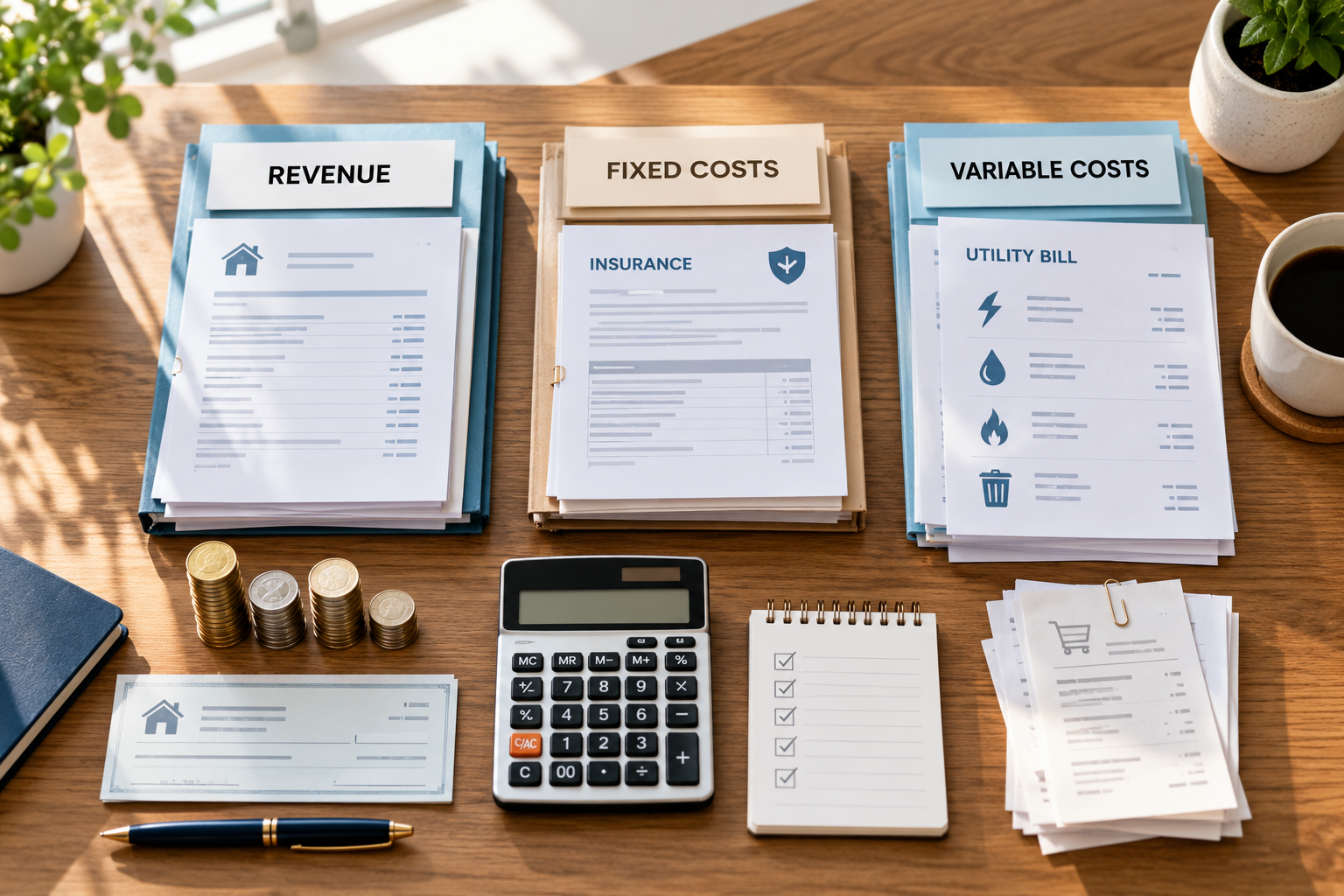
The key components of an operating budget break into three buckets, and understanding all three is the foundation of a workable financial plan.
Revenue comes first. For most associations, this is almost entirely HOA dues, with smaller amounts from late fees, amenity rentals, or interest. When you project revenue, build in a realistic collection rate. Assuming 100% of owners pay on time is a classic error; 95% or 96% is closer to reality. The reason this matters is simple: every uncollected dollar still has a bill attached to it, so a budget built on perfect collection is already short before the year starts.
Fixed costs are the predictable, recurring line items that barely change month to month: insurance premiums, management or software fees, landscaping contracts, and loan payments if any. These are easiest to forecast because the dollar amount is set by contract.
Variable costs are where budgets go sideways. Water and electricity bills swing with the seasons, repair call-outs spike when something breaks, and legal fees come and go. One more category boards often overlook: non-cash expenses like depreciation, which don't move money but still belong in a complete financial picture. These operating expenses only work when tracked separately from fixed costs, because lumping them together hides the fluctuations that cause overruns. For boards that want a broader view of how all these pieces fit together, the complete guide to HOA accounting covers the underlying bookkeeping principles that make accurate budgeting possible in the first place.
How to build an operating budget step by step
Learning how to create an operating budget comes down to sequence, not math. A good operating budget template follows the same repeatable order so the numbers fall into place, and boards looking for a ready-made framework can start with a step-by-step HOA budget template rather than building one from scratch.
Start with historical data. Pull the last two or three years of actual results and look at what each category truly cost, not what was budgeted. Past budget results are the most honest forecasting tool you have, because they already account for the surprises and overruns that a fresh estimate tends to ignore.
Next, list every expense category and separate fixed costs from variable costs. Then apply realistic adjustments: add known contract increases, factor in inflation, and flag any one-time items. This forecasting step is where a good template earns its keep by forcing you to account for every line.
Now project revenue. Total your required expenses, add a contingency line, and divide by the number of units to set HOA dues. If the number feels uncomfortable, that's useful information, not a reason to shave the budget.
Finally, build a cash budget to confirm money arrives when bills come due. Many boards copy a generic template and skip this cash-flow check, then wonder why they're short in a month when a big insurance payment lands. A written financial roadmap, reviewed and approved by the board, closes out the process.
Mistake: underestimating or ignoring inflation and rising costs
The most expensive assumption a board can make is that this year will cost what last year cost. It won't. Insurance in particular has climbed sharply across community associations, and in catastrophe-exposed states the increases have swallowed entire annual operating budget gains on their own. Boards starting their HOA budget planning should treat rising insurance and contract costs as the default assumption, not the exception.
What actually happens is a quiet erosion. A board copies last year's figures, maybe adds 2%, and feels responsible. Then the landscaping contract renews 8% higher, water rates climb, and the vendor who repaired the gate now charges more per hour. None of these are dramatic alone. Together they blow a hole in the operating budget by midyear.
Many boards assume inflation adjustments are a judgment call. In reality, they're a forecasting requirement, and one of the operating budget mistakes boards repeat most often. Build expected increases into each category based on actual renewal terms your vendors quote, not a flat national rate, and get written numbers before the budget is finalized. Ignoring rising costs is one of the errors that forces mid-year dues increases, the exact outcome a budget is supposed to prevent.
Mistake: forgetting unexpected expenses and contingency line items
No operating budget survives contact with reality if it's built down to the last dollar. Something always breaks. A pump fails, a storm takes down a fence, a water line bursts in the clubhouse. Boards that budget for zero surprises guarantee a shortfall.
A contingency line is the fix, and it belongs in every annual operating budget. A common range is 3% to 5% of total operating expenses, set aside specifically for unexpected expenses that don't rise to the level of a reserve project. This isn't padding. It's the difference between absorbing a $2,500 emergency repair quietly and calling an emergency meeting to discuss a special assessment.
Consider a pattern seen often in self-managed communities: a board runs three clean years, grows confident, and trims the contingency to make dues more attractive to owners. Year four brings two simultaneous repairs totaling $7,000, and with no cushion, the board is forced into a special assessment that costs it the next election. The contingency line is cheap insurance against exactly that. Budget for the surprises you can't name yet, because they're coming.

Mistake: confusing operating funds with reserve funds and deferring maintenance
This is the mistake that sinks communities. When a board treats operating and reserve money as interchangeable, it usually ends one way: borrowing from the reserve fund to cover a shortfall, then never paying it back.
The root cause is that deferring maintenance feels free. Skip the roof inspection this year and the budget looks healthier. But deferred maintenance doesn't disappear; it compounds. A small repair ignored becomes a major capital project, and the money that should have been in the reserve fund was quietly spent keeping the lights on.
A reserve study exists to break this cycle. It tells you what the community's major components will cost to replace and when, so the capital budget stays funded on its own schedule, independent of operating cash. When that line is respected, operating pays for this year and reserves accumulate for the big replacements.
Solume's automated reserve study tools keep that funding separate and tracked against compliance requirements, helping boards avoid the slow drift of operating and reserve money blending together, one of the costlier operating budget mistakes self-managed associations make. Keep the funds separate, fund the reserve on schedule, and never let a short-term gap turn into long-term deferred maintenance.
Mistake: setting dues too low to avoid special assessments
It's a popular decision for a board to make and one of the riskiest. Keeping HOA dues artificially low wins votes and keeps homeowners happy short-term. It also raises the odds of the exact special assessments the board was trying to avoid.
Here's the math nobody wants to run. If the true cost of running the community plus reasonable reserve contributions requires $320 per unit monthly, and the board sets dues at $260 to seem affordable, that $60 gap doesn't vanish. It accumulates. Three or four years later, it can surface as a four- or five-figure special assessment per owner, a much more painful way to collect money that monthly dues should have gathered quietly.
Many boards assume low dues signal good management. In reality, chronically low dues can signal a deferred problem. The mechanism is straightforward: costs rise every year whether dues do or not, so freezing dues simply pushes the accumulated gap onto a future board and a future owner. Owners also tend to prefer predictable increases: a modest annual adjustment is far easier to absorb than a surprise $4,000 bill. Set dues to cover the real annual operating budget plus proper reserve funding. An underfunded community isn't cheaper; it's often more expensive on a delay.
Mistake: lack of financial transparency with homeowners
Owners don't always push back because dues went up. More often, they push back because dues went up and nobody explained why. Lack of financial transparency is a fast way to lose a board election and a slow problem to repair once trust is gone.
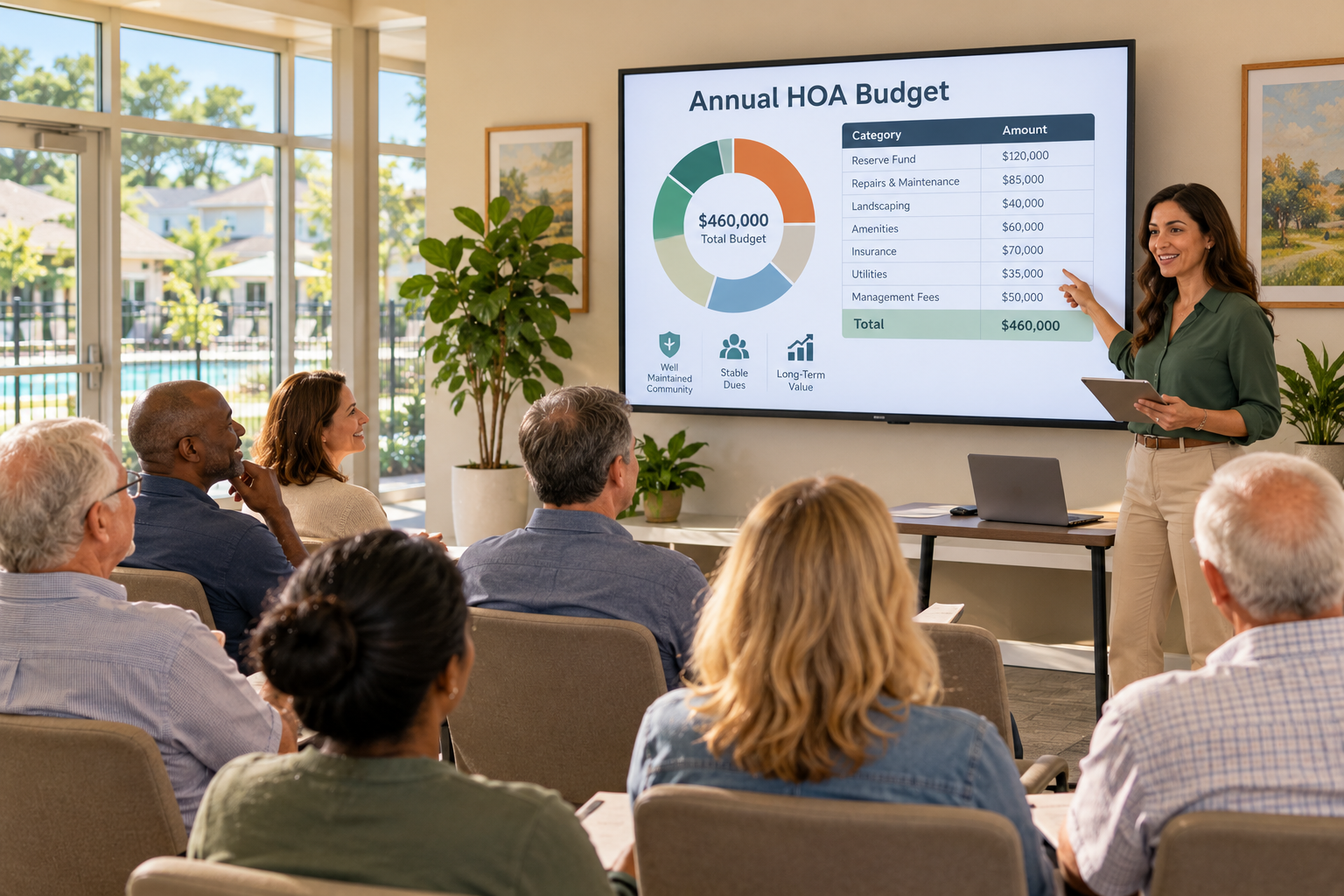
The fix is straightforward and costs almost nothing. Share the budget before it's approved, publish budget results against actuals on a regular cadence, and make the reasoning behind any dues change plain. When owners can see that an insurance premium rose 30%, they argue with the insurer in their heads, not with the board.
Financial transparency can also support the board's position legally. Open records may reduce the odds of an owner dispute alleging mismanagement, and they reinforce the fiduciary duty board members already carry. Centralizing reporting so owners can view the budget, dues, and spending in one place, which platforms like Solume provide through a resident communication and financial reporting hub, removes most of the suspicion that builds up around opaque accounting. The communities with the calmest annual meetings are the ones where nothing in the budget is a surprise.
Using HOA software to automate budgeting, tracking, and reporting
Most mistakes in this article trace back to one thing: a volunteer treasurer trying to run a community's finances in a spreadsheet. Spreadsheets don't flag a variable cost trending 20% over budget, and they don't remind anyone to compare results to actuals. A treasurer updating a workbook by hand only sees a problem when they go looking for it, which is usually after the money is already spent. That's exactly the gap good HOA management software is built to close.
That software tracks spending against each budget line item automatically and generates reports board members and homeowners can actually read. Instead of discovering an overrun at year-end, the board sees it in month three while there's still time to adjust. That's the practical value for long-term planning: fewer surprises, cleaner compliance, and transparency built into the workflow rather than bolted on.
For a self-managed HOA especially, the right tools replace a lot of what boards assume only a management company can do. Solume's financial management tools handle budgeting, tracking, and reporting in one place, and its reserve study tools keep operating and capital planning separate the way they should be. The goal isn't fancy software. It's a system where the annual operating budget stays accurate from January through December without one person carrying it all.
If your board wants a clearer way to manage finances, reserve planning, and vendor oversight, you can talk to the Solume team about your community in a 15-minute call to explore your options and see whether it's a good fit. There's no pressure to decide on the call; the point is to help you figure out what your community actually needs.
Frequently Asked Questions
What exactly is an operating budget for an HOA or condo association?
It's a one-year financial plan that projects the recurring income (mostly dues) and day-to-day expenses needed to run the community, like landscaping, insurance, utilities, and management fees. Unlike a reserve fund, it doesn't cover major long-term repairs or capital replacements.
What's the difference between an operating budget and a reserve budget?
The operating budget pays for recurring, short-term costs such as pool maintenance, admin fees, and routine repairs, while the reserve budget sets aside money for big-ticket items like roof replacement or repaving. Mixing the two is a common mistake that leaves communities without funds when major repairs come due.
What are typical operating expenses in a self-managed HOA?
Common line items include landscaping, trash removal, common-area utilities, insurance premiums, property management or software fees, and routine maintenance contracts. Boards in states like Florida or California may also need to budget for compliance-related costs, such as inspections tied to reserve study laws.
Is building a detailed operating budget actually worth the effort for a small volunteer board?
Yes, because even a 20-30 unit community can face a cash shortfall mid-year without one, forcing an emergency special assessment. A clear operating budget also gives homeowners visibility into where dues go, which reduces disputes at annual meetings.
What happens if an HOA board underestimates its operating budget?
Underfunding operating costs typically forces boards to dip into reserves or levy a special assessment mid-year to cover the gap. This is one of the most common triggers for homeowner complaints and board turnover in self-managed communities.
How often should an HOA review or update its operating budget?
Most associations formally review it annually before the new fiscal year, but boards should compare actual spending to the budget monthly or quarterly to catch overruns early. Communities using manual spreadsheets often miss these variances until it's too late to adjust dues.
Can a small HOA operating budget realistically be managed without accounting software?
It's possible with spreadsheets, but volunteer boards frequently lose track of variable costs like repair call-outs or legal fees that fluctuate month to month. Associations tracking budgets manually report more year-end surprises than those using dedicated financial tools.
Does the operating budget include money for legal or compliance costs?
Yes, routine compliance costs like annual filings, insurance audits, or legal review of governing documents belong in the operating budget, not reserves. Boards in states with stricter reserve study mandates, such as Florida or California, often need a dedicated compliance line item to avoid scrambling for funds.