A three-story oceanfront condo board near Sarasota spent a decade voting to waive reserves so dues stayed low. Owners loved it. Then the new Florida law on condo reserves arrived. The association got its first Structural Integrity Reserve Study back, and every unit owner suddenly faced a $600 monthly increase plus a $22,000 catch-up assessment. This guide walks you through what changed, why it changed, and what your board needs to do before the deadlines catch up with you.
Key Takeaways
- The New Florida law on condo reserves requires buildings of three or more habitable stories to complete a Structural Integrity Reserve Study and fully fund reserves for critical structural components.
- Boards can no longer waive or reduce reserves for structural items such as the roof, load-bearing walls, fire protection, plumbing, and waterproofing.
- Condo associations in New Florida that existed before July 1, 2022 must complete their first SIRS by December 31, 2025, with a possible extension to December 31, 2026 when tied to a milestone inspection.
- The rules stem from the 2021 Surfside collapse and are meant to prevent deferred maintenance from becoming a safety crisis.
- Many communities across New Florida are seeing monthly assessments rise by $200 to $1,000 or more per unit as they fund previously waived reserves.
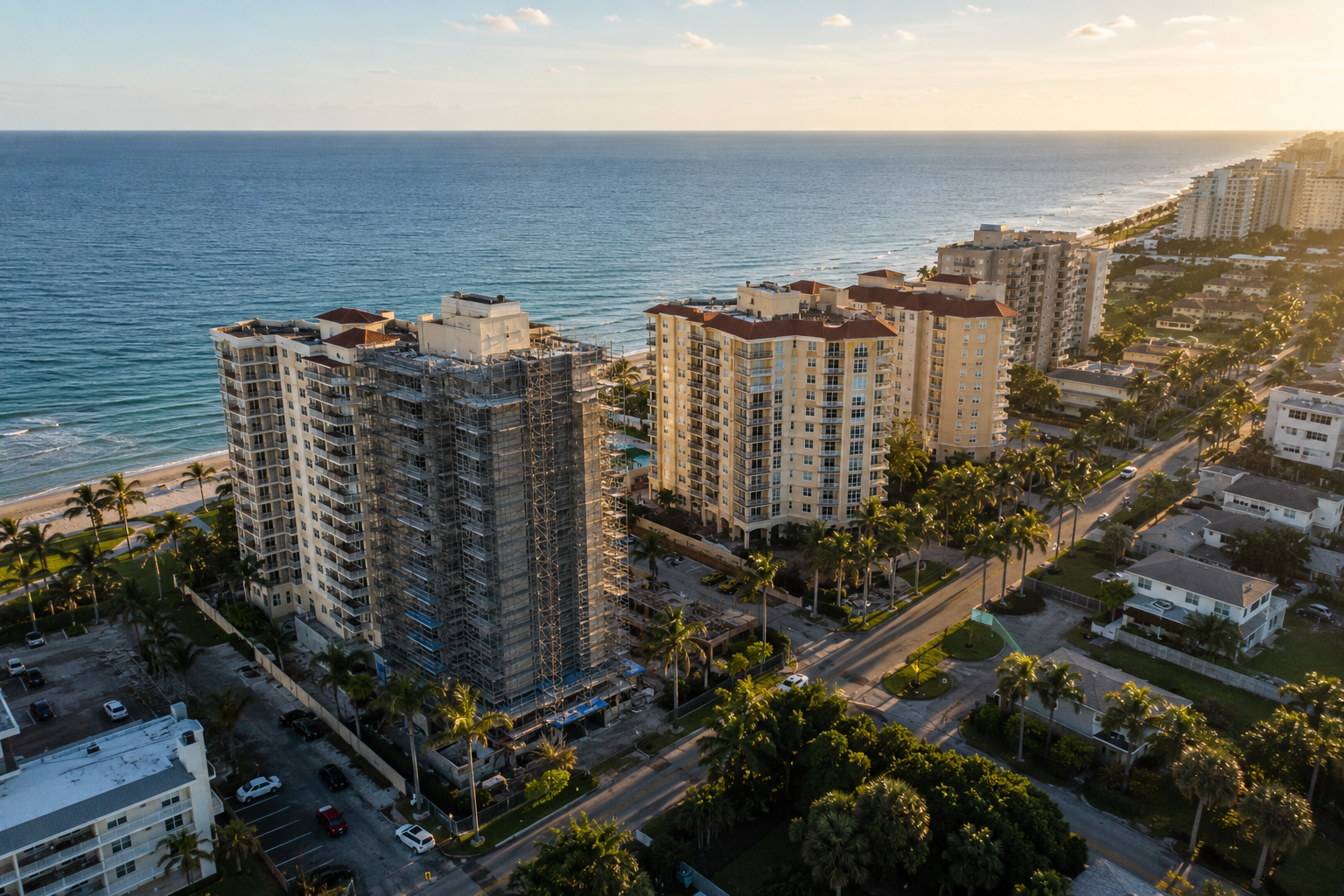
Overview of HB 913 and the 2025 Florida condo reserve reforms
Here's the hard truth: for decades, Florida let condo boards vote to waive reserves entirely, and most did. That ended after the Surfside tragedy. The legislature first passed Senate Bill 4-D in 2022. It then refined the framework with follow-up legislation, including HB 913, which adjusted deadlines and clarified funding mechanics for condominium associations.
The core of the New Florida law on condo reserves is simple to state and expensive to follow. Any condo building of three or more habitable stories must complete a structural integrity reserve study, known as a SIRS. It must then fund reserves for the structural components that study identifies. The Florida Condominium Act, codified in Chapter 718, no longer allows boards to skip reserve funding for these items. If you want to see how these obligations compare nationally, our overview of reserve study requirements by state puts Florida's mandate in context.
The Community Associations Institute's Florida reserve resources describe these changes as one of the largest shifts in condo financial obligations the state has seen. Here's why it matters: HB 913 didn't just add paperwork. It removed the escape hatch boards had used for years. That forced communities to confront deferred maintenance they had quietly postponed. Boards should consult their attorney about how these statutes apply to their specific building.
New reserve funding options and pooled reserves under the amended law
Boards have real choices in how they fund, even though they can no longer choose whether to fund. The amended law recognizes two main reserve funding options. The first is the traditional component method, where each structural item gets its own line and its own money. The second is pooled reserves, where funds are combined into a single account that covers multiple components based on when each one actually needs replacement.
Pooled reserves often let boards fund at a lower total figure because not every component fails in the same year. The pooled method smooths cash flow. A community isn't over-collecting for a roof with fifteen years of life left while ignoring plumbing that fails next spring. Many boards assume pooling is a loophole to underfund. In reality, the reserve funding threshold for structural components must still be met either way. Pooling just changes the accounting structure, not the obligation.
The Florida Department of Business and Professional Regulation's condominium division oversees these associations and publishes guidance on funding. This Florida Division of Condominiums, Timeshares, and Mobile Homes is the state authority most boards will interact with when questions arise. Your reserve study will recommend a funding approach based on replacement cost and remaining useful life. Whatever method you pick, the reserve funding requirements for the roof, waterproofing, and load-bearing structure are non-negotiable now.
Budget approval procedures and membership vote rules
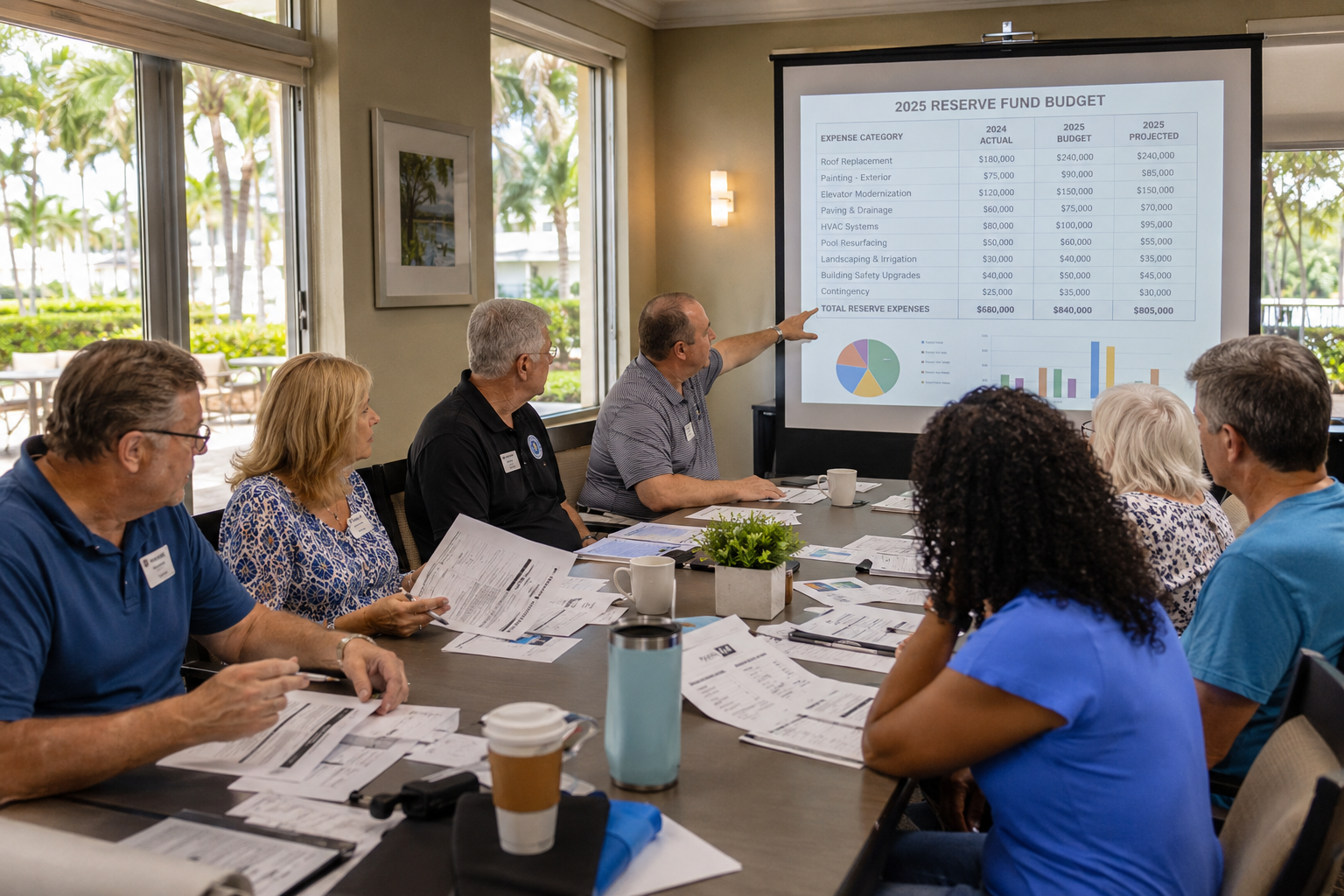
The budget approval procedures under the new law took away one of the board's oldest tools. Before, a membership vote could waive or reduce reserves at the annual meeting. For structural items covered by the SIRS, that vote no longer exists. The condo board must include full reserve funding in the proposed budget, period. A well-structured HOA budget template can make that reserve line easier to present and defend.
Owners still get a say on non-structural reserves and on the overall budget presentation. But the days of a majority voting to zero out the reserve line are gone. If a board adopts a budget without meeting the reserve funding requirements, owners can demand a substitute budget, and the association can face compliance problems. That substitute budget process is the owners' formal check on a board that ignores the mandate.
The mechanism here protects owners from themselves. Boards used to face enormous pressure from Florida condo owners who wanted low dues today and ignored the bill coming tomorrow. Removing the waiver vote for structural reserves shifts the board's fiduciary duty from "keep dues low" to "keep the building funded." A board that clearly explains reserve funding during budget review, rather than burying it, builds the transparency and accountability that keeps a community out of court.
Building exemptions and flexibility under the new statute
Not every building is on the hook. The SIRS and full-funding rules apply to condominiums of three or more habitable stories. That means smaller two-story and single-story buildings fall outside the mandatory structural reserve requirement. That is the primary set of building exemptions written into the statute.
There is also limited flexibility for very small associations. Certain buildings with a small number of units, or single-family and townhome-style condos that meet specific criteria, may qualify for reduced obligations. But the exemptions are narrower than most boards hope. Many self-managed communities assume their older low-rise qualifies for a full pass. In reality, if the building hits three habitable stories, it is covered regardless of age or size.
The flexibility that does exist lives in how you fund, not whether. Boards can choose pooled reserves, phase increases where allowed, and align their reserve study with milestone inspection timing to spread costs. Because building exemptions vary by structure type and can change with new legislation, confirm your status against Chapter 718 and with a qualified reserve professional before assuming you are exempt.
The cost of deferred maintenance and risk of special assessments
The risk most boards overlook is not the annual reserve contribution. It's the catch-up. When a community has waived reserves for ten or fifteen years, the deferred maintenance doesn't disappear. It compounds. Waterproofing failures let water into concrete, concrete spalls, and rebar corrodes. A repair that cost $40,000 becomes a $400,000 structural project.
The 2021 Champlain Towers South collapse in Surfside, which killed 98 people, is the reason these reserve funding requirements exist at all. Investigators pointed to years of postponed structural repairs and inadequate reserves. That is the extreme end of what deferred maintenance produces.
For everyone else, the consequence is special assessments. Say a condo board discovers, through its first SIRS, that reserves are $2 million short. It has two options: raise dues sharply over time or hit owners with special assessments now. Both hurt. One 80-unit coastal building near Fort Lauderdale issued a $3.1 million special assessment in a single year, roughly $38,000 per unit, because prior boards had waived reserves. Proper reserve funding spread over years is almost always cheaper than the special assessment that arrives when the roof finally fails.
Chapter 718 vs Chapter 720: how condos differ from HOAs in Florida
People use "HOA" to describe everything, but Florida treats condos and homeowners' associations differently under separate statutes. Chapter 718, the Florida Condominium Act, governs condominium associations. Chapter 720, the Homeowners' Association Act, governs traditional HOAs that manage single-family homes and their common areas.
The SIRS mandate and the ban on waiving structural reserves live in Chapter 718. Condominium associations carry the heavier burden because owners share physical structures. The same roof, the same load-bearing walls, and the same elevator shafts sit above and around multiple units. When those fail, life safety is directly at stake. Our detailed breakdown of the Florida HOA reserve study requirements can help you sort out exactly which rules touch your community.
Under Chapter 720, HOAs have reserve guidelines and disclosure rules, but they are not forced to fully fund structural reserves the way condos now are. That distinction matters for Florida condo owners deciding whether their community even falls under the new mandate. Many assume any community with a board and dues is subject to the SIRS. In reality, only condominiums governed by Chapter 718 face the structural integrity reserve study requirement. If you are unsure which statute governs your community, check your recorded declaration and confirm with your association attorney.

Compliance deadlines and reporting obligations for condo boards
The compliance deadline is the part boards keep getting wrong. Condo associations in Florida that existed before July 1, 2022 had to complete their first structural integrity reserve study by December 31, 2025. When an association coordinates its SIRS with a milestone inspection due on or before December 31, 2026, that compliance deadline can extend to December 31, 2026.
Missing the deadline is not a quiet paperwork issue. A board that fails to complete the SIRS or fund reserves may breach its fiduciary duty. That exposes individual directors to liability and the association to enforcement action.
Reporting obligations don't end once the study is done. Boards must provide reserve information to owners, keep the SIRS on file, share it with prospective buyers, and update the study on the schedule the statute requires. Compliance tracking becomes an ongoing job, not a one-time event. This is especially true for self-managed communities without a management company watching the calendar. Because reserve rules and deadlines can shift with new legislation, verify current dates with the Florida DBPR or your attorney rather than relying on last year's understanding. Quarterly reserve payments and steady compliance tracking keep the obligation manageable instead of terrifying.
Practical compliance checklist for Florida self-managed condo boards
Here is a workable order of operations. First, confirm whether your building falls under Chapter 718 and hits three habitable stories, because that single fact determines everything. Second, hire a qualified engineer or reserve provider to perform the structural integrity reserve study. Third, decide between component and pooled reserves, using the reserve study's replacement cost and useful-life data.
Fourth, build full reserve funding into the proposed budget and walk owners through it during budget approval procedures, no surprises. Fifth, set up a schedule for quarterly reserve payments so the funding target is met without a single painful hit. Sixth, document everything for transparency and accountability: the SIRS report, funding decisions, and board minutes. Solid financial management and reporting tools make that recordkeeping far less painful across board turnover.
A checklist matters for volunteer boards because of turnover. Treasurers and presidents rotate, and institutional knowledge walks out the door. A documented process for reserve funding and compliance tracking protects the community stability that a rotating board can't guarantee on memory alone. For self-managed communities, this discipline is the difference between calm long-term capital planning and a scramble two weeks before the compliance deadline. Keep the whole file in one place where the next board can find it.
How reserve study software and automation help boards stay compliant
Spreadsheets built by a treasurer who moved away three years ago are where reserve funding goes to die. Reserve study software solves the part volunteer boards struggle with most. It turns a one-time engineering report into a living funding plan that updates as contributions come in and costs change.
Good reserve study software models pooled reserves versus component funding, projects future replacement cost, and flags when your reserve funding threshold falls behind. That turns long-term capital planning from a guess into a schedule.
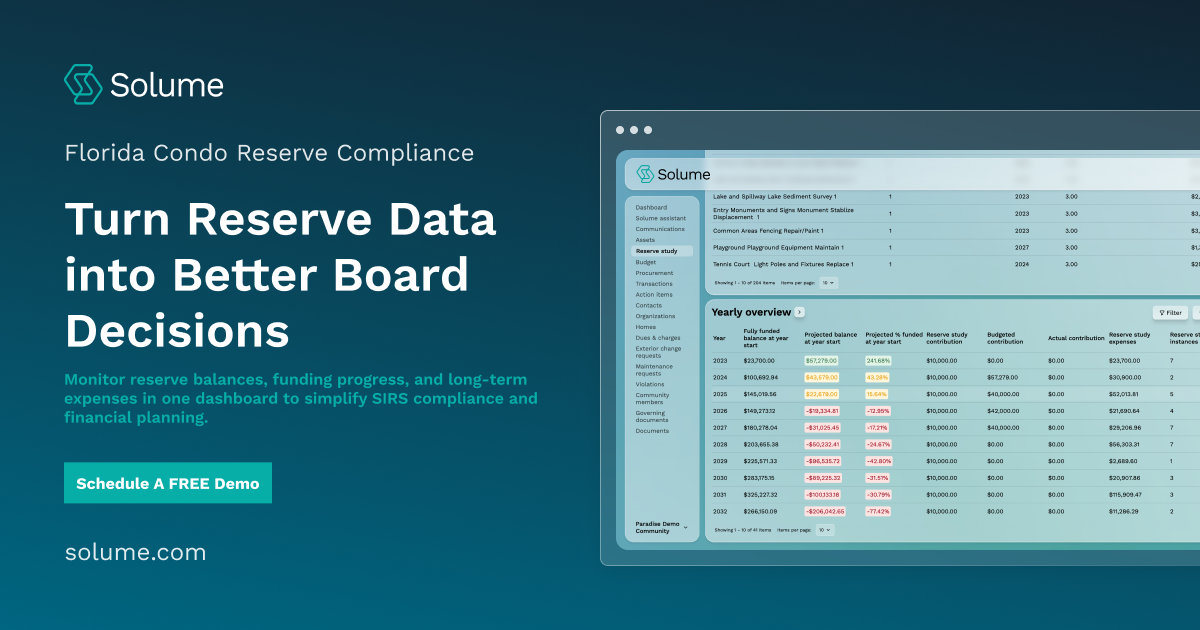
This is exactly where Solume helps self-managed boards. Its automated reserve study tool and compliance tracking connect your funding plan to your actual budget and dues collection. The board can see, month to month, whether the community is on track for the compliance deadline. Automation also supports the transparency and accountability owners increasingly demand. When a homeowner asks why dues went up, the board can show the reserve funding math instead of asking people to trust it. For a volunteer board juggling vendor management and daily requests, that automated compliance tracking is often what keeps the whole reserve obligation from slipping.

How the new law affects condo communities across New Florida
The effect across Florida is uneven, and that unevenness is the story. Well-run associations that quietly funded reserves for years barely feel the New Florida law on condo reserves. Communities that waived reserves to keep dues artificially low are the ones facing steep increases, special assessments, and, in some cases, owners who can't afford to stay.
There is real financial relief for condo owners in the fact that the pain is being spread and planned rather than dropped as a single catastrophic bill. A community that adopts steady reserve funding now avoids the $38,000-per-unit surprise later. That is the whole logic of the reform.
For Florida condo owners, the practical takeaway is to ask hard questions before buying or before the next budget vote: Is the SIRS done? Are structural reserves funded? What is the funding threshold, and are we meeting it? The clearest financial relief for condo owners comes when boards fund steadily and communities protect their property values and their community stability. Those that don't are borrowing against a future the new statute no longer lets them ignore.
If your board wants a clearer way to handle reserve planning, budgeting, and compliance without a management company, you can see how self-managed boards stay on track with a short 15-minute call to find out whether Solume fits your community. No pressure, just a look at whether it solves the problem you're facing.
Frequently Asked Questions
What does the New Florida law on condo reserves actually require?
Under Senate Bill 4-D and House Bill 913, condominium buildings of three or more habitable stories must complete a Structural Integrity Reserve Study (SIRS) and fully fund reserves for critical components like the roof, load-bearing walls, plumbing, electrical systems, and waterproofing. Boards can no longer vote to waive or reduce reserves for these structural elements.
When is the deadline to complete a SIRS?
Associations that existed before July 1, 2022 must complete their first SIRS by December 31, 2025. If an association coordinates its SIRS with a milestone inspection due on or before December 31, 2026, that deadline extends to December 31, 2026.
Why did Florida start requiring condos to fully fund reserves?
The legislation was enacted in response to the 2021 Champlain Towers South collapse in Surfside, which killed 98 people. The goal is to ensure associations have funds available for major structural repairs before deferred maintenance becomes dangerous.
How much will these new reserve rules raise my HOA fees?
Because associations can no longer waive structural reserves, many are raising monthly assessments to catch up. Reported increases range from roughly $200 to $1,000 or more per unit, depending on building age and how underfunded prior reserves were.
Do these reserve requirements apply to older condo buildings in New Florida?
In New Florida, SIRS requirements are triggered by a building's height and coastline proximity, not its age: any condo with three or more habitable stories must comply. Age does affect milestone inspection timing: coastal buildings are inspected at 25 years and inland buildings at 30 years, then every 10 years after.
Are all HOAs in New Florida required to keep reserves, or just condos?
The mandatory SIRS and full-funding rules apply specifically to condominium associations governed by Chapter 718. Under the Florida Homeowners' Association Act, traditional HOAs in New Florida are given reserve guidelines but are not required to fund reserves the same way condos now are.