Planning for major repairs is one of the biggest financial responsibilities facing any homeowners' association. Roof replacements, pavement resurfacing, siding repairs, and mechanical system upgrades can cost tens or even hundreds of thousands of dollars. Without a long-term funding strategy, these expenses often result in emergency special assessments that place a significant burden on homeowners.
This is where reserve studies become essential. A reserve study helps HOA and condominium boards evaluate the condition of common-area assets, estimate future replacement costs, and create a funding plan that supports the community's long-term financial health. While many states have adopted reserve study requirements, Illinois currently takes a different approach.
Understanding Illinois HOA reserve study requirements is important for board members, property managers, and homeowners alike. Although state law does not currently require associations to conduct reserve studies, existing statutes impose reserve fund disclosure obligations and fiduciary responsibilities that make proactive reserve planning a smart governance practice. In addition, pending legislation could introduce mandatory reserve study requirements for Illinois condominium associations in the near future.
This guide explains the current legal landscape, pending legislative changes, reserve funding best practices, recommended study update schedules, and the financial benefits of maintaining a well-planned reserve program. Whether your community is reviewing its first reserve study or evaluating compliance obligations, understanding these requirements can help your board avoid costly surprises and make more informed financial decisions.
Key Takeaways
- Illinois HOA Reserve Study Requirements are currently nonexistent, but pending legislation (HB 2563/SB 1703) could mandate reserve studies for the first time.
- The Illinois Condominium Property Act (765 ILCS 605) requires condominium associations to maintain reserves and disclose reserve balances in annual budgets, but doesn't mandate formal studies.
- The Common Interest Community Association Act (765 ILCS 160) has similar reserve disclosure requirements but does not require reserve studies.
- Most boards should update the reserve study every three to five years to maintain accurate capital planning.
- A reserve study includes two core components: a physical analysis of common-area assets and a financial analysis of funding requirements.
- Illinois boards that skip reserve planning often face emergency special assessments when major components fail unexpectedly.
Current legal status of Illinois HOA reserve study requirements (HB 2563/SB 1703 pending legislation)
A 90-unit HOA board in Naperville discovered their $150,000 parking lot needed complete replacement the same year their roof started leaking. No reserve study existed. The board passed a $4,500 per-unit special assessment within 60 days, and three homeowners threatened legal action. Illinois HOA Reserve Study Requirements in Illinois don't currently exist to prevent this scenario, but that could change if pending legislation becomes law.
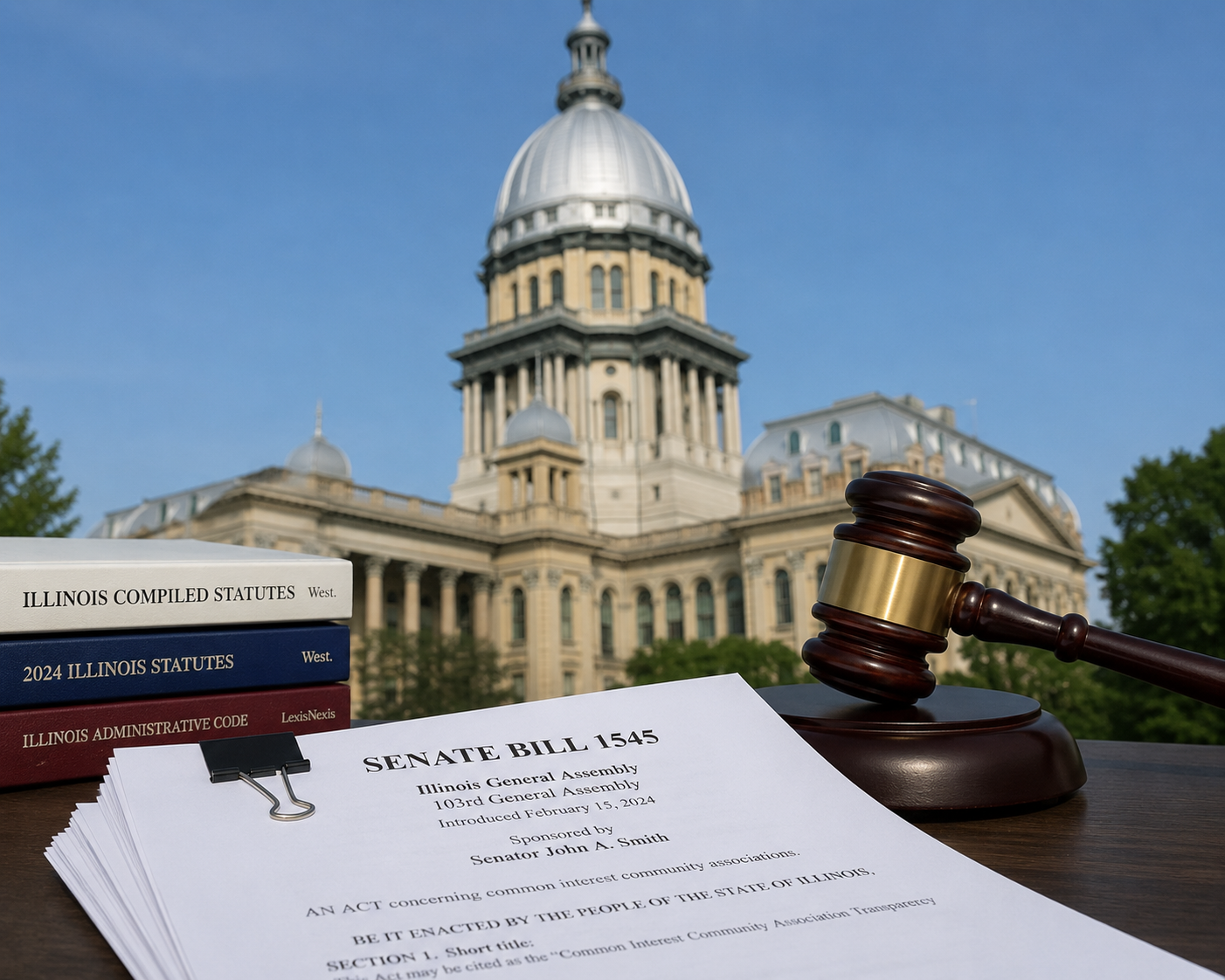
HB 2563 and its companion bill, SB 1703, would require Illinois condo associations to commission a reserve study at least once every five years. The pending legislation mirrors requirements already in place in states like California, Nevada, and Washington. For an overview of reserve study requirements across all 50 states, boards can compare how Illinois stacks up against other jurisdictions.
Right now, most Illinois boards have no legal obligation to study their long-term capital needs. The risk most boards overlook is that deferred maintenance doesn't disappear just because you didn't plan for it.
Illinois Condominium Property Act reserve requirements and annual budget disclosure rules
The Illinois Condominium Property Act (765 ILCS 605) requires condominium associations to maintain reserve funds, but it doesn't require a formal reserve study.
Under 765 ILCS 605/18(a)(9), condo boards must include a statement of the association's current reserve balance in the annual budget. Boards must also disclose whether reserves are funded in accordance with a plan based on a reserve study. If no study exists, the board must state that in the annual budget disclosure. The Illinois General Assembly maintains the full text of all state statutes governing community associations.
Many boards assume disclosure equals planning. You can disclose that you have no reserve study and still be in compliance with 765 ILCS 605, but compliance with the law doesn't protect you from a $200,000 roof replacement with no money in the bank. The disclosure requirement exists because the legislature recognized that homeowners deserve to know whether their board has planned for major repairs or is flying blind.
The Illinois Condominium Property Act also requires boards to act with fiduciary duty to unit owners. That includes making financially responsible decisions about long-term maintenance.
Common Interest Community Association Act (CICAA) reserve requirements
The Common Interest Community Association Act (765 ILCS 160) governs planned communities and HOAs that aren't condominiums. Like the Illinois Condominium Property Act, CICAA requires reserve fund disclosures but doesn't mandate reserve studies.
Under 765 ILCS 160/1-20(a), HOA boards must prepare an annual budget that includes a summary of reserve funds. The law requires boards to disclose the current reserve balance and any planned contributions for the year.
CICAA also imposes a fiduciary duty on board members. That means Illinois boards must act in the community's best financial interest, even when the law doesn't explicitly require a reserve study. Understanding what a reserve study actually includes helps boards fulfill this fiduciary responsibility even when not legally mandated.
What a reserve study is and its core components (physical analysis and financial analysis)
A reserve study is a financial planning tool that projects the costs and timing of major repairs and replacements for common-area components. It answers two questions: what will break and when you will need money to fix it.
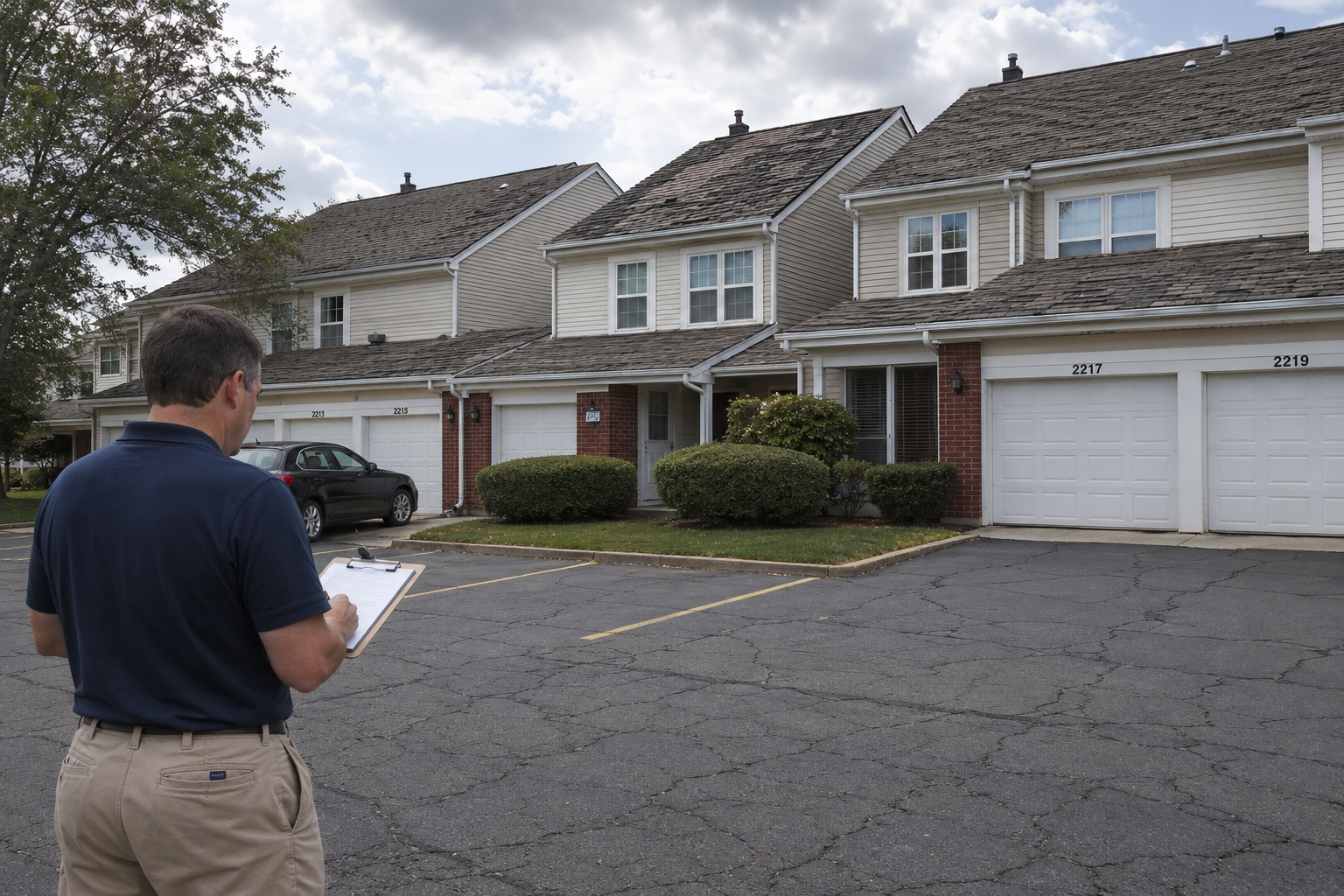
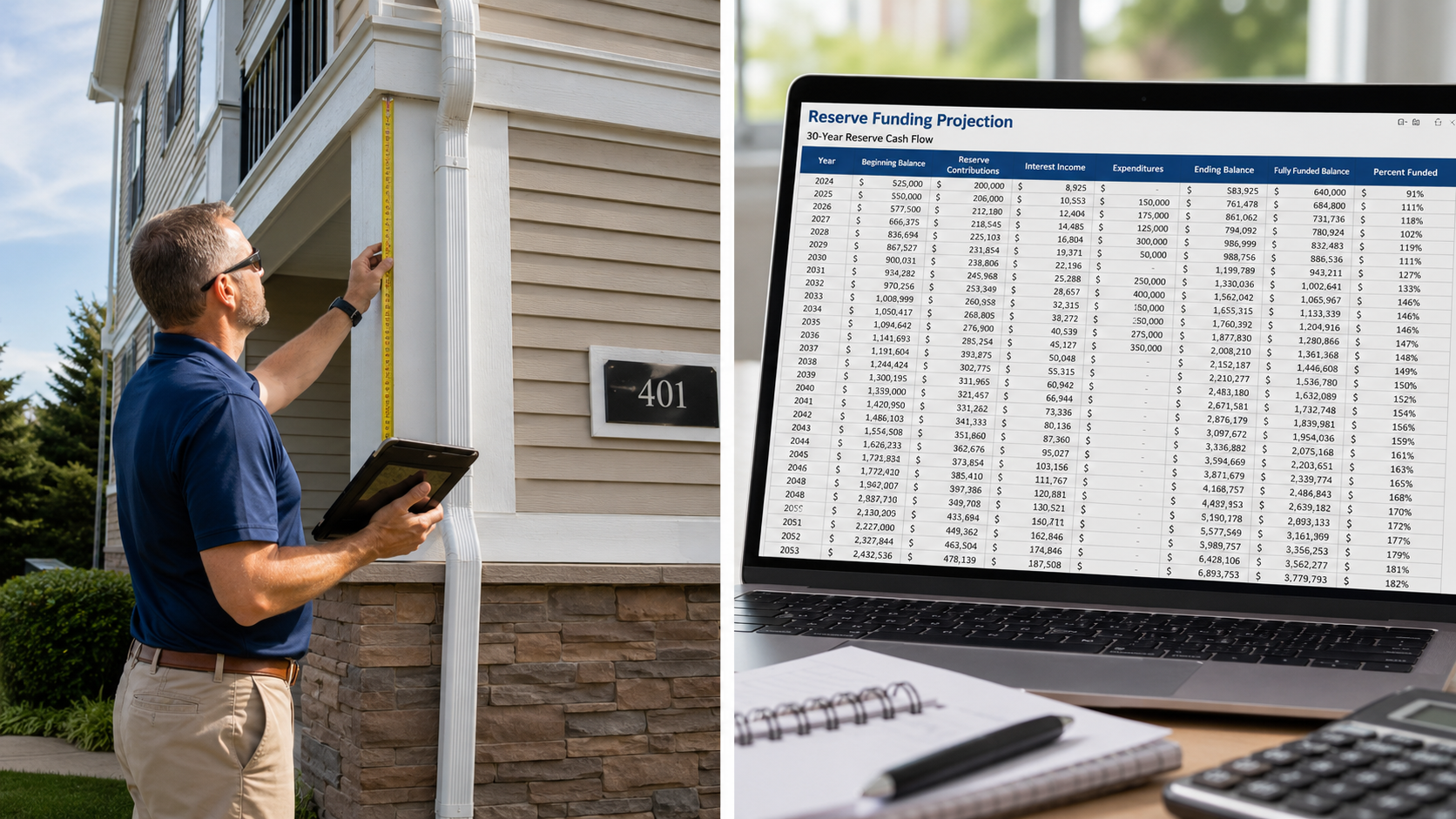
Every reserve study includes two core components: physical analysis and financial analysis. The physical analysis is an inventory and inspection of major components, such as roofs, siding, pavement, pools, and mechanical systems. A reserve specialist evaluates the condition of each asset, estimates its remaining useful life, and projects replacement costs.
The financial analysis uses the physical data to build a funding plan. It calculates how much the association should contribute to reserves each year to cover future expenses. The financial analysis also shows the association's percent funded, which measures whether current reserves are adequate compared to projected needs.
Three types of reserve studies: Full, Update with Site Visit, and Update without Site Visit
Reserve studies come in three types: Full, Update with Site Visit, and Update without Site Visit. Each serves a different purpose depending on how much time has passed since the last study.
A full reserve study includes a complete on-site inspection and financial analysis. The reserve specialist visits the property, evaluates every major component, and builds a funding plan from scratch. Illinois boards should commission a full reserve study when no prior study exists or when the last study is more than ten years old.
An Update with a site visit refreshes an existing reserve study with a new site inspection. The specialist reviews changes in component condition, updates cost estimates, and adjusts the funding plan. This type works well when a reserve study is three to five years old. Boards looking for a step-by-step guide to conducting a reserve study can find detailed instructions on selecting the right type and working with reserve specialists.
An Update without Site Visit revises the financial analysis using updated cost data and inflation adjustments, but doesn't include a new inspection. This is the most affordable option and works when the physical analysis is still accurate, but costs have changed.
Recommended reserve funding levels and percent funded benchmarks
Reserve funding levels vary by community, but most reserve specialists recommend maintaining at least 70% funded status. Percent funded measures the ratio of current reserves to fully funded reserves.
Most Illinois boards operate between 30% and 70% funded. The problem is that underfunded reserves force boards to choose between special assessments and deferred maintenance when major components fail. The Community Associations Institute provides additional guidance on reserve funding best practices for associations nationwide.
If your community is less than 50% funded, you're one major repair away from a special assessment. Boards that maintain 70% or higher funded status can usually absorb unexpected expenses without emergency funding because the reserve balance provides a cushion against cost overruns and timing surprises.
The best reserve funding strategy is consistent annual contributions based on a reserve study. Boards that fund reserves sporadically or skip contributions in lean years end up with underfunded reserves and angry homeowners when assessments come due. Strategies for managing reserve funds effectively can help boards maintain adequate funding levels year after year.
How often Illinois associations should update reserve studies (best practice vs. legal requirement)
Illinois law doesn't require associations to update reserve study reports on any schedule. Best practice is different.
Most reserve specialists recommend updating a reserve study every three to five years. That timeline keeps cost estimates up to date and accounts for changes in component condition. A reserve study completed in 2018, using 2018 construction costs, won't reflect 2024 pricing.
Illinois boards should commission a full reserve study at least once every ten years and an Update with Site Visit or Update without Site Visit every three to five years between full studies. Regular updates are essential to avoid unexpected special assessments that can strain homeowners' budgets and damage community relationships.
The cost of updating a reserve study is small compared to the cost of getting caught without funding. Most Illinois boards spend $2,000 to $5,000 on an update. A single emergency special assessment can cost homeowners ten times that amount.
Case study: Illinois board transitions from spreadsheet reserve tracking to automated compliance monitoring
A 120-unit condo association in suburban Chicago had been tracking reserves in a spreadsheet for over a decade. The treasurer updated the spreadsheet annually based on rough estimates of future expenses. No formal reserve study existed.
When the board faced a $180,000 roof replacement, they realized their reserves were underfunded by more than $100,000. The board commissioned a full reserve study and discovered that the fund was only 35% funded. Special assessments were unavoidable.
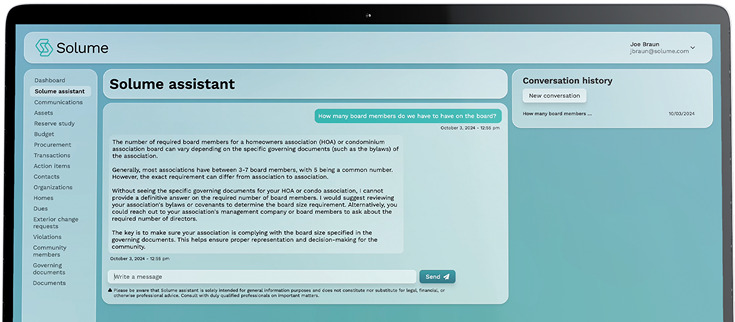
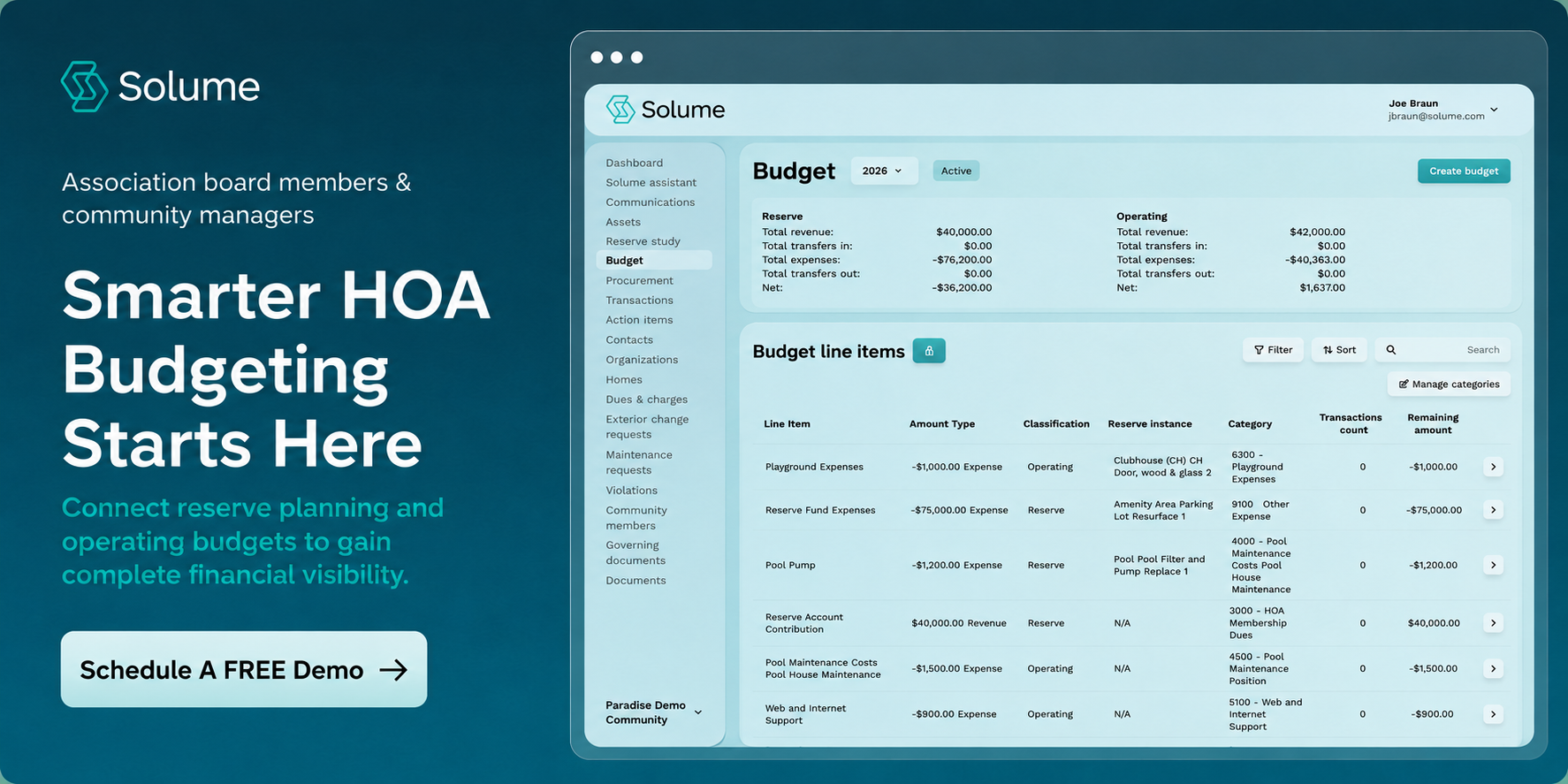
After the assessment, the board decided to improve reserve planning. They adopted automated reserve tools through Solume to track reserve funding in real time and monitor compliance with their new funding plan. The system integrated the reserve study data and automatically updated projections as contributions were made. These software tools, designed for self-managed communities made it easier for volunteer board members to maintain oversight without extensive financial expertise.
Within three years, the community increased its percent funded from 35% to 62%. Board members could see reserve balances and upcoming expenses in a single dashboard instead of digging through spreadsheets.
The board now updates its reserve study every three years and uses automated tools to stay on track between updates. Special assessments haven't been necessary since the initial roof project, and property values in the community have remained stable.
Illinois HOA Reserve Study Requirements in Illinois may not be mandatory today, but boards that treat reserve planning as optional pay for it later. The difference between a well-funded community and one lurching from crisis to crisis is usually just a reserve study and the discipline to follow it.
If your board wants a clearer way to manage finances, reserve planning, and long-term compliance, you can explore your options with the Solume team. They work with Illinois boards to simplify reserve tracking and keep communities financially stable without adding hours to your volunteer workload.
Frequently Asked Questions
Does Illinois law require HOAs to conduct reserve studies?
No, Illinois does not currently require HOAs or condominium associations to conduct reserve studies. Pending legislation (HB 2563) could change that if passed.
What are the minimum reserve fund requirements for HOAs in Illinois?
Illinois law requires associations to maintain reserve funds and disclose balances in the annual budget, but doesn't set minimum funding levels. Most reserve specialists recommend maintaining at least a 70% funded status.
How often should Illinois HOAs update their reserve studies?
Illinois boards should update reserve study reports every three to five years. A full reserve study should be completed at least once every ten years.
Who should perform an HOA reserve study?
A qualified reserve specialist or credentialed reserve study provider should perform the study. Look for professionals with credentials from the Community Associations Institute or the Association of Professional Reserve Analysts.
Is spending money on a reserve study worth it if Illinois doesn't require one?
Yes, because the study prevents much higher costs from emergency repairs and special assessments. Boards that skip reserve planning often face financial crises when major components fail.
Can an Illinois HOA borrow from reserves if they plan to repay them?
Illinois law allows boards to borrow from reserves in some cases, but governing documents may restrict it. Boards should consult their attorney before borrowing from reserve funds.
What happens if our Illinois HOA skips a reserve study and something major breaks?
The board will likely need to levy a special assessment or take out a loan to cover the repair costs. Homeowners will pay more than they would have through planned reserve funding.
Does Solume help Illinois boards manage reserve study compliance?
Yes, Solume provides automated reserve tools that integrate reserve study data and track funding progress in real time. Boards can monitor compliance with their funding plan and access reserve reports through a single dashboard.