
A cracked parking structure. A burst main line. An insurance premium that doubled overnight. Any one of these can turn into a five-figure bill in your mailbox with 30 days to pay. That bill is usually an HOA special assessment, and most homeowners don't know it's coming until the board votes. This guide breaks down what a special assessment actually is, how boards calculate it, and how the rules differ from state to state. You'll also see your options, whether you're a homeowner staring at an invoice or a board member trying to levy one correctly.
Key Takeaways
- An HOA special assessment is a one-time charge added to regular dues when reserves and the operating budget fall short of a major or emergency cost.
- The charge is calculated by subtracting reserves and insurance from the project cost, then dividing the remaining gap among homeowners by ownership share or per unit.
- Homeowners can't simply refuse to pay without risking liens and foreclosure, but they can challenge assessments that skipped required notice, quorum, or membership votes.
- Most states set no dollar cap, so the real limits come from your CC&Rs; often a mandatory homeowner vote above a percentage-of-budget threshold, as with California's 5% Davis-Stirling rule.
- Consistent reserve funding is the most reliable way to reduce the frequency and size of future special assessments.
What is an HOA special assessment (definition and how it differs from regular dues)
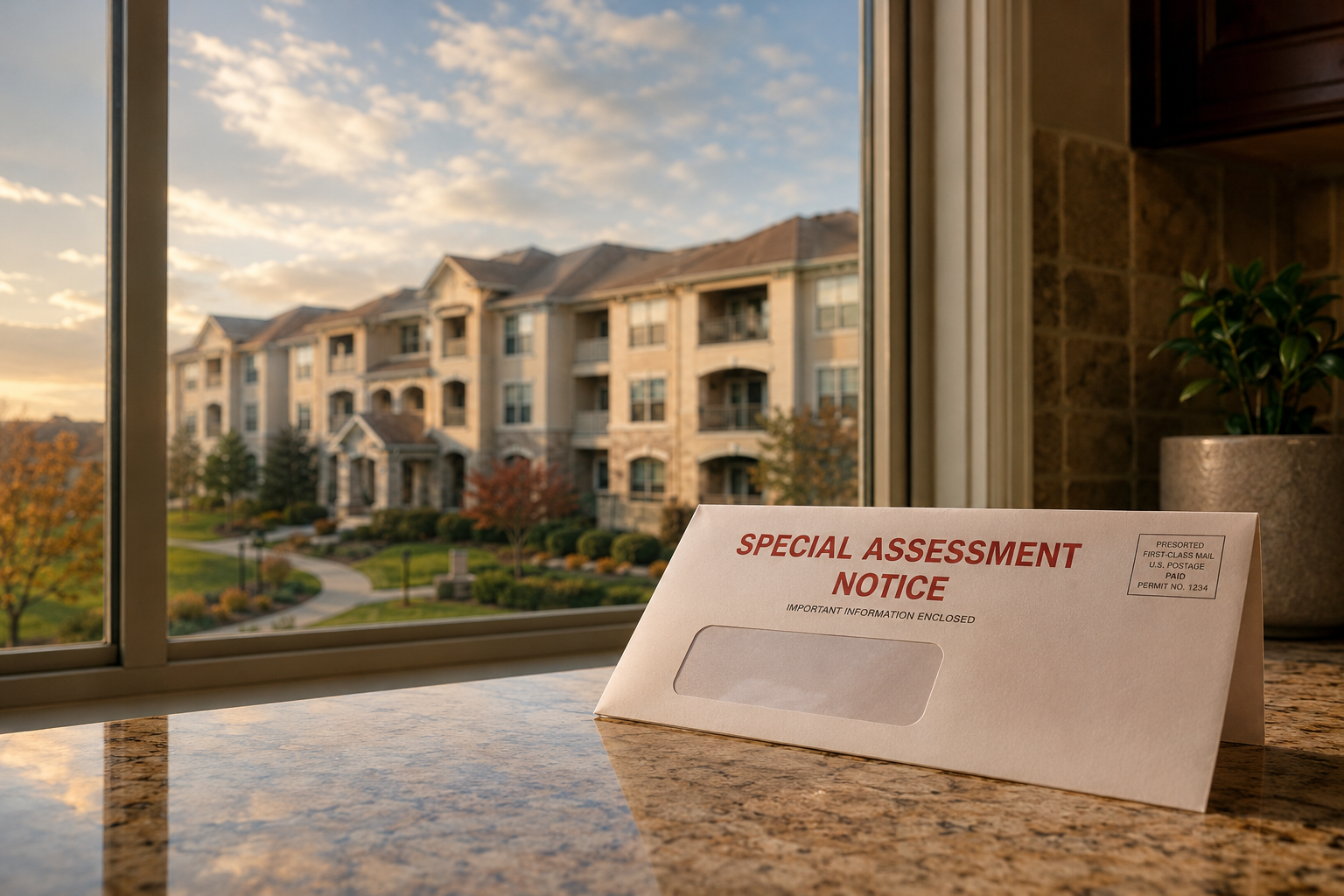
So what is a special assessment, really? It's a charge your homeowners association levies on top of your normal HOA dues to cover a specific cost the regular budget can't absorb. Regular assessments (your monthly or quarterly dues) fund predictable operations: landscaping, insurance, management, and reserve contributions. A special assessment is tied to one event or project, not ongoing operations.
Here's the practical distinction. Regular assessments are budgeted a year ahead and spread evenly. A special assessment shows up when something big and unplanned lands: a failed elevator, a lawsuit, or a reserve fund short on a roof replacement. The Community Associations Institute, the main trade body for HOA and condo governance, publishes plain-language explainers on how these charges fit into association finance in its Community Associations Institute resource library.
Many owners assume a special assessment means the board mismanaged money. Sometimes true, often not. In reality, a well-run condominium association can still face one after a storm or a sudden code change. The label describes the funding mechanism, not blame.
Why HOAs impose special assessments (major repairs, emergencies, budget shortfalls, underfunded reserves)
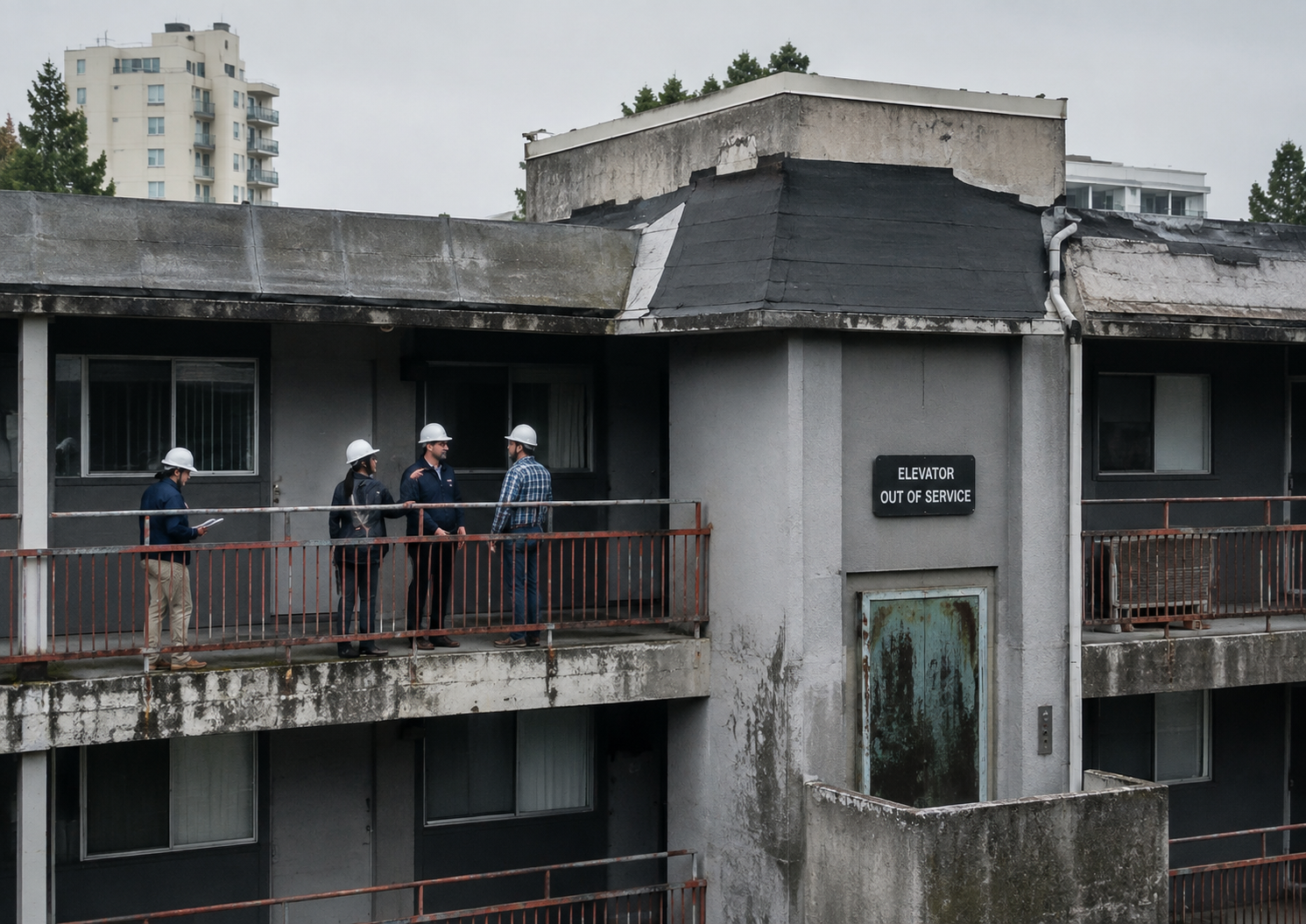
Special assessments come from four recurring situations. First, major repairs that exceed what's saved: roofs, elevators, private roads, plumbing risers. Second, an emergency assessment for a fire, flood, or structural failure that can't wait for the next budget cycle. Third, a budget shortfall mid-year when costs outrun projections. Fourth, and most often, underfunded reserve funds that leave no cushion when a budget shortfall becomes a crisis.
The root cause is almost always deferred maintenance meeting underfunding. When boards skip reserve contributions to keep dues low, the money isn't there when a big-ticket item fails, because a reserve fund is the only pool set aside specifically for these predictable but infrequent replacements. The 2021 Surfside condominium collapse near Miami killed 98 people. It's an extreme warning: engineers flagged structural damage years earlier, and the association struggled to fund repairs. You can read the National Institute of Standards and Technology's ongoing investigation summary through the NIST Champlain Towers South investigation page.
Consider a 60-unit association that froze dues for a decade to stay popular. When the roof and two elevators failed in the same year, the board had almost nothing in reserves. It issued a $9,000-per-unit emergency assessment. The bill wasn't the disaster. The years of underfunding were.
How special assessments are calculated and divided among homeowners
Calculating special assessments is less mysterious than it sounds. The board starts with the total project cost, subtracts whatever is available in reserve funds, then subtracts any insurance payout for covered damage. What's left is the funding gap, and the board divides it among homeowners.
The division method comes straight from your governing documents. Two approaches dominate. An equal per-unit split charges every home the same dollar amount. A proportional split allocates the gap by ownership percentage or square footage, so larger units pay more. Most CC&Rs specify one method, and the board can't improvise a different one because it feels fairer. The allocation method is a contractual term binding on every owner, so changing it usually requires amending the governing documents, not a single board vote.
A quick example. Say a capital improvement assessment for repaving costs $500,000, reserves cover $150,000, and there's no insurance. The $350,000 gap across 100 equal units is $3,500 per home. Switch to proportional allocation, and a penthouse owner might pay $6,000 while a studio owner pays $1,800.
Boards typically offer installment payments on larger assessments. Spreading the charge over months or a year keeps homeowners from getting hit with a single lump sum they can't cover.
State-specific special assessment rules and limits (caps by state)
Here's the hard truth about HOA special assessment limits: most states set no dollar cap. The real special assessment cap usually lives in your CC&Rs, not in a statute. Rules on special assessments vary widely by state. Always confirm the current requirements with your state's HOA or condominium statute and, for interpretation, your association's attorney.
A few states do add structure. A California HOA special assessment is governed by the Davis-Stirling Act. It generally requires a membership vote before a board levies special assessments totaling more than 5% of the association's budgeted gross expenses in a fiscal year, a rule set out in California Civil Code Section 5605. That 5% threshold is the closest thing California has to a special assessment cap, and it shapes the assessment approval process there. A Florida HOA special assessment must follow strict notice requirements, and Florida Statute 718.112 on assessments lays out the notice and meeting rules condo associations must follow. Since the post-Surfside reforms, condo associations face mandatory reserve studies and Structural Integrity Reserve Studies that reduce how often assessments are needed.
Comparing special assessment by state quickly shows the pattern: statutes mostly govern process (notice, quorum, voting) rather than a hard number. So when you research special assessment by state, read the procedure rules as carefully as any cap. It's also worth confirming your state's reserve study requirements, since those obligations increasingly drive how and when associations must fund major repairs.

What happens if you don't pay a special assessment (fines, liens, collections)
Failure to pay a special assessment doesn't make it disappear. It compounds. The first consequence is usually late fees and interest, which stack month over month per your governing documents. Ignore it longer, and the escalation gets serious.
The association's most powerful tool is the HOA lien. In most states, an unpaid assessment automatically attaches as a lien against your property. The homeowners association can eventually move to foreclose on that lien, even for a debt that started at a few thousand dollars. That's the part owners underestimate: failure to pay special assessment charges can, in the worst case, cost you the home.
Before foreclosure, expect other pressure. Boards often route delinquent accounts to a collection agency. Many CC&Rs also allow suspension of privileges, losing pool, gym, or clubhouse access, and sometimes voting rights, until you're current.
If the amount is a genuine hardship, don't go silent. Ask the board about a hardship plan or a longer installment schedule. Boards would rather collect over time than pay legal fees to foreclose. A documented payment arrangement almost always beats a lien on your record.
How homeowners can dispute or challenge an improper assessment
You can't dispute a special assessment simply because you think it's too expensive. You can challenge one that broke the rules. The strongest grounds are procedural, and boards get these wrong more often than you'd expect.
Start by pulling your governing documents and your state statute side by side, then check three things. Did the board satisfy the special assessment notice requirements (correct number of days and delivery method)? Did the meeting reach quorum? And if the amount crossed the threshold that triggers a community vote, did the board actually hold a membership vote? Skipping any required step in the assessment approval process and the levy may be voidable.
Here's why this matters. Courts and arbitrators generally won't second-guess a board's business judgment on whether a repair was necessary. They will enforce the procedures the law and CC&Rs require. Process is where challenges win.
If you find a defect, raise it in writing to the board of directors before the deadline. Request the meeting minutes and vote records, then escalate to mediation or your state's HOA dispute process if needed. To successfully dispute a special assessment, document everything and act fast.

How strong reserve planning prevents special assessments
Most boards assume special assessments are bad luck. In reality, they're usually a symptom of weak long-term capital planning. The single most reliable way to shrink both the frequency and size of future assessments is boring, consistent reserve funding.
It works because a funded reserve absorbs the shock. When the roof reaches end of life, a fully funded reserve pays for it, and no one gets an invoice. When reserve funds are thin, that same predictable expense becomes a special assessment, or even a capital improvement assessment nobody planned for. A current reserve study is the foundation. It inventories every major component, estimates remaining life and replacement cost, and tells the board exactly how much to set aside each year. Without a reserve study, boards guess, and guessing is how deferred maintenance accumulates. If you're new to building a healthy reserve fund, that annual set-aside is where the discipline starts.
Financial transparency matters too. When homeowners can see the reserve study, the funding percentage, and where HOA dues go, they're far more likely to support adequate contributions instead of demanding artificially low dues. That visibility is exactly the gap many self-managed boards struggle with, since tracking component schedules and funding projections by hand often falls behind. Solume's automated reserve study tools help a self-managed HOA keep those schedules and projections current, so long-term capital planning stops being a spreadsheet nobody updates. Reserve planning isn't glamorous, but it's the closest thing to insurance against surprise assessments, and it addresses one of the biggest challenges self-managed HOAs face when they operate without a management company.
Practical checklist for boards levying a compliant special assessment
If your board has to levy one, doing it correctly protects both the community and the directors personally. Work through this order.
Confirm the need first. Get written vendor bids or an engineer's report so the amount is defensible, not a round-number guess. Check your governing documents and state statute for the exact assessment approval process, including whether the total triggers a mandatory community vote. Verify the special assessment notice requirements: how many days' notice, what the notice must contain, and how it must be delivered.
Then run the numbers with financial transparency. Show homeowners the project cost, the reserves and insurance applied, and how the remaining gap was divided. Offer installment payments and, where possible, a hardship plan so financial strain doesn't turn into delinquency and collections. It also helps to explain how HOA fees and assessments are treated for taxes, since owners often assume they can write off a charge they can't.
Finally, document everything: the meeting, quorum, the vote tally, and the mailed notices. That paper trail is exactly what defeats a challenge later. Boards that skip documentation lose disputes, even when the assessment itself was justified. A self-managed HOA especially benefits from a system that timestamps notices and votes, since compliance requirements don't relax just because there's no management company.

If your board wants a clearer way to manage reserve planning, dues collection, and the compliance requirements behind any special assessment, you can book a 15-minute call to see if Solume fits your community. It's a short, no-pressure conversation about whether a self-managed system can reduce the surprises that lead to special assessments in the first place.
Frequently Asked Questions
What exactly is an HOA special assessment?
It's a one-time charge added to regular dues when the operating budget and reserves can't cover a large expense, like a roof replacement, storm damage, or an insurance shortfall. Unlike recurring dues, it's tied to a specific project or emergency rather than routine operations.
How does an HOA calculate how much each homeowner owes?
The board totals the project cost, subtracts available reserves and any insurance payout to find the funding gap, then allocates that shortfall across homeowners, usually by ownership percentage or an equal per-unit split defined in the CC&Rs. So a $200,000 gap across 100 equal units means roughly $2,000 per home.
Can I refuse to pay a special assessment I think is unfair?
Generally no; if the assessment was properly approved, refusing to pay can trigger late fees, interest, a lien on your property, and even foreclosure. You can dispute it, but non-payment is not a safe strategy.
How do I actually fight a special assessment I believe was handled wrong?
Look for procedural defects: whether the board gave required notice, met quorum, and secured any homeowner vote your CC&Rs or state law mandate. If those steps were skipped, that's your strongest ground to challenge the assessment before a board or in court.
Is there a legal cap on how large a special assessment can be?
Very few states impose a hard dollar cap. Limits usually come from your own CC&Rs; many require a homeowner vote once an assessment exceeds a set percentage of the annual budget, and state statutes may add notice or approval requirements on top.
What are the special assessment rules in California and Texas?
In California, the Davis-Stirling Act generally requires a membership vote before levying assessments above 5% of the association's annual budget in a fiscal year. Texas has no statewide dollar cap, so limits and voting thresholds depend almost entirely on each community's governing documents.
Should I file a special assessment against my insurance?
If the assessment stems from a covered event like a storm or structural damage, a "loss assessment" endorsement on your homeowner's policy may reimburse your share. Check your policy limits first, since loss assessment coverage is often capped at a few thousand dollars.
If we fund our reserves well, can we avoid special assessments entirely?
Strong reserve planning dramatically lowers the odds, since most assessments come from underfunded reserves meeting an unexpected big-ticket repair. But truly unforeseen emergencies or litigation can still force one even in a well-funded community.