
Key Takeaways
- In Hawaii, reserve studies are a legal requirement for most condominium associations under Hawaii Revised Statutes Chapter 514B.
- Planned communities and HOAs in Hawaii are treated differently under state law, but still face the same financial and fiduciary risks.
- Hawaii’s climate accelerates deterioration, making reserve planning more critical than in many mainland states.
- A reserve study is not a one-time report. It is a long-term financial planning tool that must be reviewed and updated regularly.
- Solume helps boards and property managers manage reserve studies, track funding over time, and maintain compliance in one unified system.
Hawaii HOA reserve study requirements are often misunderstood, especially by board members moving from mainland states or serving on their first board. The most important point should be stated clearly at the outset.
In Hawaii, reserve studies are not optional for most condominium associations. They are required by law.
That legal reality immediately separates Hawaii from many other states. While planned communities and HOAs may not face the same statutory mandate, both Condo Associations and HOAs are still responsible for maintaining common elements, protecting property values, and planning responsibly for long-term expenses. This guide explains how Hawaii approaches reserve studies, what state law actually requires, and why reserve planning matters even when the statute does not explicitly apply.
As a community evolves, it becomes more complex, and many boards are also discovering that a static PDF reserve study is no longer enough. Reserve study software is increasingly necessary to track ongoing obligations, connect reserve planning to real maintenance decisions, and keep boards compliant year after year.
What Are Hawaii HOA Reserve Study Requirements?
Hawaii’s reserve study requirements are almost entirely governed by Hawaii Revised Statutes (HRS) Chapter 514B, which applies to condominium property (both self-managed and under property management). Planned communities and HOAs may technically fall outside of these statutes, but the financial principles stay the same.
Defining an HOA Reserve Study
An HOA Reserve Study is a long-term financial planning tool intended to identify major components of a community, estimate their remaining useful life, determine the estimated cost of repairing or replacing those components, and calculate the funding needed for future repairs and replacement. A Traditional Reserve Study typically includes a site inspection, reserve analysis, and a reserve funding plan that spans multiple fiscal years.
A Reserve Specialist or reserve study company evaluates three broad categories that affect long-term cost and risk:
Structural components include items that affect the physical safety and stability of buildings, such as foundations, load-bearing walls, roofs, and balconies. Common elements include shared assets like pools, elevators, parking areas, clubhouses, and shared utilities. Major systems include electrical systems, fire protection systems, plumbing network, irrigation, and mechanical equipment.
Together, these components form a roadmap for reserve planning and capital expenditures rather than a simple checklist.
Legal Requirements Under Hawaii Revised Statutes
Under HRS §514B-148 and §514B-149, condominium associations in Hawaii are required to maintain reserves and conduct a professional reserve study. The law requires associations to update their reserve study at least every three years and to review reserve funding annually as part of the budgeting process.
These requirements apply specifically to Condo Associations. Planned communities and HOAs may not be explicitly bound by the same statutes, but boards still carry fiduciary duties under state law, governing documents, and general principles of Real Estate management.
Legislative changes in Hawaii have strengthened the importance of reserve planning by highlighting transparency, adequate reserves, and financial stability. Boards that ignore reserve planning do so at significant risk.
Why Reserve Studies Are Crucial for Hawaii HOAs
Several factors make Hawaii unique, creating challenges that make reserve studies especially important, regardless of whether a community is legally required to conduct one. Geographic isolation drives up labor and material costs (lumber, for example), salt air accelerates corrosion of structural components, and constant exposure to sun, wind, and moisture shortens the estimated remaining useful life of major systems. In practical terms, this means capital expenditures arrive sooner, cost more, and leave far less room for error if boards are not planning ahead.
Protecting Property Values and Structural Integrity
Structural integrity is a central concern for Hawaii communities. Salt air, humidity, heavy rainfall, and constant sun exposure accelerate wear and tear on structural components. Roof replacement, corrosion of electrical systems, and deterioration of concrete and steel occur faster in coastal environments.
A structural integrity reserve study helps boards anticipate major repairs before they become emergencies. Deferred maintenance expense often grows quietly until costs spike, putting both property values and resident safety at risk.
Financial Health and Avoiding Special Assessments
Search anywhere online and you’ll hear people complaining about HOAs. Often, this is because of special assessments. Special assessments are one of the most common points of conflict in homeowners associations. Underfunded reserves force boards to levy sudden assessments that strain homeowners and tick people off.
Foresight and strong reserve planning support financial health by aligning reserve contributions with the annual budget and spreading costs across each fiscal year. Adequate reserves reduce the likelihood of special assessments while improving long-term financial stability.
Basically, a community needs to know how much something is going to cost in 3, 5, or 15 years when the item is likely to need to be replaced. Once they know the future cost, they can (or at least should) plan for that cost over a several-year period - not a single special assessment.
Key Elementsof a Hawaii HOA Reserve Study
Inspections and Reserve Analysis
A professional reserve study begins with a site inspection and visual inspection of common area components. The Reserve Specialist evaluates structural components, estimates remaining useful life, and determines estimated replacement cost.
Reserve analysis then translates those findings into a reserve funding plan that supports capital expenditures over time. This transforms a reserve study from a static document into an active financial planning tool.
Important Reserve Items and Common Elements
In Hawaii, reserve items often include electrical systems, fire protection systems, pavement resurfacing, and building painting. Roof replacement is a major expense due to environmental exposure. Other common elements include elevators, pools, drainage systems, and shared utilities.
These major components represent long-term obligations that require disciplined reserve planning and ongoing reserve study updates.
Best Practices for HOA Reserve Planning in Hawaii
Working With Professionals
Hiring a licensed engineer or professional reserve study company improves accuracy and credibility. Property managers rely on reserve studies to coordinate maintenance plans, manage major repairs, and support Association Reserves responsibly.
Regular reserve study updates allow boards to adjust for rising costs, climate impacts, and evolving maintenance plans while continuing legal compliance.
Engaging HOA Boards and Members
Board members play a central role in reserve planning. Candid communication helps homeowners associations understand why reserve contributions matter and how funds are used.
While some decisions may require a majority vote under governing documents, boards should seek legal advice to guarantee compliance with state law and internal requirements.
Reserve Study Software and Ongoing Compliance
A reserve study is only as effective as the system used to manage it. Many boards commission a professional reserve study and then struggle to track updates, funding changes, and completed projects.
This is where reserve study software becomes essential. Reserve study software allows boards and property managers to track reserve items, monitor funding levels, model future repairs, and maintain compliance over time.
Solume was built to support this exact need. As an all-in-one Condo and HOA management platform, Solume allows boards and property managers to manage reserve studies, track long-term funding scenarios, and connect reserve planning directly to maintenance and vendor work. Instead of juggling PDFs, spreadsheets, and emails, everything lives in one system.
Ensuring Long-Term Success for HOAs in Hawaii and Beyond
Hawaii’s legal framework makes one thing clear. Reserve planning is not optional for Condo Associations, and it is a practical necessity for HOAs.
Compared to states like California or New Jersey, Hawaii places a strong emphasis on proactive reserve planning and transparency. Boards that follow best practices protect property values, reduce financial shocks, and support long-term community stability.
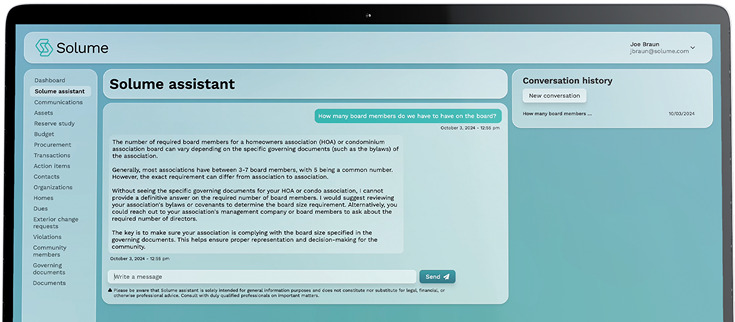
Solume was designed to help boards and property managers meet these challenges. It is the only all-in-one platform that combines reserve study management, ongoing reserve tracking, AI-driven compliance guidance, and vendor coordination.
If your board is already responsible for protecting the community’s future, is it unreasonable to spend 15 minutes seeing whether a platform could reduce risk, eliminate guesswork, and simplify compliance?
Solume helps Hawaii communities move from static reserve studies to living financial plans that evolve with the community.