
Most Delaware HOA boards assume reserve studies are optional. They're not. At least, not for condos. And even when the law doesn't require one, the financial risk of skipping it doesn't disappear. Boards that don't plan for major repairs end up scrambling when the roof fails or the parking lot cracks. That special assessment will come due whether you planned for it or not.
Delaware HOA reserve study requirements in Delaware split sharply between condos and planned communities. Condos face strict mandates under DUCIOA. Planned communities get vague guidance and minimal enforcement. But both face the same reality: deferred maintenance doesn't go away. It just gets more expensive.
This guide walks through Delaware HOA reserve study requirements, what boards actually need to do, and how to stay compliant without burning through your budget.
Key Takeaways
- Delaware condo associations must conduct reserve studies under DUCIOA, making reserve study requirements mandatory for condominiums. Planned communities are only required to make "reasonable contributions" to reserves, but no formal reserve study is mandated.
- Reserve studies identify future repair costs and help boards avoid special assessments. They're not just a compliance checkbox.
- Delaware boards must disclose reserve funding status to homeowners and buyers. Transparency isn't optional under state law.
- Coastal flooding and salt corrosion create unique reserve planning challenges in Delaware. Standard reserve studies often underestimate these risks.
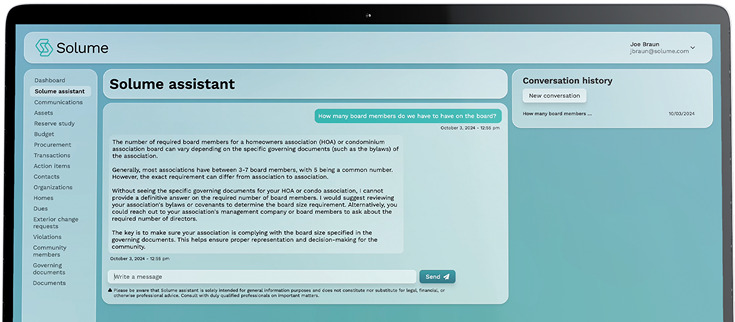
- Boards can conduct basic reserve planning internally using tools like Solume. You don't always need a $5,000 consultant to start.
Delaware Uniform Common Interest Ownership Act (DUCIOA) Overview and Scope
The Delaware Uniform Common Interest Ownership Act is Delaware's governing law for condominiums and planned communities. It replaced the older Delaware Unit Property Act in 1997 and applies to most communities created after that date. Some older communities still operate under the Delaware Unit Property Act, but most fall under DUCIOA.
DUCIOA sets baseline rules for financial management, reserve funding, and board responsibilities. The full text is available in Delaware Code Title 25, Chapter 81, which provides detailed guidance for association governance. But here's the catch: the law treats condos and planned communities differently. Condos get strict reserve study requirements. Planned communities get almost none.
That distinction creates confusion. Many Delaware HOA boards in planned communities assume they're entirely exempt from reserve planning. They're not. The law just doesn't force them to do it. The financial risk, though, is identical.
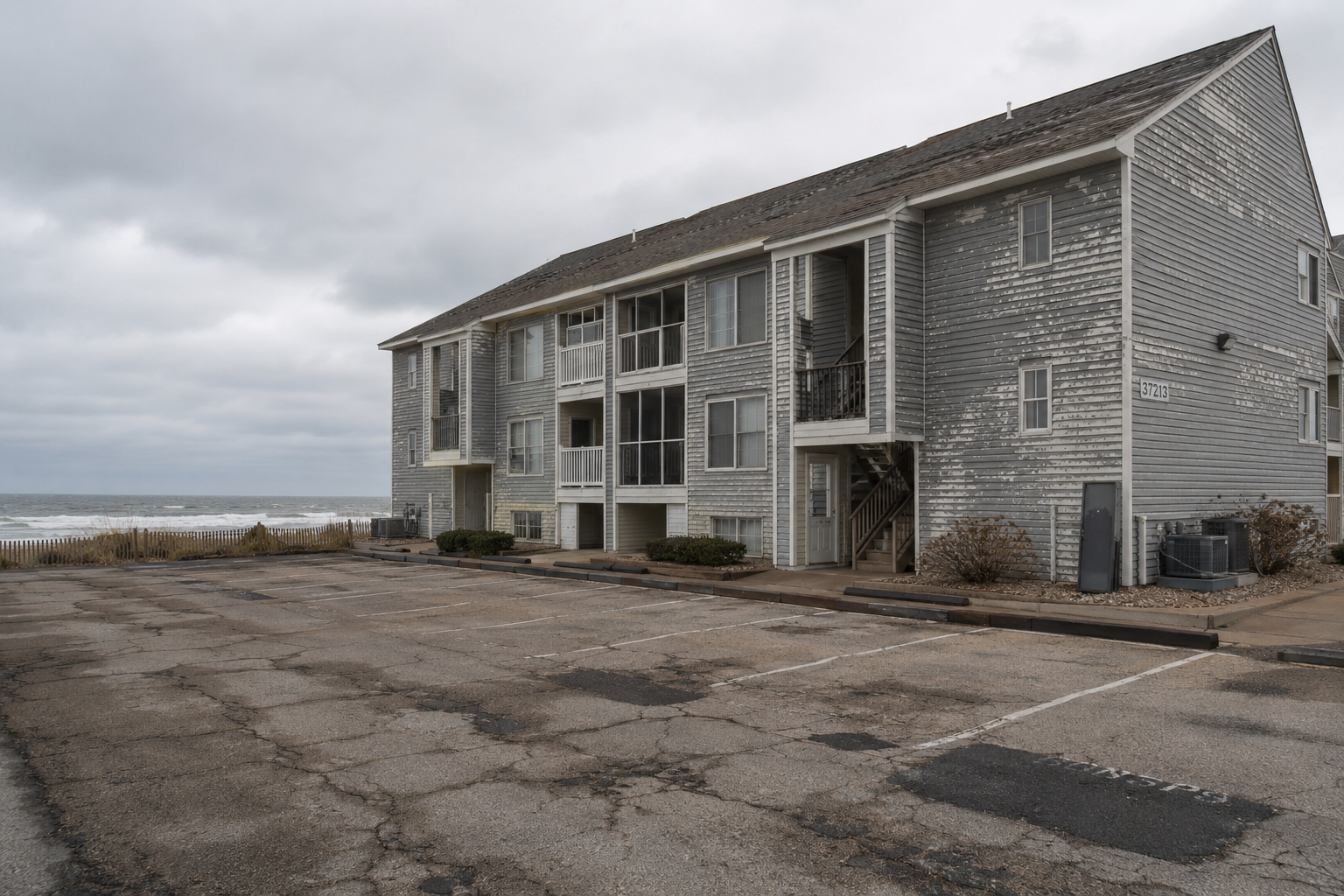
Delaware's coastal location adds another layer of complexity. Salt air accelerates corrosion of metal components, roofing materials degrade faster, and flooding risks increase replacement frequency. A board in Wilmington faces different challenges than one in Rehoboth Beach, but both need to plan for component replacement before failure forces an emergency special assessment.
Delaware Reserve Study Requirements for Condos vs. Planned Communities
Condos: Mandatory Reserve Studies
Delaware HOA reserve study requirements in Delaware mandate that condominium associations prepare and update a reserve study under DUCIOA. The law requires boards to:
- Conduct a reserve study that estimates the remaining useful life and replacement cost of major common elements.
- Update the reserve study at least every five years under the five-year rule.
- Use the reserve study to determine appropriate reserve funding levels.
The law doesn't specify the format or level of detail required. That leaves room for interpretation. But the mandate is clear: Delaware condo boards must conduct reserve studies and use them to guide reserve funding decisions. The requirement exists because legislators recognized that volunteer boards consistently underestimate future costs, leading to underfunded reserve funds and financial instability that harms both homeowners and the broader housing market.
Planned Communities: Vague Requirements
Planned communities in Delaware face a different standard. Delaware reserve laws require planned community associations to make "reasonable contributions" to reserve funds. But the law doesn't define "reasonable." And it doesn't require a formal reserve study.
Most Delaware HOA boards in planned communities interpret this as optional. In practice, many skip reserve studies entirely. That works fine until the roof fails or the pool deck cracks. Then, the boards scramble to pass a special assessment, and homeowners revolt.
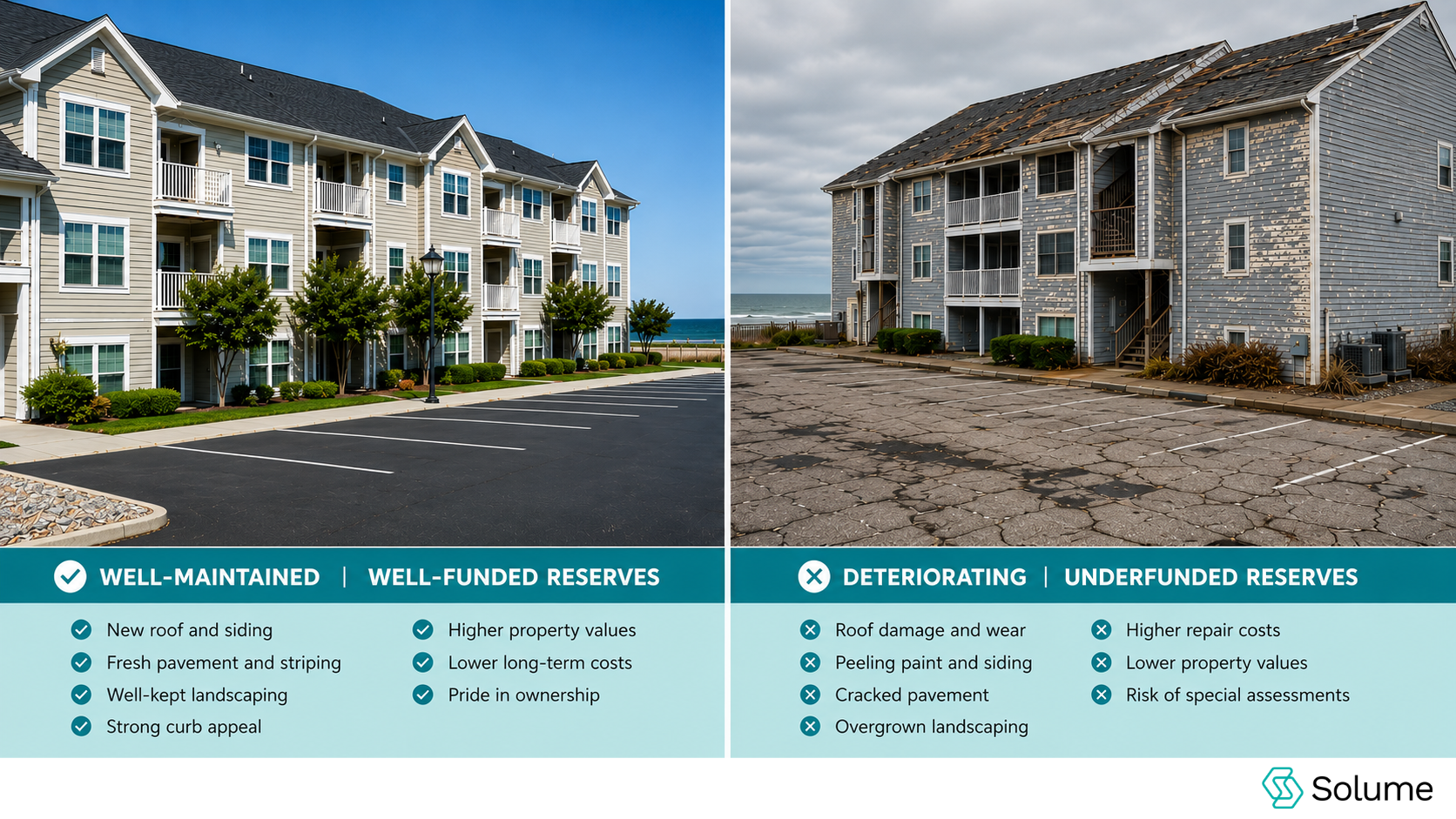
The law may not require a reserve study for planned communities, but the financial reality does. Without one, boards are guessing. And guessing wrong means special assessments. Consider a 50-unit planned community in Newark with aging infrastructure. The board maintains a $30,000 reserve balance, assuming it's adequate. When the parking lot needs $80,000 in repairs, that $50,000 gap becomes a special assessment of $1,000 per unit. Homeowners who budgeted for monthly dues suddenly face an unexpected bill, and the HOA board faces angry residents at the next meeting.
What a Reserve Study Includes for Delaware Communities
A reserve study has two parts: the physical analysis and the financial analysis.
Physical Analysis
The physical analysis identifies every major component the association is responsible for maintaining. That includes:
- Roofs
- Siding and exterior paint
- Parking lots and driveways
- Pools and clubhouses
- HVAC systems
- Elevators
- Fencing and gates
For each component, the reserve study estimates:
- Current condition
- Remaining useful life
- Replacement cost
This is where coastal flooding and salt corrosion matter. Delaware coastal communities experience accelerated wear on roofs, siding, and metal components. According to Delaware's housing stock data, many properties are located in coastal areas where environmental factors significantly impact building materials. A standard reserve study might estimate a 20-year roof life. In Rehoboth Beach or Lewes, that roof might fail in 15 years. If your reserve study doesn't account for that, your funding plan will be wrong.
The physical analysis also documents the current condition through visual inspection, sometimes including infrared scans of roofs or ground-penetrating radar of parking structures. A reserve analyst walks the property, photographs components, and notes visible deterioration. For a Delaware coastal condominium association, this means checking for rust on metal railings, inspecting wood decking for rot, and evaluating whether drainage systems adequately handle storm surge.
Financial Analysis
The financial analysis uses the physical data to build a funding plan. It calculates:
- How much money does the association need in reserves?
- How much to contribute each year.
- Whether the association is fully funded, partially funded, or underfunded.
A fully funded reserve means the association has enough cash on hand to cover its share of future repair costs. Most Delaware communities are not fully funded. They're playing catch-up.
The financial analysis also projects future special assessments. If the reserve funding plan falls short, the study will show when and how much. Understanding the difference between operating and reserve accounts is crucial for proper financial planning.
The funding plan typically uses one of three methods: full funding (maintaining 100% of deteriorated value), baseline funding (preventing reserve balance from dropping below zero), or threshold funding (maintaining a minimum balance). Full funding provides the most stability but requires higher annual contributions. Baseline funding reduces current dues but increases the risk of special assessments. Most Delaware boards target a reserve funding percentage of 70-80% over time, balancing adequate capital planning with affordable dues.
Disclosure Requirements for Reserve Studies to Homeowners and Buyers
Delaware reserve laws require boards to disclose reserve funding status to homeowners and buyers. This is one of the most overlooked compliance requirements.
Disclosure to Homeowners
DUCIOA requires boards to provide homeowners with an annual budget. That budget must include:
- The current balance of reserve funds.
- The amount budgeted for reserves in the coming year.
- A statement of whether the association is following the reserve study recommendations.
If your board isn't doing this, you're out of compliance. And homeowners have a right to know whether the association is underfunded. The disclosure requirement exists because reserve funding directly affects property values and the risk of future assessment. A homeowner evaluating whether to sell, refinance, or make improvements needs accurate information about the association's financial health.
Disclosure to Buyers
When a unit is sold, the seller must provide a resale certificate to the buyer. These disclosure requirements include:
- The association's current reserve balance.
- A summary of the reserve study, if one exists.
- Any planned or anticipated special assessments.
This is where underfunded reserves hurt property resale values. Buyers see a low reserve balance and either walk away or demand a price reduction. Lenders also scrutinize reserve funding. If reserves are too low, the lender may refuse to finance the purchase.
A Delaware condo in Wilmington recently lost a sale when the buyer's lender discovered the association maintained only 30% funding. The lender required a minimum of 50% for loan approval. The sale fell through, and the seller reduced the price by $15,000 to attract a cash buyer. That loss affected not just one owner but comparable sales throughout the community.
Common Misconceptions Delaware Boards Have About Reserve Study Requirements
"Our planned community doesn't need a reserve study because the law doesn't require it."
The law doesn't require it. But that doesn't mean you don't need one. Without a reserve study, you're guessing at future costs. Most boards guess low. That leads to special assessments. Learning about reserve study requirements across all 50 states can provide helpful context for best practices.
"Reserve studies are too expensive for small communities."
A full Level 1 reserve study from a consultant can cost $3,000 to $5,000. But boards can start with a simpler Level 3 reserve study or use software tools like Solume to build a basic reserve plan internally. You don't need a $5,000 consultant to start planning.
"We can just pass a special assessment if something breaks."
You can. But homeowners hate special assessments. And if your community has a pattern of special assessments, it will hurt property resale values and increase lender scrutiny. Proper planning is key to avoiding emergency special assessments that strain homeowner finances.
"We're fully funded because we have money in the reserve account."
Having money in reserves doesn't mean you're fully funded. Fully funded means you have enough to cover your share of future repair costs. Most Delaware communities have some reserves but are still underfunded.
"We can vote to waive the reserve study requirement."
Delaware condo boards cannot vote to waive the reserve study requirement. DUCIOA mandates it. Planned communities have more flexibility, but waiving reserve planning doesn't eliminate the financial risk.
How Delaware Boards Can Conduct Reserve Studies Without Hiring Expensive Consultants
Most volunteer board members assume they need to hire a reserve analyst to conduct a reserve study. That's not always true. Boards can start with a basic reserve plan and refine it over time.
Here's how:
Step 1: Inventory Major Components
Walk the property and list every major component the association is responsible for. Include roofs, siding, parking lots, pools, and HVAC systems. Document the installation date or age of each component. If records are incomplete, estimate based on building permits, architectural plans, or visible wear patterns.
Step 2: Estimate Remaining Useful Life
For each component, estimate how many years are left before it needs replacement. If you're not sure, ask a contractor for a rough estimate. For Delaware coastal properties, reduce standard useful life estimates by 15-25% to account for salt corrosion and moisture exposure.
Step 3: Estimate Replacement Cost
Get quotes or rough estimates for replacement costs. You don't need exact numbers. A ballpark estimate is enough to start. Contact three local contractors for each major component. Ask for rough estimates based on square footage or unit count. Document the quotes and average them for your reserve calculation.
Step 4: Calculate Annual Contributions
Add up the total replacement costs and divide by the number of years until each component needs to be replaced. That gives you a rough annual reserve contribution target. This approach aligns with the step-by-step reserve study process recommended by industry professionals.
Step 5: Use Software to Track and Update
Tools like Solume let boards track reserve components, update useful life estimates, and adjust funding plans over time. You don't need a consultant to maintain a reserve plan once you've built the initial framework.
This approach won't replace a full Level 1 reserve study. But it's better than guessing. And it gives boards a starting point for long-term planning. Success in managing reserve funds effectively requires consistent monitoring and updates.
A 30-unit planned community in Dover used this method to build its first reserve plan. The treasurer spent six hours inventorying components, getting contractor estimates, and building a spreadsheet. The board discovered they were underfunded by $120,000 and needed to increase annual reserve contributions by $4,000. They phased in the increase over three years, avoiding sticker shock while improving long-term stability. Two years later, when the roof needed emergency repairs, they had adequate reserves and avoided a special assessment.
Delaware HOA reserve study requirements in Delaware create clear obligations for condo boards and practical necessities for planned communities. The boards that plan ahead avoid special assessments, maintain property values, and sleep better at night. The ones that don't scramble when infrastructure fails.
If your board wants a clearer way to manage reserve planning, compliance, and long-term financial strategy, book a demo to see if Solume is a good fit for your community.
Frequently Asked Questions
What is the DUCIOA law in Delaware?
DUCIOA is the Delaware Uniform Common Interest Ownership Act, the state law governing condominiums and planned communities. It sets rules for reserve funding, board responsibilities, and financial management.
How often do Delaware condo associations need to update their reserve studies?
Reserve study frequency requirements under the DUCIOA mandate that Delaware condominium associations update their reserve studies at least every five years under the five-year rule.
What happens if a Delaware condo association skips its reserve study?
The association is out of compliance with DUCIOA, which can lead to legal liability, lender scrutiny, and difficulty selling units.
Why do associations need reserve studies in the first place?
Reserve studies identify future repair costs and help boards avoid special assessments by establishing adequate funding levels based on actual component lifecycles, thereby preventing costly deferred maintenance.
What if our Delaware HOA board doesn't have the budget for a full reserve study right now?
Start with a basic internal reserve plan using the five-step process outlined above. Solume can help boards build and track a reserve plan internally until budget allows for a professional study.
What percentage of reserves should a Delaware HOA maintain to be considered "fully funded"?
Fully funded means the association has 100% of the funds needed to cover its share of future repair costs, though most Delaware communities operate at a reserve funding percentage of 50-70%.
Is it worth doing a reserve study for a very small HOA with only 10-12 units?
Yes, because small communities face the same replacement costs as larger ones but have fewer owners to share the burden, making adequate reserve planning even more critical to avoid financially devastating special assessments.