A buyer's closing falls apart because the board can't locate the amended CC&Rs from 2014, and nobody knows whether the pool rules were ever officially ratified. This happens more than most boards admit. It almost always traces back to one problem: HOA boards lack a real system for the community archives they're supposed to maintain. This article breaks down what records to keep, how long to keep them, and how a self-managed HOA can run an archive without drowning in paperwork or paying a property management company to do it.
Key Takeaways
- A community archives HOA system is the board's permanent record-keeping structure, not just a one-time resale document packet from a third-party vendor.
- Retain governing documents like CC&Rs, bylaws, and articles of incorporation permanently, while financial records often follow state-mandated minimums, such as Florida's seven-year rule.
- Confusing the Community Archives resale vendor with an HOA's internal archive leaves many boards without a real retention system.
- Unenforced or undocumented covenants can lose legal standing over time, making archive accuracy a factor in whether old restrictions still hold up.
- Homeowners generally have a legal right to inspect specific HOA records, making a disorganized archive a direct transparency and compliance risk for the board.

What a community archive is for an HOA
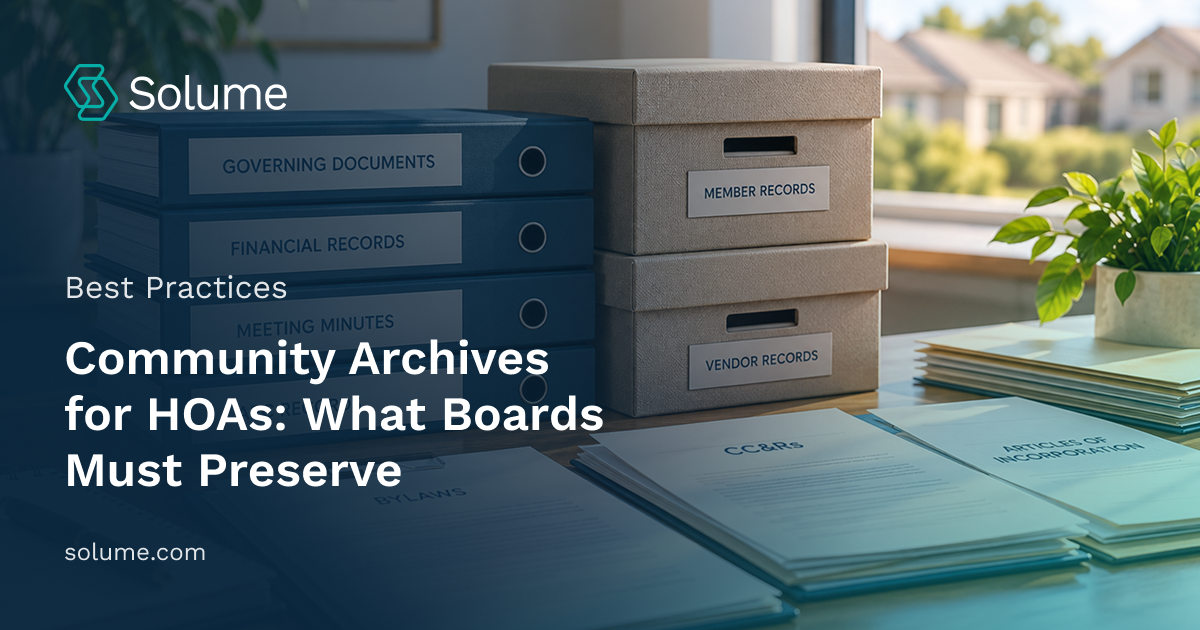
A community archive is the full set of records a board keeps over the life of the homeowners association, from formation documents to last month's meeting minutes. It is not a single packet a vendor assembles for a sale. Think of it as the association's institutional memory: governing documents, financial records, board decisions, and member records that prove what was decided, when, and under what authority. Many of the headaches boards run into here overlap with broader self-managed HOA challenges and solutions, since record-keeping is rarely an isolated problem.
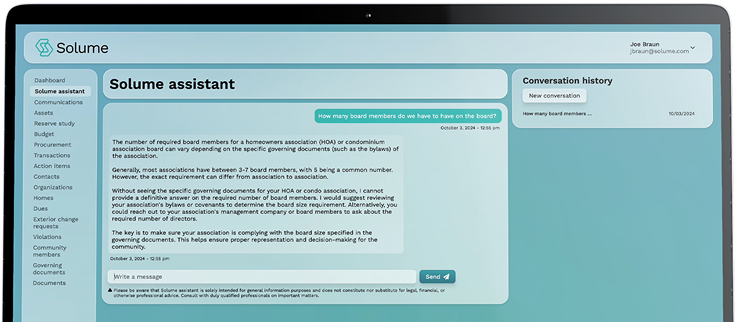
The confusion is understandable. Many boards hear "community archives" and picture the resale disclosure vendor some states use. That's a different thing. Your archive is internal, permanent, and owned by the association regardless of which outside service you hire. The distinction matters because an outside vendor only holds what you send them for a specific sale, so the board remains the only party responsible for the complete, ongoing record.
The Community Associations Institute keeps a useful overview of record-keeping obligations for boards. Their governance and legal resources are a solid starting point for understanding what a community association must maintain.
Why preserving HOA records matters (transparency and fiduciary duty)
Here's the hard truth: a missing document isn't just an inconvenience. It can breach the board's fiduciary duty. Board members hold the association's records in trust for every homeowner, and record-keeping is a core board responsibility that, when neglected, exposes the board to liability and erodes transparency.
This matters because of proof. If the board can't produce the vote that approved a special assessment, it can't defend that charge when a homeowner challenges it. If architectural review records vanish, the board loses its ability to enforce consistent standards. Records are the evidence behind every board decision, and boards that want a deeper breakdown of this risk should look at the common record-keeping failures boards don't see coming.
Most boards assume records only matter during disputes. In reality, they matter daily: for budgeting, compliance, and reserve planning. The IRS also expects associations filing Form 1120-H to keep supporting financial documentation. Good records protect both the board and the community.
Core governing documents boards must preserve
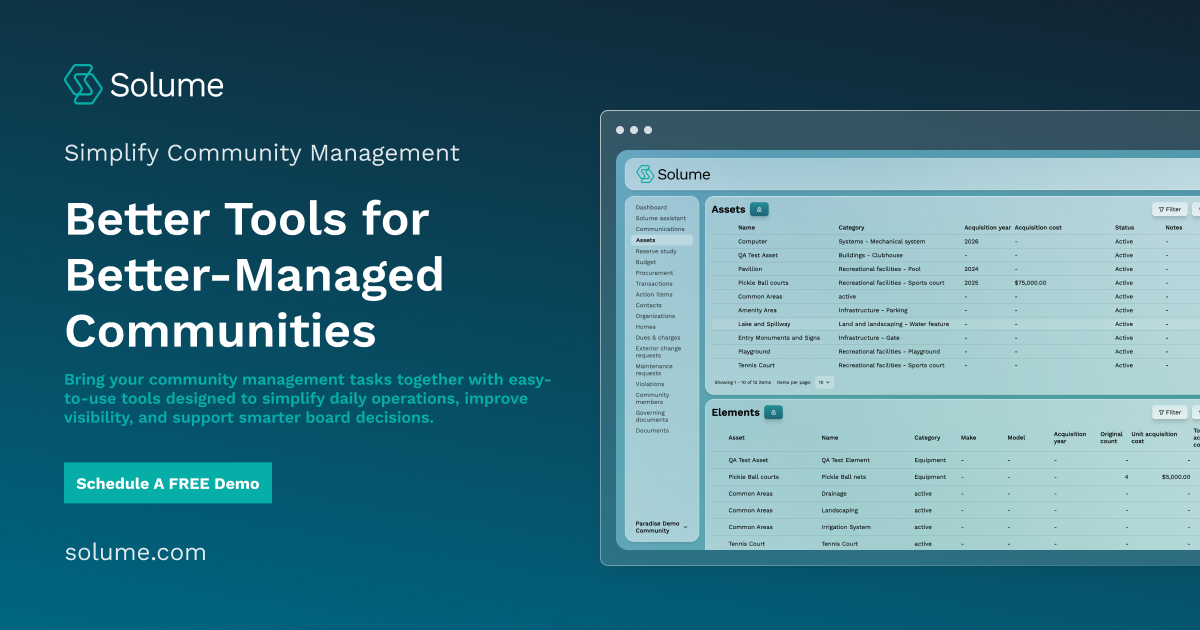
Governing documents are the foundation, and they are permanent. Keep the recorded declaration, your bylaws and CCRs, the articles of incorporation, and every amendment ever adopted. These define what the association can do, how it votes, and what homeowners agreed to when they bought in.
Keep the original recorded versions, not just working copies. A clean PDF someone retyped isn't the same as the version recorded with the county. The recorded version carries legal weight because it is the instrument filed in the public land records, which is what binds every current and future owner. Track amendments in order, with adoption dates, so current rules are never in question.
What many communities don't realize is that undocumented or inconsistently enforced covenants can lose standing over time. If you can't show a restriction was properly adopted and applied, you may not be able to enforce it. Your governing documents, and the HOA documents built around them, are only as strong as your ability to produce them.
Financial records and reserve study documentation to keep
State law gets specific about financial records. Bank statements, ledgers, invoices, tax filings, audits, and budgets typically carry minimum retention periods, often five to seven years depending on your state. Florida, for example, requires many financial records to be kept for at least seven years under its statutory framework for community associations. Boards that want a full breakdown of what belongs in this category can reference the complete guide to HOA accounting records.
Reserve study documentation deserves its own attention. Keep every reserve study, its underlying assumptions, and the funding decisions the board made in response. This is long-term planning evidence. It shows whether the board funded capital repairs responsibly or deferred maintenance into a future assessment.
The risk most boards overlook is losing the trail behind a reserve study. A single current study tells you the number. The archived history tells you whether the board has been consistently underfunding for a decade. Consider a community that raises dues sharply after years of flat budgets: without the archived studies, members have no way to see the deferred maintenance that forced the special assessment, and trust collapses right when the board needs it most. That history protects members and future boards alike. Reserve study documentation isn't optional paperwork; it's the record of financial responsibility over time.
Meeting minutes, resolutions, and board decision records
Meeting minutes are the official record of what the board did. Adopted minutes, resolutions, and the decisions behind assessments, rule changes, and contracts should live permanently in the archive. Minutes are frequently the single most requested item in a dispute, because they help demonstrate authority.
Write minutes to record decisions, not conversations. Capture motions, votes, and outcomes. Avoid transcribing debate, which can create liability without adding value. Once minutes are approved, that version is final and belongs in the archive.
The root cause of most "we can't prove it" problems is sloppy meeting minutes: a vote taken but never recorded, or minutes living in one board member's inbox that leave with them. Resolutions follow the same rule, and keeping them intact is a basic board responsibility. If the board adopted a policy, the written resolution is the proof it exists and binds future boards.
Resale certificates and resale package documents
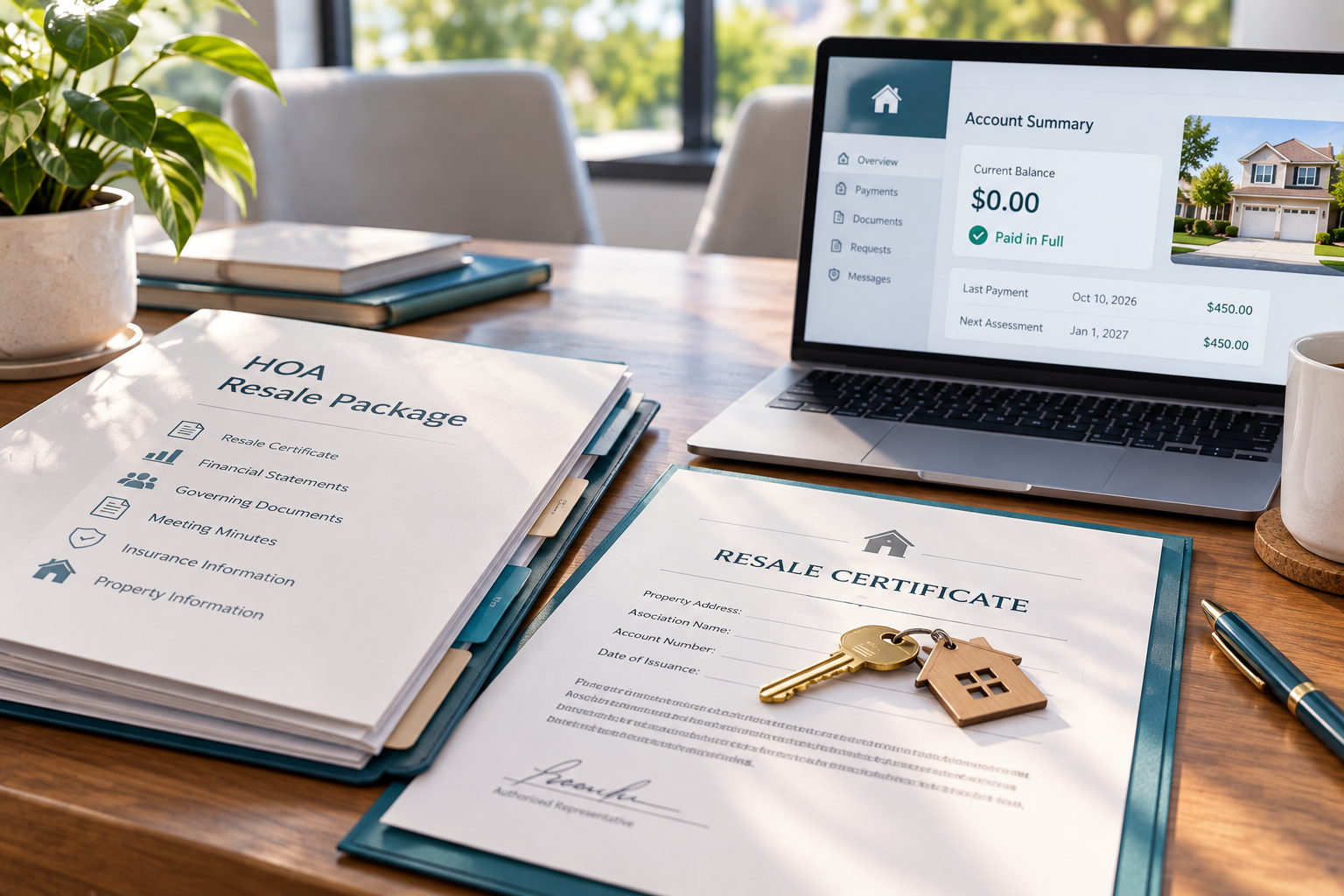
When a home sells, the association usually has to produce a resale package: governing documents, financial statements, the current budget, assessment information, and often a resale certificate confirming the owner's account status. Lenders frequently add a lender questionnaire on top. These are time-sensitive, and delays can stall or kill a closing.
Here's where the archive pays off directly. A board with a working archive assembles a resale package in minutes. Without one, a board scrambles for days, and a stalled closing can cost a seller real money and sour the community's reputation.
A common misconception: boards assume the resale certificate is a one-off document to generate when asked. In reality, the certificate pulls directly from your financial records and member records. If those are disorganized, the package will be inaccurate, and that can create liability for the association.
Architectural review (ARC) and member/home records
Architectural review records are easy to neglect and painful to lose. Keep every ARC application, approval, denial, and the reasoning behind each decision. These records let the board defend consistent enforcement when a homeowner argues their neighbor got different treatment.
Member records and home records belong in the archive too: ownership history, account balances, assessment history, violation notices, and correspondence tied to each unit. For a condo association or HOA, these drive both compliance and the resale certificate.
ARC records matter so much because of precedent. Picture a board that approved a specific fence style three times, then denied the fourth without documentation. That inconsistency becomes the homeowner's argument, and a board that can't show an even standard often ends up backing down or settling. Documented architectural review records let the board show it applied standards evenly. Vendor records, maintenance contracts, and bids round out the picture, giving the board a full history of who did what work and what the community paid.
How long to retain records and basic retention guidelines
A simple rule covers most situations: keep governing documents and adopted minutes permanently, follow your state's mandated minimum for financial records, and purge routine correspondence on a defined schedule. Record retention is a policy, not a guess.
Here's a practical baseline. Permanent: CC&Rs, bylaws, articles, amendments, resolutions, minutes, and reserve studies. Long-term, five to seven years or more: tax returns, audits, bank statements, invoices, and contracts. Shorter: duplicate drafts and informal emails, once the decision they informed is recorded elsewhere.
State law varies significantly, so boards should confirm their specific minimums by reviewing their state's HOA statute directly or consulting a qualified attorney licensed in their state. States like California, Texas, Colorado, and Florida each set their own rules, and general guidance like this article should not substitute for that review. A written retention policy, adopted by the board, keeps everyone consistent across turnover.
How self-managed boards organize and store archives
A shared drive with files named "scan_final_v2" is not an archive. It's a liability waiting for the next board transition. Self-managed boards need structure: a consistent folder hierarchy, clear naming, and defined ownership so records don't walk out the door when a volunteer steps down.
Start with centralized records in one place every current board member can reach, not scattered across personal laptops and email threads. Organize by category: governing documents, financial records, meeting minutes, ARC and member records, vendor records. Within each, order by date. The reason a flat, single folder eventually fails is that no incoming board member can reconstruct context from file names alone, so the structure has to carry the logic the departing board understood.
The most common failure in a self-managed HOA is single-person dependency. One treasurer holds everything, then moves away, and the archive effectively disappears. Build the system so no single board member is the archive. Document management is ultimately about continuity: the next board inherits a working record, not a mystery.

Using HOA software to centralize and secure community archives
Paper and shared drives work until they don't. Once a board diagnoses the real problem- single-person dependency, scattered files, and lost context at every transition- the fix is a system that holds records independently of any one volunteer. HOA management software solves the continuity problem by storing every document in one secure, role-based system that survives board turnover. Version control means the current CC&Rs are always the current ones, and audit trails show who changed what. Boards comparing options should look for software built to centralize and store HOA records rather than tools designed around a single use case.
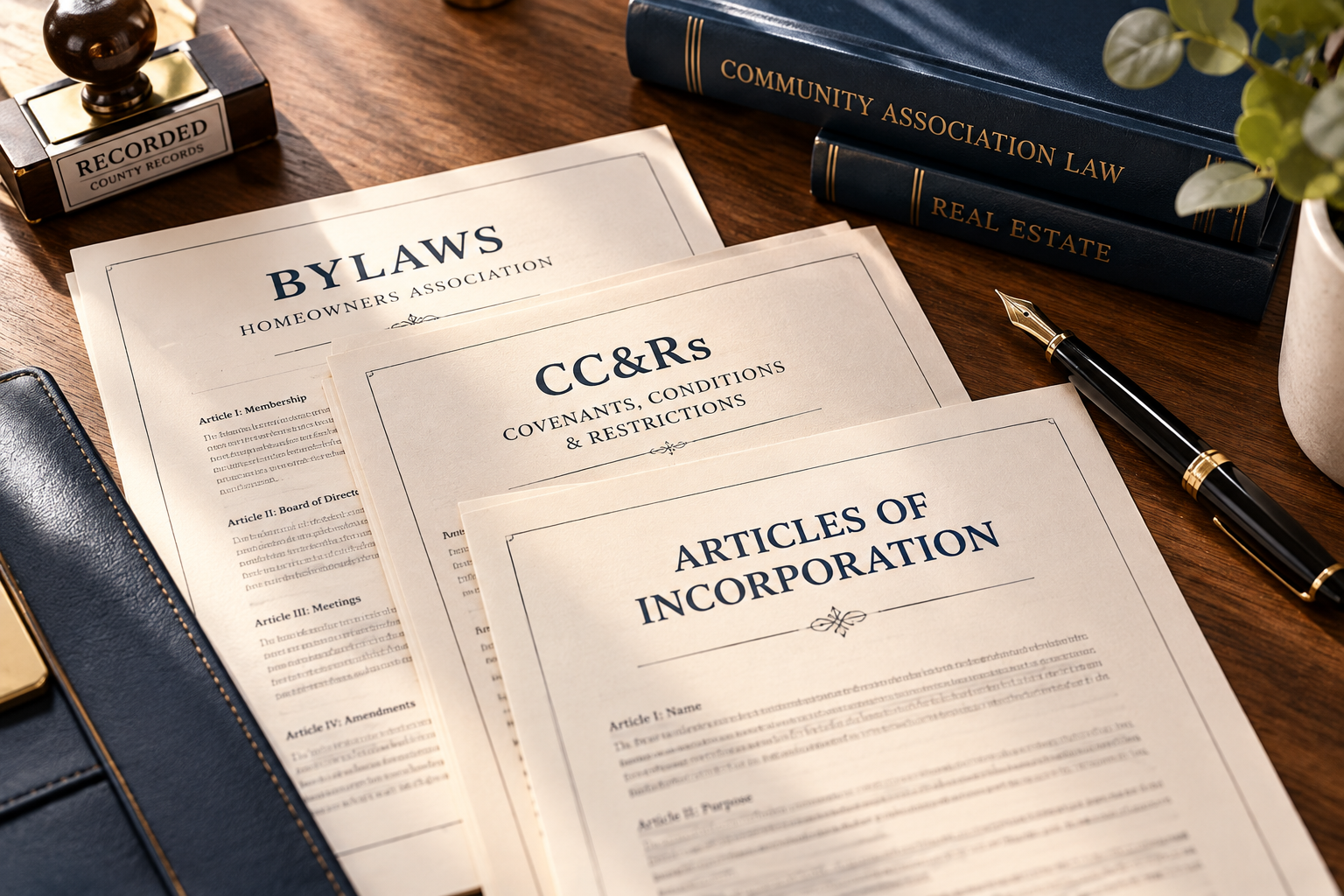
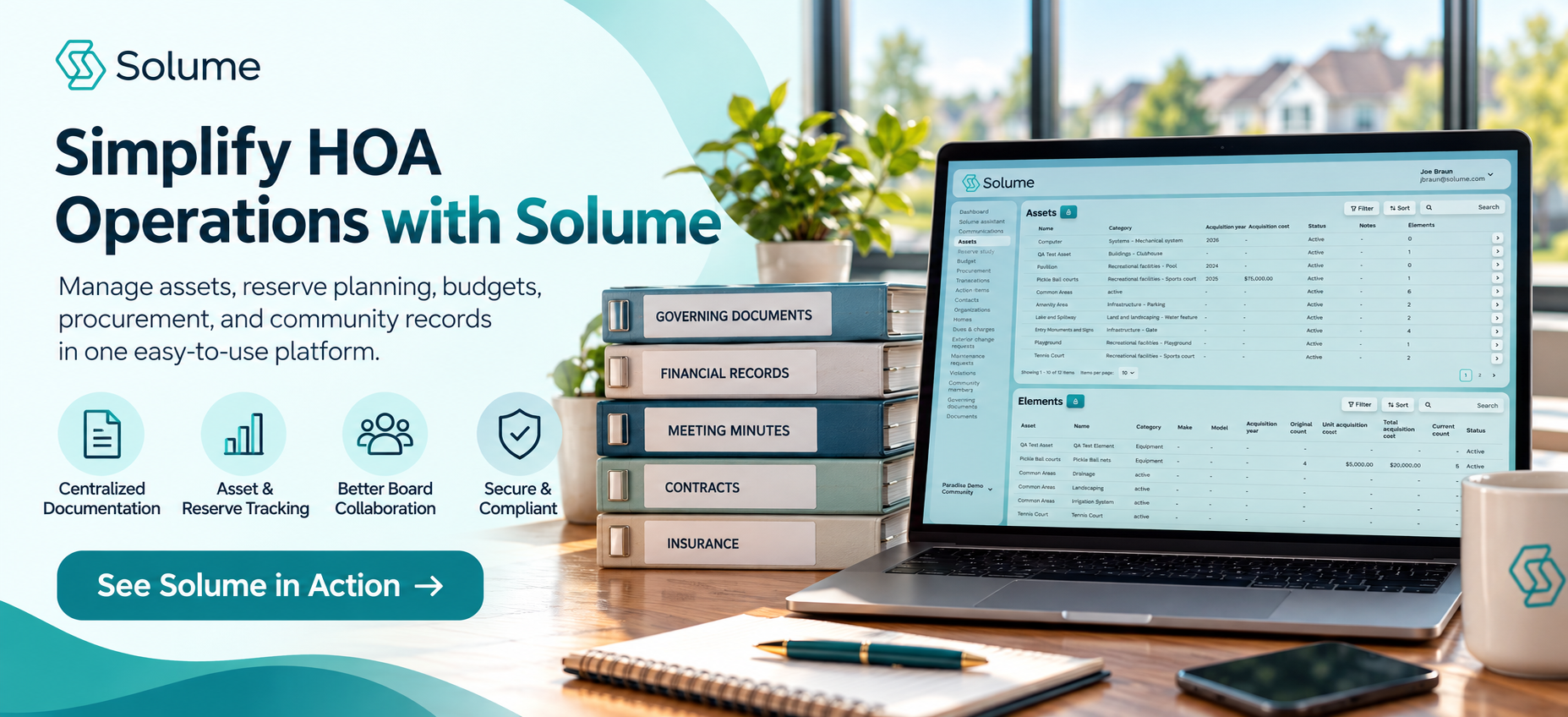
This is where purpose-built tools earn their place. Solume centralizes HOA documents, member and home records, ARC requests, and financial records in one platform built for self-managed boards, with reserve study tools that preserve the funding history behind every board decision. That gives homeowners access to records they're entitled to without a board member digging through old files.
Done right, HOA management software turns the community archives HOA boards dread maintaining into a background process. Transparency improves, resale packages assemble themselves, and compliance no longer depends on one person's memory.
If your board wants a clearer way to manage records, reserve planning, and financial transparency without a management company, you can talk to the Solume team in a 15-minute call to see whether it's a good fit for your community.
Frequently Asked Questions
What exactly counts as a community archive for an HOA?
It's the complete body of records a board must preserve long-term: CC&Rs, bylaws, articles of incorporation, amendments, board meeting minutes, financial statements, and architectural approvals. Unlike a single resale disclosure packet, the archive is the ongoing system that produces those packets on demand.
Is 'Community Archives' the same as the resale document company some HOAs use?
No, that's a naming overlap that confuses boards. Community Archives (the vendor) is a third-party service that compiles resale disclosure packages for real estate closings, while a community archive (the concept) is the HOA's own internal record-keeping system that should exist regardless of which resale vendor a board hires.
How long does an HOA actually have to keep its records?
Retention periods vary by state and document type; Florida law requires many financial records to be kept for at least seven years, while governing documents like CC&Rs and bylaws should be kept permanently. Boards should confirm exact timelines with an attorney since rules differ across states like California, Texas, and Colorado.
Can a volunteer board realistically maintain an archive without hiring a management company?
Yes, but only with a defined retention policy and a centralized digital system; a shared drive with no naming convention or ownership isn't an archive; it's a liability. Software that automates document storage, version control, and member-record management removes most of the manual burden volunteer boards face.
What happens if an HOA board loses or fails to produce old records?
Missing records can expose the board to legal liability, delay real estate closings, and in some states, violate statutory disclosure requirements homeowners are entitled to. It can also weaken the HOA's ability to enforce old covenants, since some restrictions require documented reaffirmation to remain enforceable over time.
Is paying for archive or document management software worth it for a small HOA?
For communities still relying on a board member's personal email or filing cabinet, the cost is usually justified by reduced legal exposure and faster resale transactions alone. Smaller HOAs with very few units and minimal document history may get by with a well-organized shared drive, but the margin for error narrows as board turnover increases.
What's the difference between document retention and a community archive?
Document retention is the legal schedule that dictates how long specific records must be kept, while the community archive is the storage and organizational system that enforces that schedule. A board can have a retention policy on paper yet still lack a working archive if records are scattered across old laptops, email threads, and prior management companies.
Who should have access to the HOA's archived records?
Current board members need full access for governance and compliance, while homeowners generally have a legal right to inspect certain records, such as financial statements and meeting minutes, upon written request. Vendors, attorneys, and incoming board members typically need limited, role-based access rather than access to the entire archive.