A Texas homeowner installs solar panels, gets a cease-and-desist letter from the board, and three months later the association faces a lawsuit it loses. That outcome traces back to a single misread rule. Texas HOA laws limit what boards can prohibit far more than most volunteer directors realize. The gap between what a board thinks it can enforce and what the statute actually allows is where associations get burned. This guide walks through the code chapters, covenant rules, and recent legislative changes that most often trip up self-managed boards. This is general information, not legal advice, and boards should confirm specifics with a licensed Texas attorney.
Key Takeaways
- Texas HOA laws are built around Property Code Chapters 202, 207, and 209, not a single standalone HOA statute.
- Boards cannot flatly ban rain barrels, solar panels, or drought-resistant landscaping, though they can impose reasonable placement rules.
- Foreclosure over unpaid assessments is legal in Texas, but it is barred when the lien consists only of fines, not actual dues owed.
- Condo associations fall under the separate Uniform Condominium Act (Chapter 82), while subdivision HOAs follow the Residential Property Owners Protection Act.
- Homeowners denied access to financial records or meeting minutes can petition a Justice of the Peace court to compel disclosure.

What Texas HOA laws are and why they matter for boards
Texas HOA laws are not one tidy statute you can print and pin to a wall. They are a patchwork of Property Code chapters, your association's recorded declaration, and a steady stream of legislative updates that quietly shift what HOA board members can and cannot do. For volunteers, ignorance isn't a defense. A board that enforces a covenant the state has since restricted can lose in court and pay the homeowner's attorney fees. Many of these missteps trace back to the same root causes outlined in this breakdown of self-managed HOA challenges and solutions, where limited staff and volunteer turnover make it easy to miss statutory updates.
Texas treats homeowners associations and property owners associations as entities with real power over private property, so lawmakers have layered on protections to keep that power in check. The reason for all that oversight is simple: when a private board can lien or foreclose on a home, the legislature treats it less like a neighborly club and more like a body that needs guardrails. The Texas State Law Library's HOA research guide collects the relevant statutes in one place and is a sensible starting point for any board trying to confirm what governs it. Knowing which rules apply to your community is the foundation of staying out of trouble.
The Texas Property Code as the foundation of HOA governance
Most subdivision homeowners associations in Texas answer to three parts of the Texas Property Code: Chapter 202 on restrictive covenants, Chapter 207 on resale disclosures, and Chapter 209, the Residential Property Owners Protection Act. Chapter 209 is the one boards cite most, since it dictates how assessments must be collected and enforced, how notices go out, and what rights homeowners keep during a dispute. These Texas HOA laws work as a layered system: the statute sets the baseline, and your governing documents fill in the details on top of it.
A fine issued without the required written notice and hearing opportunity is unenforceable. That means the association spent political capital on a penalty it can't collect. The Texas Legislature publishes the full text of Texas Property Code Chapter 209, and HOA board members should read it directly rather than rely on secondhand summaries. Many assume the governing documents override state law. In reality, the Property Code sets a floor no declaration can dip below, because the legislature wrote these protections as minimum rights that a private contract cannot bargain away.
Restrictive covenants and governing documents explained
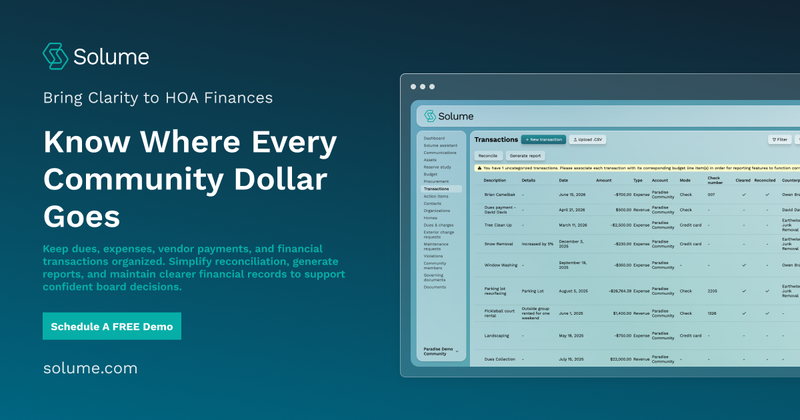
Restrictive covenants are the enforceable promises recorded against every lot in your subdivision. They live inside your governing documents: the declaration (often called the CC&Rs), the plat, the bylaws, and any recorded amendments. These documents, not the board's preferences, define what the association can regulate, whether that's fence height, paint color, or short-term rentals.
Here's the hard truth about property use restrictions: a restriction only binds owners if it was properly recorded with the county clerk and hasn't been preempted by statute. The recording requirement exists so that a buyer can discover every restriction on a lot before closing, which is why an unrecorded rule carries no weight. Chapter 202 tells Texas courts to read ambiguous covenants liberally to give effect to their purpose, but it also forces boards to apply property use restrictions consistently. Selective enforcement, cracking down on one homeowner's trailer while ignoring three others, is one of the fastest ways an association hands a defense attorney an easy win. Boards that want to avoid these traps should review this guide to unenforceable HOA rules before drafting new enforcement letters.
Texas Uniform Condominium Act and how it applies to COAs
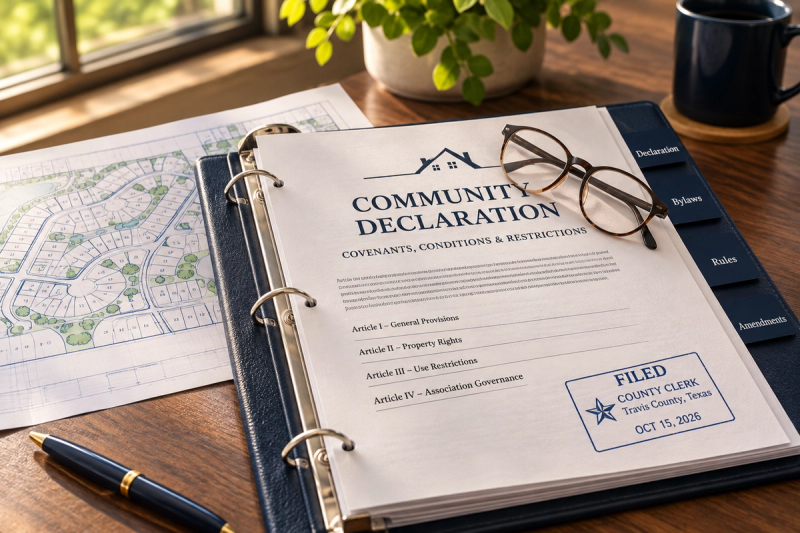
Condominium owners' associations do not play by the same rulebook as subdivision HOAs. The Texas Uniform Condominium Act, Chapter 82 of the Property Code, governs most condos created after January 1, 1994, and carries its own rules on assessments, liens, insurance, and record access. Older condos may fall under the earlier Condominium Act (Chapter 81), which is why the creation date of the regime matters.
The practical difference for condominium owners' associations is structural. Condos share walls, roofs, and systems, so the Act puts heavier emphasis on common-element maintenance and reserve funding than a typical subdivision declaration does. That emphasis exists for a reason: when a single roof or foundation covers dozens of units, deferred maintenance threatens every owner at once, not just one lot. A board that manages a condo as if Chapter 209 controls it will miss obligations unique to Chapter 82, including specific lien priority and foreclosure procedures. Confirm which act applies before you write a budget or pursue collection, because the wrong chapter can void an otherwise valid action.
HOA formation and governance requirements
HOA formation in Texas starts with a developer recording a declaration against the land, which binds every future owner. Most associations then incorporate as nonprofit corporations, pulling in the Texas Business Organizations Code alongside the Property Code. Together, these establish how the board is elected, how often it meets, and what fiduciary duty directors owe the membership.
Fiduciary duty is the concept volunteer HOA board members underestimate most. It means directors must act in the association's best interest, not their own, and must handle dues, HOA assessments, and reserves with the care of a reasonable trustee. The transition from developer control to homeowner control is a flashpoint. Developers sometimes keep voting rights longer than the declaration permits, so incoming boards should audit the governing documents to confirm the handover followed the recorded terms. Picture a new homeowner-controlled board that never checked the transition paperwork and later discovers the developer collected assessments for two years after its control should have ended. Unwinding that mess means legal fees, strained relationships, and sometimes a vote on reimbursement nobody budgeted for. Clean formation records protect the association years later when a dispute forces you to prove a vote was valid.
Homeowner rights and board responsibilities under Texas law
Chapter 209 spells out homeowner rights and responsibilities that boards can't waive away in their bylaws. Owners can inspect association records, attend open meetings, run for the board, and demand a hearing before the association fines them or suspends a privilege. These rights exist because the legislature decided transparency keeps boards honest and reduces the lawsuits that clog Texas courts.
Board responsibility runs the other direction. Directors must enforce restrictive covenants evenly, maintain accurate association records, keep meetings open except for narrow executive-session topics like legal advice or employee matters, and give proper notice before acting. Consider a self-managed board that votes on special assessments in closed session and skips the notice requirement. That vote is vulnerable, and a single owner can unwind it. Balancing homeowner rights against board responsibility isn't a courtesy. It's the statutory bargain that lets an association operate at all.

Assessment collection and enforcement rules boards get wrong
Assessment collection and enforcement is where self-managed boards rack up the most accidental violations. Texas lets an HOA foreclose a lien for unpaid dues, but Chapter 209 bars foreclosure when the lien consists solely of fines and the fees attached to those fines. Boards that lump penalties into a dues balance and then move to foreclose are stepping on a tripwire the statute set deliberately. The legislature drew that line because losing a home over accumulated fines is a wildly disproportionate penalty, while unpaid dues fund the services every owner relies on.
The mechanics matter. Before collections escalate, the association generally must send notice of the delinquency, offer a payment plan where required, and apply payments to the oldest assessments first rather than toward fines. Many boards assume fines carry the same enforcement weight as unpaid dues. In reality the two are treated differently, and conflating them weakens the association's position. Document every step, because when collection ends up in court, the board with clean compliance tracking almost always comes out ahead. Boards should also pair strong collection records with HOA fraud prevention practices, since sloppy financial controls often surface during the same disputes that trigger foreclosure challenges.

Dispute resolution and open meeting/record requirements
Before a disagreement reaches a courtroom, Texas law channels it through process. Chapter 209 requires associations to adopt an alternative payment plan policy and, for most enforcement actions, to hold a hearing where the homeowner can respond. This structure helps settle conflicts cheaply, and boards that follow it avoid most litigation.
Open meetings and association records are the backbone of transparency here. Regular and special board meetings must generally be open to members, with notice posted in advance, and owners have the right to inspect and copy association records on written request. A board that stonewalls a records request is handing the owner grounds to petition a Justice of the Peace court to compel disclosure. For self-managed communities, keeping organized digital records turns dispute resolution from a scramble into a routine. Platforms built for self-managed boards, like Solume, centralize meeting minutes, financials, and member records so that answering a lawful records request takes minutes instead of days.
Recent legislative changes affecting Texas HOAs and COAs
Texas legislative update cycles reshape HOA rules every two years, and boards that enforce last decade's covenants get caught flat. Over recent sessions, the legislature has protected homeowners' rights to install solar panels, rain barrels, drought-resistant landscaping, and religious items on their doors, and it has tightened notice and hearing requirements for fines. A board can impose reasonable placement conditions, but a flat ban on any of these is no longer defensible.
Each legislative update usually arrives as a specific house bill that amends the Property Code, so a covenant airtight in 2015 may now be partially unenforceable. The root cause of trouble is simple: declarations don't update themselves, and boards rarely re-read them against new law. These shifts are exactly why current Texas HOA laws can quietly strip a board of enforcement authority it assumed it still had. Staying current is tedious but unavoidable, because a board's enforcement authority is the kind of mistake that invites a counterclaim.
Where to find Texas HOA legal resources
Reliable legal resources keep a board from governing on rumor. The Texas State Law Library maintains plain-language guides to property owners associations and links directly to the statutes, a sensible first stop when a question comes up. County clerk offices hold the recorded declaration and amendments for your specific community, and those documents outrank any generic advice you'll find online. Boards planning major capital work should also understand the Texas reserve study requirements that govern how funds must be assessed and documented over time.
For interpretation, nothing replaces a Texas attorney who handles community association management. HOA rules vary by the association's own governing documents, and by which Property Code chapters apply, so a board should consult its attorney before taking an enforcement action it isn't certain about. Trade groups like the Community Associations Institute also publish member resources geared toward board education. Use these legal resources to confirm what your declaration says and what the current statute allows, and treat anything secondhand as a starting point, not a final answer.
Common compliance violations self-managed boards make accidentally
The most common compliance risk for volunteer HOA board members isn't fraud. It's paperwork. Boards fine homeowners without the required notice and hearing, hold votes in closed session that belong in open meetings, enforce covenants against one owner but not another, and try to foreclose over fines alone. Each one is a routine mistake that becomes expensive only when an owner pushes back. The thread running through all of them is the same: nobody treated the statutory process as mandatory until a homeowner did.
Here's the pattern self-managed communities repeat: nobody tracks notice deadlines, meeting minutes go unwritten, and the reserve study sits ignored until unbudgeted special assessments blindside everyone. Good compliance tracking fixes most of this before it starts. Solume's automated reserve study tools and compliance tracking help volunteer boards document notices, votes, and funding so missed deadlines don't turn into lawsuits. Reducing compliance risk comes down to records: the board that can prove it followed the process rarely has to defend one. Staying inside Texas HOA laws is less about memorizing statutes and more about building habits that leave a paper trail.
If your board wants a clearer way to manage finances, reserve planning, and compliance records without a management company, you can talk to the Solume team to explore your options and see whether the platform fits your community. It's a short, advisory conversation, not a sales pitch, and it's built around how self-managed Texas boards actually operate.
Frequently Asked Questions
What exactly is an HOA under Texas law?
In Texas, an HOA is typically a property owners' association (POA) created through a declaration recorded with the county clerk, governed primarily by Texas Property Code Chapters 202, 207, and 209. Unlike condo associations, which fall under the Texas Uniform Condominium Act (Chapter 82), most residential subdivision HOAs operate under the Texas Residential Property Owners Protection Act.
What are the warning signs of a dysfunctional HOA board in Texas?
Common red flags include refusing to share financial records or meeting minutes, missing or canceling meetings required under Chapter 209, inconsistently enforcing deed restrictions, and having no documented reserve planning. Texas law gives homeowners the right to petition a Justice of the Peace court to force disclosure if a board withholds records it's legally required to provide.
What is the Texas 10-acre law, and does it apply to HOAs?
The '10-acre law' refers to a Texas Agriculture Code and Property Code provision allowing certain large rural tracts to subdivide without automatically triggering subdivision or platting requirements that apply to smaller residential developments. It's largely unrelated to standard HOA governance, which is instead controlled by the declaration and Chapters 202/209 of the Property Code.
Do Texas HOAs legally operate as for-profit entities?
No. Most Texas HOAs are formed as nonprofit corporations, meaning dues and assessments fund operations, maintenance, and reserves rather than generate profit for owners or officers. Boards still have fiduciary duties, so any surplus should be reflected in budgeting, reserve funding, or returned to the community rather than treated as earnings.
Can a Texas HOA really foreclose on a home over unpaid dues?
Yes, but with limits: under Property Code Chapter 209, an HOA cannot foreclose on a lien that consists solely of fines, and it must follow specific notice and cure periods before foreclosure proceedings begin. Condo associations follow a separate but similar process under Chapter 82's Uniform Condominium Act.
If an HOA board is run entirely by unpaid volunteers, can it even be held to these legal standards?
Yes: Texas law doesn't carve out exceptions for volunteer status; board members are still bound by fiduciary duties and the procedural requirements in the declaration and the Property Code. This is precisely why many self-managed boards adopt software or compliance checklists, since volunteers often aren't aware a missed notice period or undocumented vote can expose the association to legal challenges.
Why do deed restrictions and rules differ so much between Texas neighborhoods?
Each HOA's authority comes from its own recorded declaration, plat, and bylaws: documents originally drafted by the developer and later amendable by the association. Because Texas law sets minimum protections rather than uniform rules, two subdivisions a mile apart can have very different restrictions on fences, rentals, or landscaping.