
Key Takeaways
- Texas does not legally require HOA reserve studies, but boards still have a financial responsibility (fiduciary duty) to plan responsibly for long-term expenses.
- Climate-driven deterioration, extreme heat, and aging infrastructure make reserve planning especially important for Texas communities.
- Condo Associations and HOAs are treated differently under Texas law, even though both face similar financial risks.
- Reserve studies help avoid special assessments, protect property values, and sustain long-term financial health.
- Solume helps boards and property managers manage reserve funds, long-term projections, and compliance in one unified platform.
Texas HOA reserve study requirements are often misunderstood, especially by board members comparing Texas to states such as California or Arizona. The most important thing to understand at the outset is simple and worth stating clearly:
Texas law does not require HOAs or Condo Associations to conduct a reserve study.
That reality does not reduce responsibility, however. It increases it. When the law does not mandate reserve planning, the burden falls squarely on board members to protect structural integrity, maintain financial health, and plan for long-term capital expenditures. This guide explains how Texas approaches reserve planning, what state law actually requires, and why reserve studies remain one of the most important financial planning tools available to homeowners associations.
As communities grow more complex, many boards are also realizing that a written reserve study alone is not enough. Reserve Study Software is increasingly becoming the missing layer that helps boards track long-term financial liability, connect reserve planning to real maintenance decisions, and avoid letting critical data live in disconnected files.
What Are Texas HOA Reserve Study Requirements?
Texas does not impose explicit reserve requirements the way some states do. Instead, reserve planning is determined by governing documents, fiduciary duty, and state law obligations connected to budgeting, disclosure, and maintenance of common elements.
Defining an HOA Reserve Study
A Condo or HOA Reserve Study is a long-term financial planning tool (typically 20-40 years) designed to evaluate a community’s major components, estimate their remaining useful life, and project the funding needed for future repairs and replacement. A Traditional Reserve Study typically includes a site inspection, reserve analysis, and a reserve funding plan that spans multiple fiscal years.
A Reserve Specialist or reserve study company performs this work by reviewing three core categories that determine long-term costs and risk:
- Structural Components: These are parts of the property that affect the building’s physical stability and safety. Examples include foundations, load-bearing walls, roofing systems, and balconies. When these fail, repairs are costly and often urgent. Not to mention, they can be life-threatening if they fail.
- Common Elements: These are shared assets owned and maintained by the association for the benefit of all owners. Examples include roads, parking areas, pools, clubhouses, fencing, and shared landscaping infrastructure.
- Major Systems: These are mechanical or functional systems that serve the community as a whole. Examples include electrical systems, fire protection systems, irrigation, gates, elevators, and drainage systems.
Together, these categories form more than a checklist. They create a roadmap that supports reserve planning, capital expenditures, and sustained financial stability over time.
At this point, most board members pause and ask a very practical question:
“Okay… but how do we actually keep track of all this without dropping the ball?”
This is where many communities step on their own toes. The issue is not a lack of information. It is fragmentation. Structural components could live in a reserve study PDF report, common elements in a maintenance log, major systems in a vendor spreadsheet, and financial liability somewhere inside an accounting file. When those systems do not talk to each other, things get missed.
Solume was built to solve that exact problem. It gives boards and property managers a single place to track these items together, see their financial impact over time, and connect reserve planning directly to work-order requests and ongoing maintenance. Everyone uses the same system, sees the same data, and works from the same source of truth.
Legal Requirements Under Texas Property Code
Texas does not have an equivalent to Florida Statutes Chapter 718 or legislation like HB 913. There are no Milestone Inspections mandated by state law, and no statute requiring boards to fund reserves at a specific level.
Instead, Texas Property Code provisions require boards to adopt an annual budget, maintain common area components, and provide financial statements to homeowners associations. These legal requirements make reserve planning a practical necessity even though a formal HOA Reserve Study is not mandated by state law.
Why Reserve Studies Are Crucial for Texas HOAs
Texas communities face major long-term risks when reserve planning is ignored. The absence of statutory mandates does not eliminate those risks. It simply shifts accountability to the board of directors.
Protecting Property Values and Structural Integrity
Structural integrity is a central concern for Texas communities. Extreme heat, expansive soils, severe storms, and prolonged sun exposure accelerate wear and tear on structural components. A structural integrity reserve study helps boards plan for roof replacement, pavement resurfacing, and repairs to load-bearing walls before those issues become emergencies.
Deferred maintenance expense accumulates quietly. Without a reserve study, boards often underestimate estimated replacement cost and the estimated remaining useful life of major components, putting property values and financial stability at risk.
Financial Health and Avoiding Special Assessments
Underfunded reserves are one of the most common causes of special assessments. When boards fail to fund reserves gradually, they are forced to impose sudden assessments that frustrate homeowners and destabilize the community.
Reserve planning supports financial health through aligning reserve contributions with the annual budget and spreading costs across the fiscal year and beyond. This long-term approach lowers reliance on special assessments and improves financial stability.
Key Elements of a Texas HOA Reserve Study
Inspections and Reserve Analysis
A professional reserve study begins with a site inspection and visual inspection of common elements. The Reserve Specialist evaluates major components, estimates remaining useful life, and identifies future repairs.
Reserve analysis then translates these conclusions into a reserve funding plan that supports capital expenditures over multiple fiscal years. This transforms reserve studies into an actionable financial planning tool rather than a one-time report.
Important Reserve Items and Common Elements
Texas HOA reserve studies commonly include reserve items such as electrical systems, fire protection systems, pavement resurfacing, and building painting. Other major repairs frequently involve roof replacement and long-term maintenance of common area components.
These major components represent long-term obligations that require adequate reserves and disciplined reserve planning.
Best Practices for HOA Reserve Planning in Texas
Working With Professionals
Engaging a licensed engineer or professional reserve study company improves accuracy and credibility. Property managers commonly rely on reserve studies to coordinate maintenance plans, oversee major repairs, and manage Association Reserves.
Regular reserve study updates assist boards in adjusting for inflation, legislative changes, and evolving community needs while maintaining financial stability.
Engaging HOA Boards and Members
Board members play an important role in reserve planning. Candid communication with homeowners associations develops trust and reduces resistance to reserve funding decisions.
While Texas law does not require a majority vote for reserve contributions, boards should seek legal advice when interpreting governing documents and reserve requirements under state law.
Reserve Study Software and Long-Term Financial Planning
A reserve study is only as useful as the system used to manage it. Many boards commission a professional reserve study, file the report away, and then struggle to translate it into actual financial decisions. This is where reserve study software becomes essential.
Reserve study software allows boards and property managers to actively manage reserve data, funding scenarios, and long-term capital planning inside a single platform. Instead of relying on static PDFs or disconnected spreadsheets, boards can align reserve planning with the annual budget, track reserve contributions over each fiscal year, and model future repairs with clarity.
Solume was built to fill this gap. Its built-in reserve study software connects reserve analysis directly to day-to-day financial management, guiding communities' move from theoretical planning to practical execution. Boards can see how today’s decisions impact future capital expenditures, while property managers can use the same system to coordinate maintenance plans and vendor procurement.
To learn more about how this works in practice, visit Solume’s reserve study platform: https://www.community.solume.com/reserve-study
Ensuring Long-Term Success for HOAs in Texas and Beyond
Texas grants flexibility, but that flexibility carries responsibility. Compared to states such as California or Arizona, Texas places greater emphasis on board judgment rather than statutory mandates.
Reserve studies provide the structure that Texas law does not. They support financial planning, protect property values, and reduce the risk of underfunded reserves.
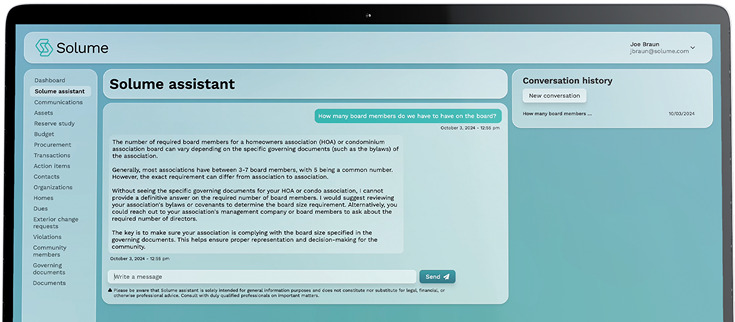
Solume’s Reserve Study Software was built to support boards and property managers facing these realities. It is the only all-in-one platform that allows communities to manage reserve studies, track long-term funding scenarios, oversee vendor procurement, and sustain legal compliance through AI-powered guidance.
If your board is already responsible for the community’s long-term financial health, is it unreasonable to spend 15 minutes seeing whether a platform could reduce risk, eliminate guesswork, and bring clarity to reserve planning?
Solume makes long-term reserve planning practical, transparent, and manageable for Texas communities.
Texas Reserve Study FAQs for HOA Boards
Are reserve studies required for HOAs in Texas?
No. Texas law does not require HOAs or Condo Associations to perform a reserve study. That said, I’ve seen many Texas boards learn the hard way that “not required” does not mean “not necessary,” especially when major repairs surface without a plan in place.
What does Texas law actually say about HOA reserve funds?
Texas law focuses on budgeting, disclosures, and maintaining common property, not on mandating reserve studies or minimum funding levels. In practice, that means the responsibility for reserve planning lands squarely on the board’s judgment and fiduciary duty.
Why should a Texas HOA do a reserve study if it’s not required by law?
Because the absence of a legal mandate does not reduce financial risk. Most boards that skip reserve studies do so until a roof fails, pavement crumbles, or a large special assessment becomes unavoidable.
What happens if a Texas HOA does not plan for reserves?
What usually happens is deferred maintenance, followed by sudden special assessments and frustrated homeowners. I’ve rarely seen a board regret doing a reserve study, but I’ve seen plenty regret waiting too long.
What assets are typically included in a Texas HOA reserve study?
A Texas HOA reserve study typically includes structural components, common elements, and major systems. Think roofs, pavement, pools, irrigation, electrical systems, gates, and any shared asset that wears down over time and costs real money to replace.
How often should a Texas HOA update its reserve study?
Most Texas HOAs should update their reserve study every three to five years, with interim reviews as costs change. In a state where construction prices, labor, and climate stress shift quickly, old numbers become unreliable faster than boards expect.
Do Condo Associations and HOAs follow the same reserve rules in Texas?
No. Condo Associations usually carry responsibility for more structural components than planned communities. That difference means condos face higher financial exposure even though Texas law treats reserve studies as optional for both.
Can a Texas HOA rely on its property manager instead of a reserve study?
A property manager can help operate the community, but they do not replace long-term financial planning. Managers change, contracts end, and vendors rotate, but reserve obligations stay with the association.
How do reserve studies help Texas HOAs avoid special assessments?
Reserve studies spread costs over time instead of dumping them on homeowners all at once. That predictability is what keeps HOA finances stable and prevents emergency decisions that damage trust.
What tools help Texas HOAs actually manage reserve studies over time?
The challenge is not getting a reserve study done; it’s managing it year after year. Boards need tools that connect reserve planning to budgets, maintenance, and work orders so the study becomes a living plan, not a forgotten document.