A homeowner repaints their front door bright red. Three weeks later, they're staring at a $500 fine and a lien notice. Most boards assume the rules of homeowners association they enforce are ironclad, but a surprising number collapse the moment a homeowner hires an attorney who reads the governing documents more carefully than the board ever did. This article breaks down where HOA rules come from, what makes them legally enforceable, which federal and state laws override them, and how a board can enforce them without inviting a lawsuit.
Key Takeaways
- The rules of a homeowners association come primarily from CC&Rs, bylaws, and board-adopted regulations, all of which are legally binding once a homeowner buys into the community.
- HOA rules rank below federal law, state statutes, and local ordinances in legal authority, meaning a board cannot enforce a provision that conflicts with a higher law.
- Board members enforcing rules in good faith are generally protected from personal liability, but that protection weakens when decisions fall outside the governing documents.
- Rule enforcement typically moves through warnings, fines, and liens before escalating to foreclosure or litigation, with exact limits set by state law.
- States like California revise HOA-related statutes on a near-annual basis, so a rule's enforceability can change year to year without any action by the board itself.

What are HOA rules and where they come from (governing documents)
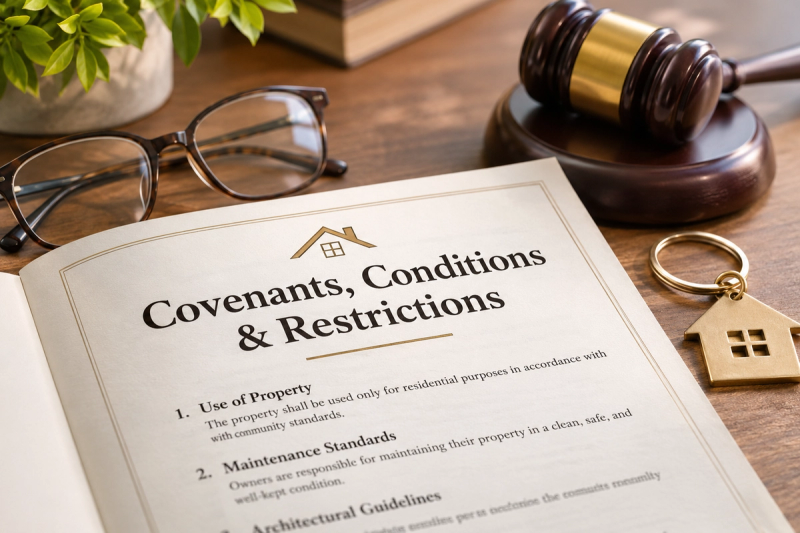
HOA rules are the standards a community agrees to live by, and they don't come out of thin air. They come from a stack of governing documents created when the community was built: the declaration (often called the CC&Rs), the bylaws, the articles of incorporation, and the board-adopted rules that fill in day-to-day details. When a developer records the declaration with the county register of deeds, those recorded documents attach to every lot. Buy the home, and you buy the obligations.
Here's the hard truth most new homeowners miss: you don't have to sign anything separately for the rules of homeowners association to bind you. The recorded documents run with the land, which is the legal mechanism that makes them enforceable even against buyers who never read them. That's why the Federal Trade Commission's guidance on homeowners associations urges buyers to read the CC&Rs before closing. The HOA board doesn't invent rules on a whim either; its authority traces directly back to what these documents permit. Step outside that authority, and a rule may not hold up. In fact, many communities carry rules that boards can't actually enforce simply because no one checked the governing documents before adopting them.
The hierarchy of HOA governing documents (CC&Rs, bylaws, rules & regulations)
Not all HOA rules carry equal weight. Knowing the pecking order saves boards from enforcing something a court will toss. The hierarchy runs top to bottom: the declaration (CC&Rs) sits at the top as the master contract, followed by the bylaws that govern operations, then the board-adopted rules at the bottom.
When these conflict, the higher document wins. If the board bans overnight street parking but the CC&Rs permit it, the CC&Rs control and the rule is unenforceable. Many boards assume they can patch any gap with a quick vote on a new regulation. In reality, a rule can't contradict or expand beyond what the declaration and bylaws already allow, because board authority is delegated by those documents and can't rise above its source. The Community Associations Institute, a national trade group covered in this overview by Nolo's HOA resources, stresses that board-level rules fill in detail; they don't rewrite the contract. Amending the CC&Rs usually demands a supermajority vote, which is why that top layer rarely changes. Boards looking for a deeper breakdown of governance standards can also consult the legal encyclopedia on HOA governance to see how different document types interact.
What makes an HOA rule legally enforceable
A rule only becomes one of the enforceable rules of a homeowners association if it clears a few tests. First, it has to be authorized by the governing documents, meaning the declaration or bylaws grant the board power to regulate that subject. Second, it must be reasonable and applied the same way to everyone. Enforcing a rule against one neighbor but ignoring it for another invites a selective-enforcement defense that weakens your case.
Most failed enforcement actions fail on procedure, not substance. A rule might be perfectly reasonable, but if the board adopted it without the notice-and-comment period state law requires, its enforceability is in doubt. The rule also can't conflict with state law or federal regulations, and it must be properly adopted and, where required, recorded. Consider a board that fines a homeowner $1,000 for an unapproved shed, only to discover the architectural review provision was never in the recorded declaration. The fine may not hold up, and the association risks legal fees. This is exactly the kind of gap that proper architectural review request management is designed to close, since every submission and approval gets tied back to the governing documents. Enforceable rules are built on authority, reasonableness, consistency, and clean procedure.
Federal laws that limit and shape HOA rules
No matter what the CC&Rs say, federal law sits above every HOA rule, and ignoring that is how boards end up in court. The Fair Housing Act prohibits rules that discriminate based on race, religion, sex, disability, or familial status. A "no children in the pool after 6 p.m." rule can trigger a complaint under the Fair Housing Act because familial status is a protected class, and age-based pool limits single out families with children. The Americans with Disabilities Act and fair housing rules together require boards to consider reasonable accommodations, such as allowing a service animal in a pet-restricted community.
Several narrower federal statutes carve out specific protections. The Freedom to Display the American Flag Act stops an HOA from banning a residential flag. The FCC's Over-the-Air Reception Devices Rules limit how an association can restrict satellite dishes and antennas. The Fair Debt Collection Practices Act shapes how associations pursue unpaid dues. And the Corporate Transparency Act now requires many associations to report beneficial ownership information. Many boards assume federal law only touches big corporations. In reality, these rules quietly override chunks of nearly every HOA's rulebook.
State HOA statutes and why they vary
Federal law sets the floor, but your state statute sets most of the rules boards live by day to day, and those rules differ wildly across state lines. Each state's version of a homeowners association act governs how rules are adopted, what fines are permitted, how liens attach, and how much notice a homeowner must receive before enforcement. California's Davis-Stirling Act, for example, is amended almost every year, so a rule enforceable last year may need new notice procedures this year.
Enforceability is a moving target. A board in Florida operates under reserve-study and inspection requirements that a board in Texas simply doesn't face. HOA laws vary significantly by state, so boards should confirm their rules against their own state's homeowners association act and consult an attorney for legal considerations rather than copying a neighbor's playbook. Boards that want a broader sense of how industry groups track these shifting requirements can review the Community Associations Institute's advocacy resources, which monitor state-by-state legislative changes. State law also decides whether self-managed communities must file annual reports or keep specific records. What's permitted in one state can expose a board to liability in another.
Common categories of HOA rules boards enforce
Most HOA rules fall into a handful of predictable buckets, and knowing the categories helps boards spot gaps in their own documents. Architectural standards top the list: paint colors, fence heights, roofing materials, and additions that run through an architectural review process before approval. Landscaping rules dictate lawn upkeep, approved plantings, and tree removal. Parking rules restrict street parking, commercial vehicles, and RVs.
Then come the use-and-conduct rules: pet limits, noise curfews, short-term rental bans, and occupancy caps. Financial rules cover dues, late fees, and special assessments. Each category ties back to a specific provision in the governing documents, and that's the test of enforceability. A common pattern: boards try to enforce a short-term rental ban that was never written into the declaration, then lose when a homeowner lists the property anyway. The rules a board enforces should map cleanly onto a recorded document. If you can't point to the clause, you probably can't enforce the rule.

The board's duty and responsibility to enforce rules fairly
A board that enforces rules against one homeowner and looks the other way for another isn't just being unfair; it's creating a legal defense for every future violator. Board responsibility starts with the fiduciary duty each director owes the association: the duty to act in the community's best interest, not their own. That fiduciary duty is why self-dealing, favoritism, and inconsistent enforcement are so dangerous.
Fair rule enforcement means applying the same standard to everyone, documenting each step, and giving homeowners the notice and hearing their state law requires. Board members who act in good faith, stay within the governing documents, and follow procedure are generally protected by the business judgment rule. Here's the risk most boards overlook: selective enforcement doesn't just affect one case; it can weaken the community association's standing to enforce that rule against anyone, because courts may treat a pattern of looking the other way as the association waiving its right to enforce. Transparency in how the board applies its rules is the best defense. When a homeowner sees the rule applied the same way to their neighbor, disputes shrink and legal exposure drops.
Consequences of non-compliance and non-enforcement
Non-compliance cuts both ways, and boards tend to focus only on the homeowner's side. When a homeowner ignores the rules, the association can issue warnings, levy penalties, record a lien, and in extreme cases pursue foreclosure or legal action. Those tools protect property values and recover costs, but state law caps each step.
The flip side gets less attention: a board that fails to enforce rules consistently faces its own consequences. Non-enforcement invites selective-enforcement challenges, erodes community stability, and can expose directors to claims they breached their responsibility. Picture a community that stops enforcing its architectural review requirements for two years, then suddenly fines a homeowner for an unapproved deck. A court may find the association waived the right to enforce. Beyond the courtroom, inconsistent enforcement causes reputational damage and operational disruption when disputes pile up. The real cost isn't the single fine; it's the pattern. Boards that enforce sporadically often spend more on legal fees than communities that enforce steadily and predictably.

How boards adopt, amend, and communicate rules to residents
A new rule nobody heard about before it took effect is a rule a homeowner can challenge. Most state statutes require boards to follow a specific process: propose the rule, notify homeowners, allow a comment period, vote at an open meeting, and distribute the final rule. Skip a step, and the rule's enforceability is at risk.
Amending the declaration is harder than passing a board rule. It usually requires a supermajority vote and re-recording the change with the register of deeds so it becomes part of the recorded governing documents. Board-level rules move faster but can't exceed what the CC&Rs allow. Many communities don't realize that communication is a legal step, not a courtesy. If a homeowner never received notice of a rule, a court may treat it as unenforceable against them, because enforcement depends on the homeowner having had fair warning of the standard. Maintaining a centralized communication hub for residents means every notice, update, and rule change is timestamped and delivered the same way to the whole community, which turns a shaky enforcement action into a defensible one. Transparency in this process protects the board as much as the homeowners.

Using software to track compliance and enforce rules consistently
Consistency is the hardest part of rule enforcement, and it's exactly where paper files and spreadsheets fail self-managed communities. When a board tracks violations across emails, sticky notes, and one volunteer's memory, selective enforcement happens by accident, and that accidental inconsistency is the exact weakness an attorney may use to challenge a fine. The fix is a single system of record that logs every violation, notice, response, and penalty with a timestamp.
Compliance tracking software standardizes the process: every homeowner gets the same warning sequence, the same notice period, and the same documented trail. That record is what defends the board if a dispute reaches an attorney. Solume provides architectural review request management and compliance tracking built specifically for volunteer boards, so any community association can apply its rules the same way to everyone without a management company. For boards weighing their options, this software built for self-managed board enforcement outlines exactly what to look for before committing to a platform. It also automates reserve study tracking, which matters because many strict rules boards enforce, like special assessments, trace back to underfunded reserves. Documented, consistent rule enforcement isn't about being harsh. It's about being defensible.
If your board wants a clearer way to manage rule enforcement, architectural review, and the long-term planning behind it, book a 15-minute call to see whether Solume fits your community and where it could tighten your compliance process.
Frequently Asked Questions
What are considered normal rules for a homeowners association?
Normal HOA rules typically cover exterior paint colors, landscaping standards, parking limits, fence specifications, pet restrictions, and noise curfews, all recorded in the CC&Rs. These rules exist to protect property values and keep the community visually consistent, not to micromanage daily life.
Do HOA rules override city or county ordinances?
No. Federal law controls first, then state statutes, then local city or county ordinances, and HOA rules sit below all three in the legal hierarchy. An HOA can impose stricter standards than a city ordinance, but it cannot legally enforce a rule that contradicts state or local law.
Can an HOA board member be held personally liable for enforcing rules?
Board members are usually shielded from personal liability under the business judgment rule as long as they act in good faith, stay within the governing documents, and avoid self-dealing. That protection disappears if a board member acts fraudulently, ignores state statutes, or makes decisions outside their authority, which is why D&O insurance and documented decision-making matter.
What happens if a homeowner refuses to follow HOA rules?
Enforcement typically escalates from a written warning to fines, then to a lien on the property, and in persistent cases, foreclosure or a lawsuit for injunctive relief. The process and penalty caps are governed by state statute, so what an HOA can actually do to a non-compliant homeowner varies significantly by state.
How can homeowners dissolve an HOA, using Indiana as an example?
Dissolving an HOA in Indiana generally requires a supermajority vote of members as specified in the governing documents, followed by filing articles of dissolution with the Indiana Secretary of State and resolving any outstanding liens or association debts. This process is rare in practice because most CC&Rs are recorded against the deed and don't automatically expire with the association's dissolution.
Does having too many HOA rules actually protect property values, or just create friction?
Rules tied to visible standards, like paint, landscaping, and architectural review, do correlate with stronger resale values because they prevent neighborhood inconsistency. But rules created reactively without board documentation or legal review tend to generate disputes and legal costs that outweigh any property-value benefit.