A homeowner asks where $40,000 in reserve money went, and the treasurer can't produce a clean answer. That single moment, repeated across thousands of self-managed communities, can damage a board more than any special assessment ever could. Financial transparency isn't about dumping spreadsheets on people. It's about making sure every dollar collected, spent, and saved can be traced, explained, and understood by the people who funded it. This article covers what transparency actually means, why it protects your board, and how to build it into daily practice.
Key Takeaways
- Financial transparency requires boards to share accurate, timely financial data, not just comply with the minimum disclosure laws require.
- Financial opacity (vague or delayed reporting) was a direct factor in scandals like the Las Vegas HOA fraud case.
- A single person controlling records without an audit trail is the most common structural gap that erodes homeowner trust.
- Tying financial reports directly to reserve study funding targets makes numbers understandable, not just available.
- Consistent reporting formats across every period matter more to homeowner trust than the sheer volume of documents shared.

What financial transparency means (definition)
Financial transparency means the people responsible for money and the people who provided it, can both see the same accurate picture at the same time. For an HOA board, that covers dues collected, reserve balances, vendor payments, and outstanding debts. It should be presented in a form a homeowner can read without an accounting degree.
It is more than handing over financial statements once a year. Transparent reporting means the numbers are current, consistent, and connected to decisions the board actually made. The SEC describes the goal of financial disclosure as giving stakeholders the information they need to make informed judgments, and the same principle applies to a 30-unit condo association. Organizations like the Community Associations Institute track national data on community association governance, and the pattern is consistent: communities that disclose proactively tend to see fewer disputes than those that treat transparency as an afterthought.
Many boards assume transparency means publishing more. In reality, a flood of documents nobody understands creates less trust than a single clear report. The aim is comprehension, not volume. Open financial practices turn financial information into something homeowners can verify, question, and ultimately trust, especially when paired with clear, easy-to-read financial statements that don't require a background in accounting to interpret.
Why financial transparency matters for trust and accountability
Homeowner trust is fragile. Once it breaks, dues collection gets harder, meetings turn hostile, and good volunteers quit. Financial transparency in business and community associations, built on steady financial responsibility, keeps that trust intact. When stakeholders can see where their money goes, they stop assuming the worst.
The root cause is simple: people distrust what they can't see. A reserve fund that nobody can trace invites suspicion, even when the board has done nothing wrong. Accountability depends on visibility, and building trust starts with letting people see the numbers. If the books are open, mistakes get caught early and honest boards get the benefit of the doubt. Boards that want a close look at what happens when boards lose homeowners' trust need only study how quickly a single unexplained transaction can unravel years of goodwill.
The Florida Surfside collapse in 2021 killed 98 people, and investigators pointed to years of deferred maintenance and underfunded reserves that residents weren't fully informed about. NIST opened a formal investigation into the collapse. Public trust in the people managing shared buildings, and physical safety itself, both rested on financial information that stayed buried. Transparent reporting is how boards prevent that gap.
The board's role and fiduciary duty in financial oversight
Board members hold a fiduciary duty, meaning they're generally required to act in the community's financial interest, not their own convenience. That duty doesn't end when you hire a bookkeeper or sign up for software. The HOA board stays responsible for every dollar.
Here's what actually happens when boards forget this: financial oversight collapses into one person. The treasurer handles everything, nobody checks the work, and the rest of the board signs reports they never read. That is board responsibility abandoned, even if no fraud ever occurs.
Fiduciary duty generally calls for at least two sets of eyes on the money. Separate the person who writes checks from the person who reconciles the account. Review financial statements as a full board, not as a rubber stamp, and document every decision in the minutes. These habits, along with basic compliance with your state's recordkeeping rules, form the foundation of financial responsibility. They can also help protect individual board members if a homeowner ever challenges a decision, though boards should consult their own attorney about their specific obligations. Oversight is the job, not an optional extra.

Benefits of financial transparency for an organization
The benefits of financial transparency show up fastest in dues collection. When homeowners understand what their money funds, they pay on time and fight assessments less. Resistance usually comes from confusion, not stinginess.
Transparency also strengthens decision-making. A board working from accurate, real-time data makes better calls on vendor contracts, reserve planning, and budget priorities, and guesswork disappears. The benefits extend to recruiting, too, since capable homeowners are far more willing to join an HOA board whose books they can already see.
There's a compliance payoff as well. States like California, Colorado, and Nevada have tightened disclosure and reserve study rules, and a transparent board is already most of the way there, though specific requirements vary, and boards should confirm their current obligations with state statutes and legal counsel. Open financial practices and ethical behavior reinforce each other: when sharing numbers is routine, bad behavior has nowhere to hide. Ultimately, community stability grows from confidence that the money is handled honestly.
Risks and consequences of poor financial transparency
The risks of poor financial transparency go well beyond angry emails. The Las Vegas HOA fraud scheme, one of the largest in U.S. history, grew directly out of hidden financial decisions and boards that no one could scrutinize. Opacity created the room for it.
Picture a self-managed community that delays reporting for two years while deferred maintenance piles up. When a roof finally fails, the reserve is empty, and homeowners get hit with a $12,000 special assessment they never saw coming. The money problem was real, but the trust problem is what ends careers and triggers lawsuits.
Poor transparency also invites litigation. Homeowners who feel kept in the dark file complaints, demand inspections, and sometimes sue to force disclosure. The Consumer Financial Protection Bureau regularly fields consumer complaints about financial mismanagement across industries, and HOA finances are no exception once residents feel they have no other recourse. Each dispute drains the budget and the board's time. The quieter risk is burnout: volunteers running an opaque system eventually quit, taking institutional knowledge with them. Fraud prevention, homeowner trust, and basic community stability all erode at once when the books stay closed.
How to practice and build financial transparency (reporting schedules, open books)
Start with a fixed schedule. Regular financial reporting means monthly bank reconciliations, a quarterly budget-to-actual summary, and an annual report tied to the reserve study. Consistency matters more than frequency; a homeowner who gets the same report every month learns to read it.
Open books is a practice, not a slogan. Give homeowners a defined way to review financial statements, vendor bids, and reserve balances without filing a formal request every time. The easier access is, the less suspicion builds. Boards looking for a starting point can take practical steps to improve financial transparency instead of trying to overhaul everything at once.
Many boards assume transparency means a messy free-for-all where anyone can rummage through records at will. In reality, structured, scheduled access builds more trust than chaotic openness. Tie every report back to a funding target so the numbers mean something, and confirm your specific obligations against your state's current HOA statute since rules vary significantly by state, so boards should also check with their attorney when questions come up. Building trust is a routine, repeated every single period, not a one-time gesture before an annual meeting.

Role of technology and software in transparent financial reporting
Spreadsheets are where transparency goes to die. A single treasurer's workbook, saved on one laptop, is the exact structural gap that erodes homeowner trust. Nobody else can see it, verify it, or recover it if that volunteer leaves.
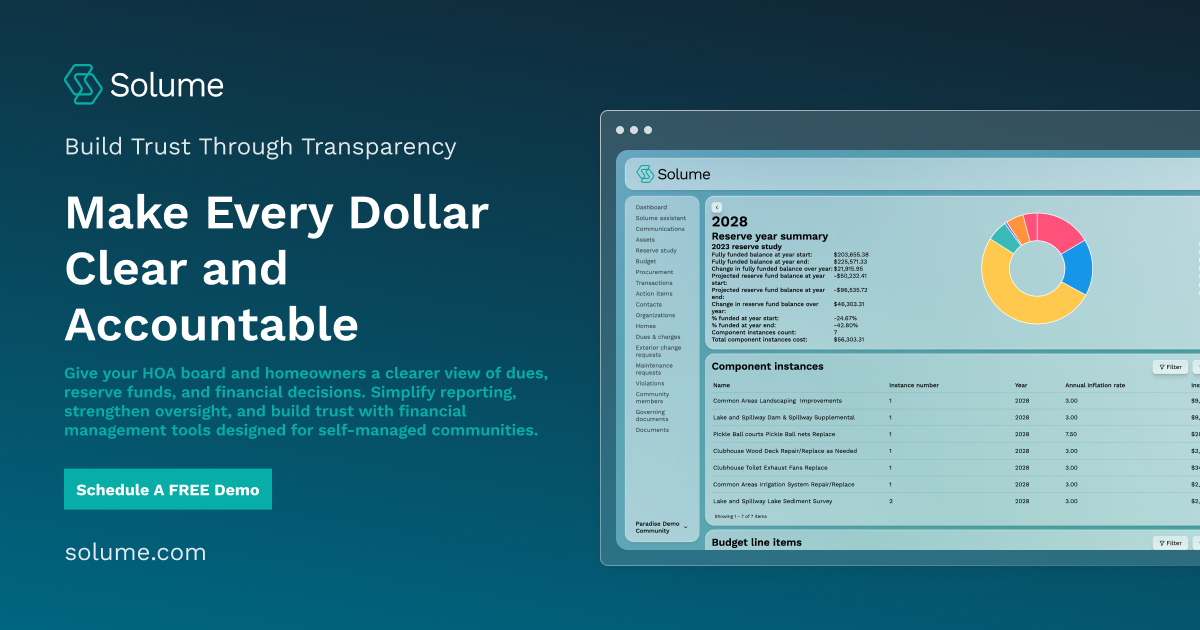
Transparent accounting tools fix this by giving the whole board and homeowners access to the same live numbers. Real-time data means reserve balances, dues collection, and vendor payments update as they happen, instead of waiting for a monthly summary somebody has to assemble by hand. These tools also create an audit trail, so every transaction has a timestamp and a name attached.
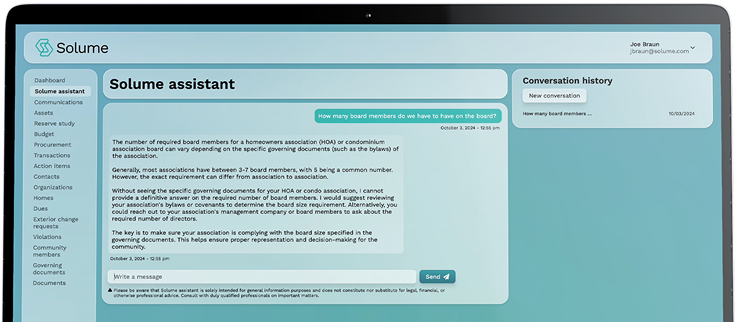
This is where purpose-built platforms matter for self-managed communities. Solume gives boards financial management tools built for transparency, including reporting and reserve study features in one place, so the numbers stay visible without one person owning the whole process. Technology won't replace board responsibility, but it removes the blind spots that make transparent reporting hard for volunteers to sustain.
What financial information boards should share with homeowners?
Homeowners don't need every receipt, but they do need the information that affects their money and their property values. Share the annual budget as a line item, the current reserve fund balance against the reserve study's funding target, and a regular budget-to-actual comparison.
Vendor transparency is often skipped. Disclose major contracts and the competing bids, not just the final invoice. When homeowners see three bids and understand why the board picked one, vendor decisions stop looking like favoritism.
Also share dues collection status in aggregate, outstanding liabilities, and any pending or anticipated special assessments as early as possible. A surprise assessment destroys trust; a forecasted one, explained months ahead, gets accepted. Solume's reserve study tools help boards connect these numbers to long-term funding so disclosure reflects where the community is actually headed. The test is simple: could a homeowner read what you shared and explain the community's financial position to a neighbor? If not, you're disclosing documents, not information.
A practical financial transparency checklist for volunteer boards
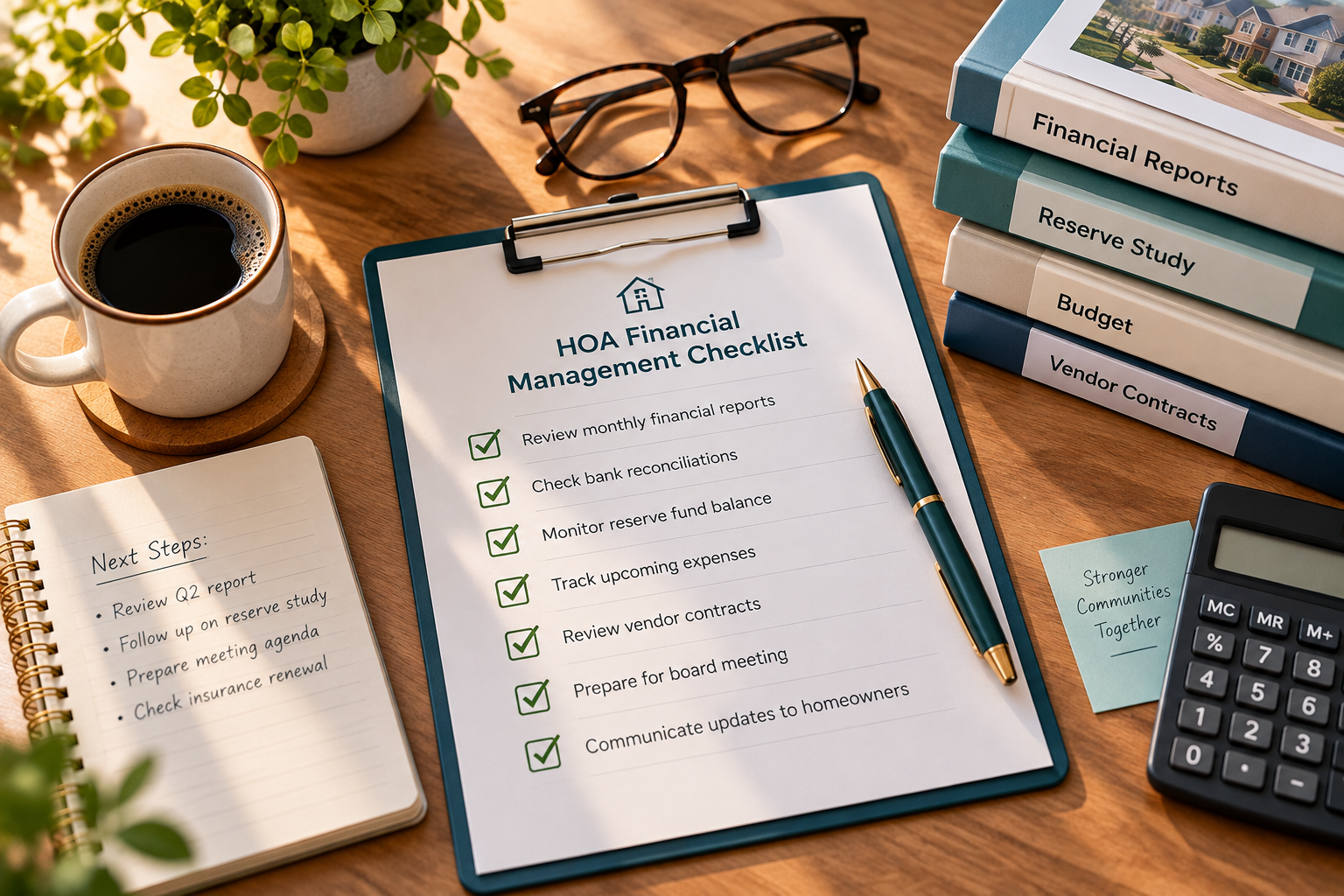
Use this transparency checklist as a baseline, then adapt it to your state's disclosure requirements:
- Two-person control: The person writing checks is not the person reconciling the account.
- Monthly reconciliation: Bank statements are reconciled and reviewed by at least one non-treasurer board member every month.
- Reserve alignment: Every financial report references the reserve study's funding target, not just current cash.
- Consistent format: The same report layout every period so homeowners learn to read it.
- Open access: A defined, standing way for homeowners to view financial statements and vendor bids.
- Documented decisions: Every financial vote recorded in the minutes.
- Audit trail: All transactions timestamped and attributed, not editable without a record.
- Early assessment warnings: Potential special assessments disclosed as soon as the board sees them coming.
Run through this list once a quarter. If your HOA board can check every box, you've moved past minimum disclosure into genuine accountability, which keeps homeowner trust intact.
Financial transparency isn't a one-time project; it's a habit your board repeats every period. If your board wants a clearer way to manage reporting, reserve planning, and vendor oversight without relying on one person's spreadsheet, book a 15-minute call to see if Solume fits your community. There's no pressure to switch, just an honest look at whether the tools solve the problems your board is actually facing.
Frequently Asked Questions
What does financial transparency actually mean for an HOA?
It means homeowners and board members can see accurate, up-to-date numbers on dues collected, reserve funds, vendor payments, and outstanding liabilities without having to ask. For an HOA, this usually takes the form of open books, regular financial reports, and a budget tied to the reserve study rather than guesswork.
Is financial transparency the same thing as financial disclosure?
No. Disclosure is the legal minimum: handing over audited statements or filings because a state statute requires it. Transparency goes further: the board proactively shares clear financial context so homeowners understand the community's financial position, not just technically comply.
What's another term people use for financial transparency?
Common alternatives include 'open-book management,' 'financial openness,' and 'fiscal transparency,' the last of which the IMF uses specifically for government and public-sector finances. In HOA contexts, boards often call it simply 'open financials' or 'full disclosure practices.'
What's the opposite of financial transparency, and why should boards care?
Financial opacity describes withheld, delayed, or vague financial information: think unexplained special assessments or reserve funds nobody can trace. Opacity is what fueled scandals like the Las Vegas HOA case, where hidden financial decisions led to fraud charges and homeowner lawsuits.
Does a transparency tool actually stop fraud, or is it just paperwork?
Software alone doesn't stop fraud, but it removes the blind spots that let it happen, like a single treasurer controlling records with no audit trail. Automated tracking and real-time reporting make unusual transactions visible to the full board instead of staying buried in one person's spreadsheet.
Is switching to transparent financial software worth it for a small, all-volunteer HOA?
For communities under 50 units with simple finances, the return depends on how much time the treasurer currently loses to manual reconciliation and homeowner disputes. If your board is fielding repeated 'where did my dues go' questions or struggling to produce records during a reserve study, the time saved on reporting usually outweighs the switching cost.
What if our board shares financials but homeowners still don't trust the numbers?
This usually means the information is technically available but not understandable: buried in PDFs or inconsistent formats that don't match the reserve study timeline. Trust typically improves when boards present the same data consistently every period and tie it directly to funding goals, not just when they share more documents.
What are concrete examples of financial transparency in a condo association?
Examples include publishing a line-item budget before the annual meeting, posting monthly bank reconciliations, and giving homeowners access to a dashboard that shows reserve fund balances against the reserve study's funding target. Another example is disclosing vendor contracts and bids, not just the final invoice amount.