
A treasurer in a 42-unit condo association resigns, hands over a laptop, and nobody can find the password to the spreadsheet holding three years of dues history. That scenario plays out in self-managed communities every month. It's exactly the kind of failure HOA management software is built to prevent. This article walks through what these platforms actually do. It covers how they handle accounting and compliance, and how to tell whether a tool is built for your board or for a management company that wants you dependent on it.
Key Takeaways
- Condo association management software centralizes dues collection, accounting, maintenance tracking, and communication into one platform instead of scattered spreadsheets and emails.
- Because up to 88% of spreadsheets contain input errors, software reduces financial risk as an association grows and board members change over.
- Reserve planning and compliance features are the biggest safeguards for boards in stricter states such as Florida, California, and Colorado.
What condo association management software is and how it works
At its core, this is an all-in-one condo association management platform that replaces the pile of spreadsheets, checkbooks, email chains, and filing cabinets most boards use to run a community association. It pulls dues collection, HOA accounting, maintenance tracking, document storage, and resident communication into a single cloud-based system. Every authorized board member can access it.
Here's the hard truth: most self-managed communities don't fail because volunteers don't care. They fail because the knowledge lives in one person's head and one person's laptop. When that person leaves, so does the institutional memory.
Good HOA management software fixes this by keeping records tied to the association rather than an individual. A homeowner portal lets residents pay dues and check their balance. A mobile app lets board members approve requests from their phone. According to the Community Associations Institute's national data on community associations, tens of millions of Americans live in these communities. The scale also shows up in American Housing Survey data on housing units, and the administrative burden on volunteer board members keeps growing. Software exists to shrink that burden without hiring a management company.
Accounting, financial reporting, and dues collection features
This is where most boards feel the pain first. Dues collection by paper check means someone drives to the bank, someone updates a spreadsheet, and someone chases the three owners who "forgot." Automated invoicing removes that entire loop. The system bills every owner on schedule, records payments automatically, and flags delinquencies before they snowball.
Financial reporting matters so much because of fiduciary duty. Board members are generally responsible for handling other people's money. A court may not accept "the spreadsheet had a typo" as a defense. Solid HOA accounting produces balance sheets, income statements, and delinquency reports on demand. That's what financial transparency and accounting tools actually look like in practice.
Many boards assume their bank statements are enough. In reality, a bank balance tells you nothing about what's owed, what's reserved, or where money is leaking. The Consumer Financial Protection Bureau's guidance on handling other people's money underscores how much documentation fiduciaries must keep. The bureau also publishes broader consumer guidance on housing and mortgage costs that helps owners understand what their dues protect. Solume handles dues collection and reporting for self-managed boards. It gives board and homeowners the same clear view of the numbers, which is how you build trust.
Automating repetitive board and management tasks
Volunteer board members burn out on the same handful of tasks: sending late notices, logging maintenance requests, chasing vendor quotes, and re-typing the same information into three different places. Automation kills most of that.
What actually happens is that automation does the boring, repeatable work so people don't. Recurring dues get billed through automated invoicing. Violation tracking logs a complaint, sends the notice, and records the timeline without anyone opening a Word template. Maintenance tracking turns a resident's "the gate is broken" text into a dated ticket assigned to a vendor.
Vendor management is a quiet win here too. Instead of digging through email to find who fixed the roof and what they charged, the full vendor management history sits in one record. Some platforms are starting to add predictive maintenance signals, flagging that an asset is due for service before it fails.
The point isn't to replace judgment. It's to stop volunteers from spending their evenings on data entry that automation should handle. That saved time is often the difference between a functioning board and a board nobody wants to join.
Resident and board communication tools
Poor communication is where trust in a community association quietly dies. An owner emails one board member, gets no reply, assumes the board is hiding something, and shows up angry at the annual meeting. Multiply that by fifty units.
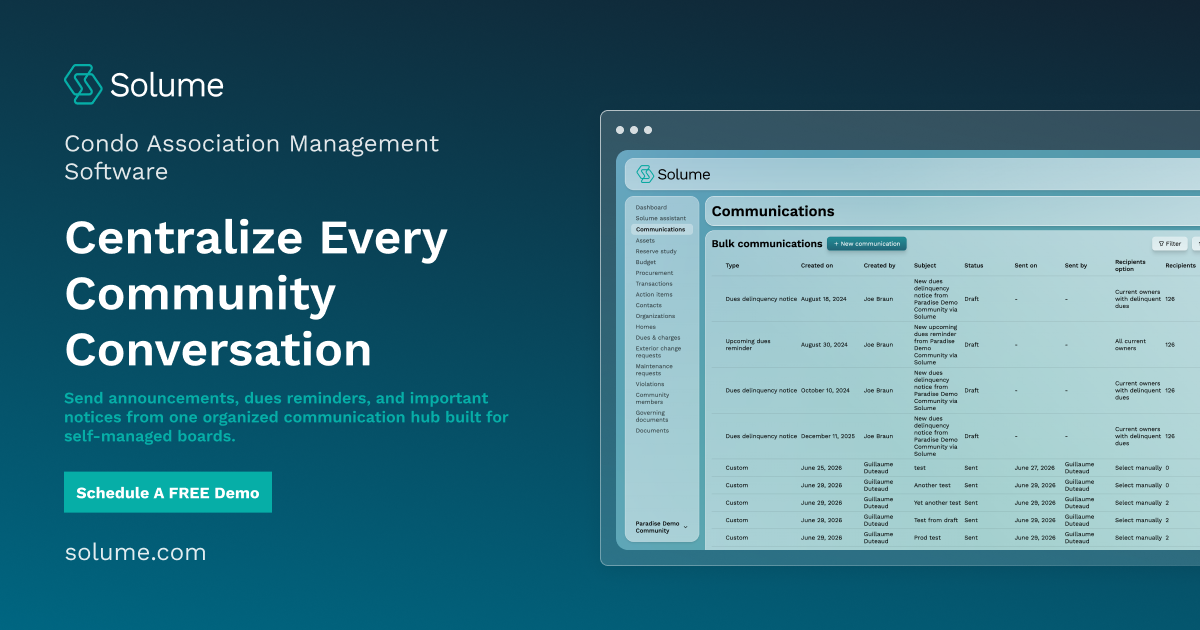
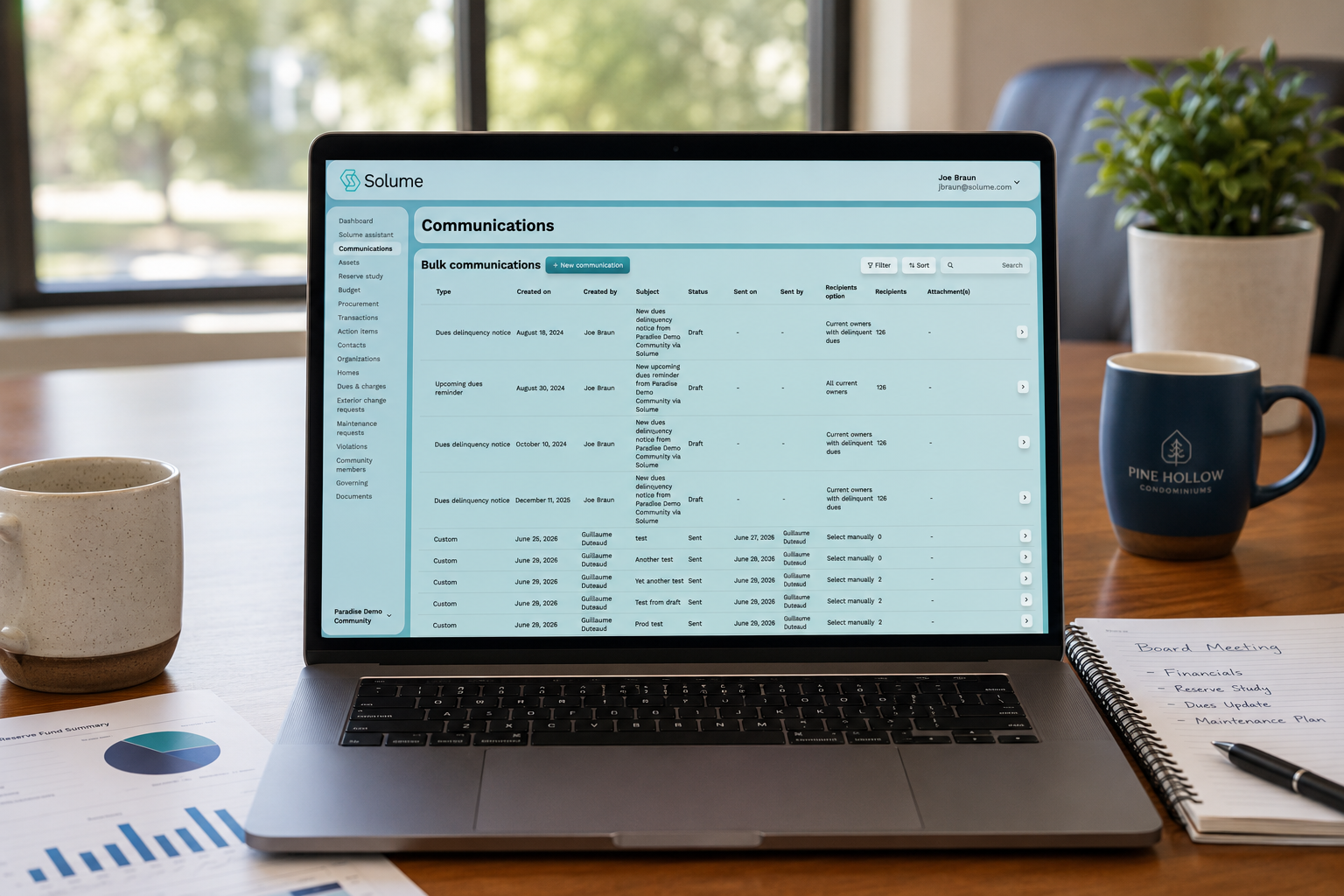
A centralized communication hub fixes the "I never got that notice" problem. Announcements, meeting notices, and policy changes go out through one channel and get logged. There's a record of what was sent and when. Resident communication stops depending on whether someone remembered to CC the whole board.
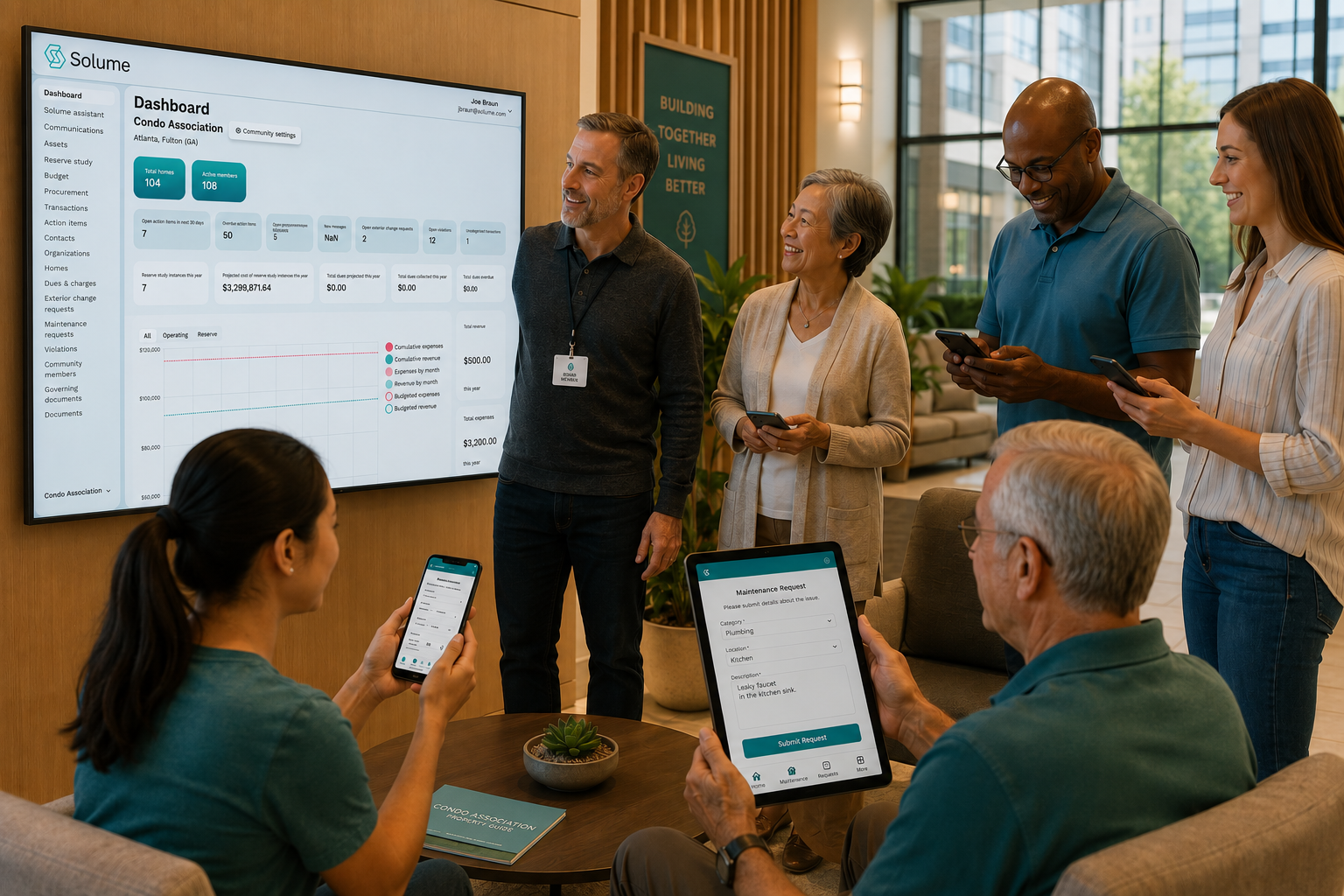
The homeowner portal is the other half. Owners submit maintenance requests, check their dues balance, and access documents without emailing anyone. That self-service cuts the board's inbox down dramatically. It gives residents answers on their own schedule through a mobile app.
Architectural review requests are a common friction point that these tools smooth out. Instead of a paper form that gets lost, arc request management routes each architectural review request, tracks its status, and stores the decision. When an owner asks why their fence color was denied two years later, the answer is one search away. Good resident communication isn't about talking more. It's about making decisions visible and easy to verify.
How to choose the right software for your association
Start with the problems your board actually has, not the longest feature list. A community drowning in delinquencies needs strong dues collection and financial reporting first. A community facing tighter state laws needs reserve planning and compliance tools before anything else.
Ask three practical questions. Does its HOA management software handle HOA accounting to a standard your CPA would accept? Can a non-technical volunteer board member use it without a training manual? And does your data security hold up, keeping records yours rather than locked inside a vendor you can't leave?
Data security deserves real attention. You're storing owners' names, addresses, and payment information. Look for a platform that encrypts data and offers a clear answer about who owns the records if you cancel.
Price matters, but the cheapest property management software often costs more later in manual workarounds. Most reputable platforms offer a free trial, so use it. If you want a head-to-head comparison, our rundown of the best software for self-managed boards in 2026 is a useful starting point. Load real dues data, run a report, and have your least tech-savvy board member try to submit a request. If they can do it without calling you, that's your answer. Cloud-based software only the treasurer understands isn't much better than the spreadsheet you're replacing.
Software built for self-managed boards vs. property managers
Most condo association management software on the market was built for property management companies, not for boards. That distinction matters more than the sales pages admit.
Many boards assume the choice is "hire a management company or figure it out alone." In reality, the right all-in-one platform makes self-management genuinely workable. It also helps even communities that keep their manager. Solume is built specifically for self-managed HOA and condo association boards, which is why its tools center on the volunteer rather than the professional. If your management company is doing work you could handle with software, that's money you could reinvest in the community instead.

Reserve study and long-term capital planning integration
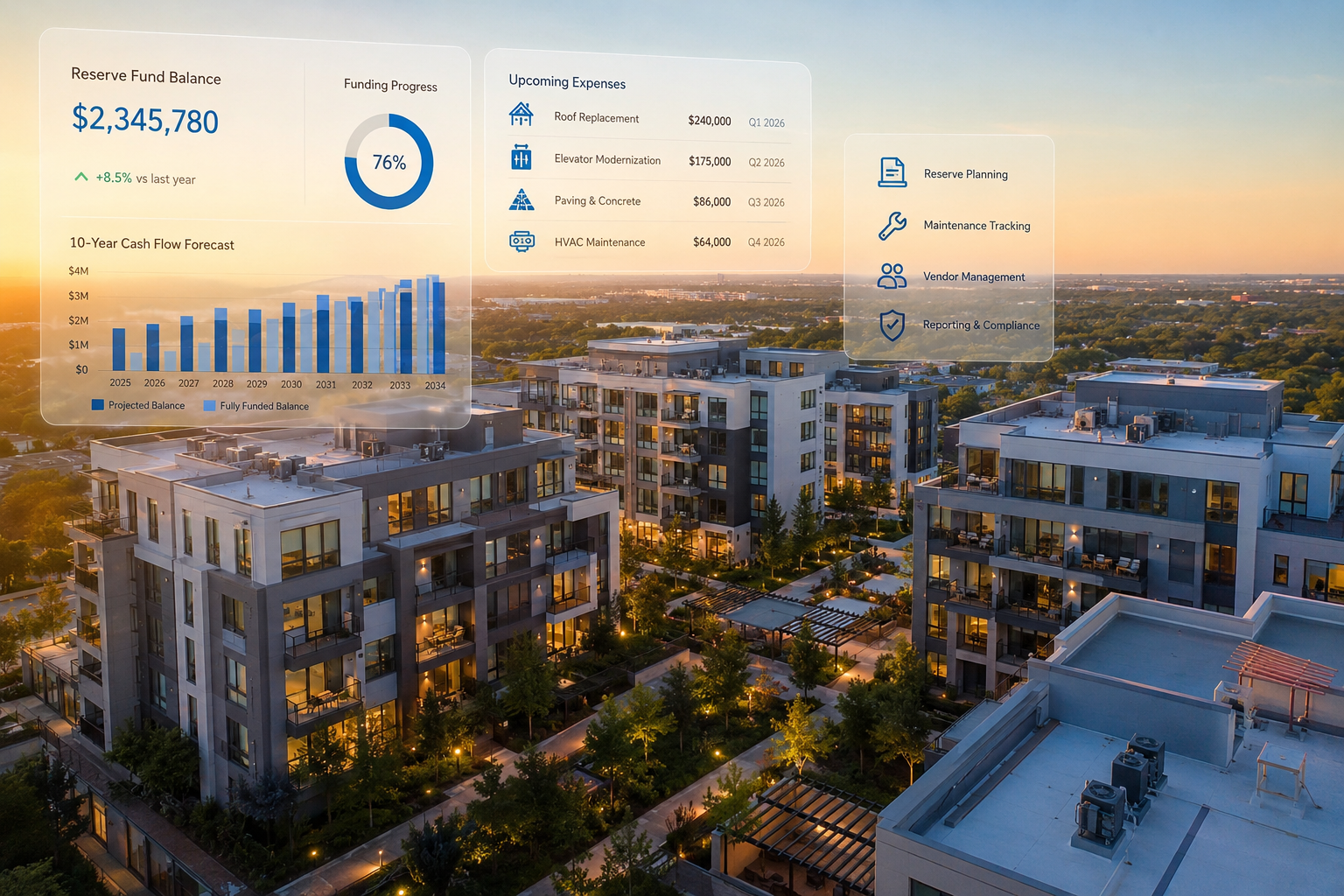
Here's the risk most boards overlook: the roof, the elevators, and the parking lot are all quietly aging while dues stay flat to keep owners happy. Then a major system fails and the board hits everyone with five-figure special assessments nobody saw coming.
The 2021 Surfside condo collapse in Florida, which killed 98 people, put deferred maintenance and reserve planning under a national spotlight. States responded with tougher rules. Florida now requires structural inspections and funded reserves for many condo buildings, and boards should review the specifics of Florida condo reserve requirements before their next budget cycle. A reserve study projects when each major component will need replacement and how much to set aside now.
Consider a 60-unit association that kept dues flat for a decade to avoid upsetting owners. When the flat roof failed after a storm, the reserve fund covered barely a third of the replacement cost, and the board had to levy a $9,000-per-unit special assessment weeks before the holidays. A funded reserve study would have spread that cost across years instead of dropping it on owners at once.
Most condo association management software ignores this entirely, treating capital planning as somebody else's job. That's a mistake, because reserve planning is one of the biggest levers a board has against special assessments and community instability. Solume includes automated reserve study tool that connect long-term capital planning to the association's actual finances, so boards can see the funding gap before it becomes an emergency.
The mechanism is simple. Deferred maintenance doesn't disappear. It compounds. A component you underfund by a little each year turns into a special assessment that damages property values and community stability. A living reserve study, updated as conditions change, is how boards stay ahead of it instead of reacting after the failure.
State compliance support and fiduciary duty tools
Compliance used to be an afterthought for most boards. It isn't anymore. States including Florida, California, Colorado, Nevada, and Hawaii have tightened reserve study and disclosure requirements. In Florida, much of this stems from Florida Statute 718 governing condominiums, which spells out the board's obligations in detail. The penalties for getting it wrong now land on individual board members through their fiduciary duty.
The root cause of most compliance failures isn't defiance. It's that volunteer board members simply don't know what the current state laws require, and the rules keep changing. Software that tracks deadlines, stores required disclosures, and maintains an audit trail turns compliance from a memory test into a process.
HOA laws vary significantly by state, so boards should confirm their specific obligations with their attorney and reference their own state statutes directly. No software guarantees compliance or prevents lawsuits, and anyone claiming otherwise is overselling.
Good tools reduce risk and support each board responsibility. They keep records that document how the board acted, which can help members when a decision is challenged and reinforce community stability. Financial transparency and clean documentation are among the board's best defenses.

If your board wants a clearer way to manage dues collection, reserve planning, and compliance without depending on a management company, you can see whether it fits your community on a short 15-minute call. Solume was built for self-managed HOA and condo association boards, and the fastest way to know if this HOA management software is right for you is to walk through your actual numbers together.
Frequently Asked Questions
What is condo association management software and how does it work?
It's a platform that centralizes an association's administrative work, including dues collection, financial reporting, document storage, and resident communication. Instead of juggling spreadsheets and email threads, boards manage everything from one system, which reduces manual errors and keeps records accessible.
Is software really better than managing our HOA with spreadsheets?
Spreadsheets are cheap and flexible, but studies show up to 88% contain input errors, and they get harder to maintain as a community grows. Software automates recurring billing, tracks history, and keeps homeowners' financial data consistent, which matters most when board members rotate or fiduciary questions come up.
Is this worth it for a small association with only a handful of units?
For very small communities, a free or low-cost plan (some start under $10 per month) often covers the essentials without straining the budget. The value comes less from unit count and more from replacing error-prone manual bookkeeping and protecting the board from compliance mistakes.
What if our board is run entirely by volunteers with no accounting or legal background?
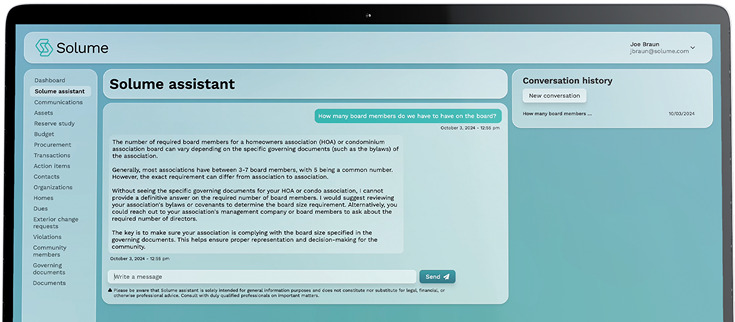
Most self-managed boards are led by retirees and homeowners with full-time jobs, not professionals. Platforms built for self-managed communities, like Solume, add automated financial tools and an AI assistant to explain governing documents and state compliance requirements in plain language.
Can this software help us stay compliant with state HOA laws?
Many platforms now include compliance tracking and reserve study tools, which matter in stricter states like Florida, California, and Colorado.