A homeowner in Spartanburg opens a letter saying the association plans to foreclose on their house over $600 in unpaid assessments, plus attorney's fees that now dwarf the original debt. That outcome can occur under South Carolina law, and it surprises most people who assume the state tightly polices what associations can do. South Carolina HOA laws are thinner than homeowners expect. That gap puts unusual weight on each community's own recorded documents. This article walks through how dues get set, what notice boards owe, how liens and foreclosure work, and what HOA board duties fall on the directors running the association.
Key Takeaways
South Carolina HOA laws rely on a 2018 statute that's narrower in scope than comprehensive HOA laws in states like Florida or California.
- Governing documents, not state statute, are the primary source of an HOA board's enforcement authority in South Carolina.
- Boards operating outside the Nonprofit Corporation Act must give homeowners 48-hour notice before approving a budget increase.
- South Carolina has no statute preventing HOA fines or lien-based foreclosures, so enforcement power depends on what the recorded covenants actually authorize.
- State law requires HOAs to maintain a fair, documented internal dispute resolution process before conflicts escalate further.

What South Carolina HOA laws are (overview of governing statutes)
South Carolina didn't have a dedicated HOA statute until fairly recently. Before 2018, homeowners associations ran almost entirely on their recorded covenants and whatever corporate rules applied. That changed with the South Carolina Homeowners Association Act, codified in Title 27, Chapter 30 of the South Carolina Code of Laws. It added recording rules, notice requirements, and disclosure obligations, but it stopped well short of the detailed regimes you see in Florida or California. It's worth looking at how another state recently overhauled its HOA law for comparison, since it shows just how much further some legislatures have gone.
Here's the hard truth most boards miss: the statute is a floor, not a ceiling. It sets minimum legal requirements for HOAs, then defers to each community's governing documents for nearly everything else. Enforcement authority, fine schedules, how HOA fees are calculated, lien rights, and architectural rules all live in the declaration and bylaws, not in the code. If your covenants are silent on something, state law usually won't fill the gap in your favor. This is the single biggest reason South Carolina HOA laws confuse new board members: they look for answers in the statute when the real answers are in their own recorded documents.
Three legal frameworks can apply at once. The Homeowners Association Act covers planned communities. The South Carolina Nonprofit Corporation Act governs HOAs that are incorporated, which most are. The Horizontal Property Act applies to condo association structures. You can read the full text of the Homeowners Association Act, known formally as the South Carolina Homeowners Association Act, through the state legislature's statute database. Incorporated associations should also review the South Carolina Nonprofit Corporation Act provisions for HOAs, since that chapter governs director conduct and corporate formalities that the HOA Act doesn't touch.
For a self-managed HOA, the practical takeaway is simple. Your governing documents carry more legal weight here than in most states. Read them before you rely on any assumption about what the board can or can't do.
The South Carolina Homeowners Association Act and key definitions
The South Carolina Homeowners Association Act created a handful of baseline legal requirements for HOAs that didn't exist before. The most important ones concern recording and notice. Governing documents, including covenants and restrictions, bylaws, and rules, must be recorded with the county register of deeds. If they aren't recorded by a specific annual deadline, the HOA can lose the ability to enforce them. The penalty exists to protect homeowners from secret or unwritten rules: if a restriction isn't on the public record, a court has no way to confirm an owner was ever bound by it. That's a real consequence, not a technicality.
The Act also sets notice requirements around budgets. A board of directors that isn't holding a membership meeting to approve a budget increase must give homeowners at least 48-hour notice before voting to raise it. Many assume this means a full homeowner vote is required on every dues hike. In reality, the statute requires notice, not approval, unless the governing documents demand a vote.
A few key definitions matter. An "association" means the nonprofit entity responsible for a planned community. "Governing documents" covers the declaration, bylaws, rules, and any recorded amendments. "Assessments" are the charges owed by lot owners, which is where the term HOA dues comes from in everyday use. Keeping these definitions straight matters because the statute's protections attach to specific documents and specific charges, not to loose or informal arrangements a prior board may have relied on.
The Act does not create a state agency to supervise associations. There's no HOA regulator fielding complaints. The South Carolina Department of Consumer Affairs collects complaint data and publishes guidance, which you can review through the South Carolina Department of Consumer Affairs. Enforcement happens through your documents and, if needed, the courts, which is why meeting the law's compliance requirements matters more here than in states with active regulators. For a self-managed board, that lack of oversight cuts both ways: no agency checks your compliance, but no agency defends you either if a homeowner challenges a decision you can't document.
How HOA dues and assessments are calculated and set
HOA dues aren't arbitrary. They start with a budget. The board estimates the coming year's costs for what the association maintains: landscaping, insurance, common-area utilities, management, and reserve contributions for big-ticket repairs down the road. Total those costs, divide by the number of lots using the formula in your declaration, and you get the per-home assessment. That's the core of how HOA fees are calculated in most South Carolina communities.
The allocation method lives in your governing documents. Some declarations split costs equally across every lot. Others use a percentage tied to square footage or unit type, which is common in a condo association. The reason this matters: a board can't just pick a number it likes. If the declaration says equal shares, the board can't quietly bill larger homes more without amending the documents. That constraint exists because the assessment formula is part of the contract every owner agreed to at purchase, and changing it mid-stream without the required vote exposes the board to a challenge.
Special assessments are the other half of the picture. When reserves fall short and a roof, road, or retaining wall needs replacing, boards levy special assessments to cover the gap. Underfunded reserves are the usual cause. A community that skips reserve planning for a decade often faces a sudden five-figure special assessment per owner, and that's exactly what fuels homeowner anger and board turnover.
What many communities don't realize is that the governing documents often cap how much the board can raise regular dues or impose in special assessments without a membership vote. Check those limits before setting a budget. Reserve study tools, like the ones built into Solume, help boards project future capital costs so dues increases stay gradual instead of arriving as a shock. Boards that want to manage HOA dues collection more efficiently often find that pairing reserve planning with automated billing prevents the kind of shortfall that forces a painful special assessment later.
Delinquent dues: what happens when homeowners don't pay
When a homeowner stops paying, the association's cash flow problem becomes everyone's problem. Delinquent HOA dues don't just hurt the board. They shift the burden onto neighbors who pay on time, because the budget still has to be met. One non-payer in a 30-home community can force a late fees scramble or a mid-year shortfall.
The collection path depends on your governing documents, since South Carolina statute says little about it. Most declarations lay out a sequence. First comes a reminder of the past-due amount owed. Late fees and interest attach next. After that, the board may send a formal demand, refer the account to an attorney, and eventually record an HOA lien against the property. Each step usually carries its own notice requirements written into the covenants.
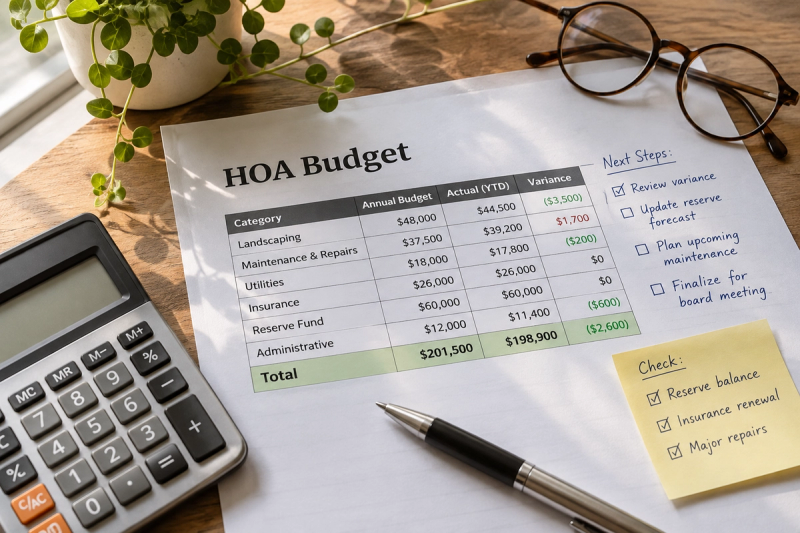
What actually happens is that costs snowball fast. A $300 balance can balloon once attorney's fees and interest pile on delinquent HOA dues, because most declarations let the association recover collection costs from the owner. That's how a modest debt turns into thousands.
Boards have discretion here, and discipline matters. Consistent collection protects community stability and keeps the association from looking like it's targeting specific owners. A board that waives late fees for friends but forecloses on strangers invites a fairness challenge. The cleaner approach: apply the same collection timeline to every delinquent account, document every notice, and follow the escalation sequence exactly. Solume's dues collection system automates reminders and tracks each account on the same timeline, reducing the risk of selective enforcement.
HOA liens and foreclosure authority in South Carolina
This is where South Carolina surprises people. The state has no statute preventing HOA liens or lien-based foreclosure. If your recorded declaration authorizes an HOA lien for unpaid assessments, the association can place one on the home and, in many cases, pursue foreclosure to collect unpaid assessments. HOA foreclosure in South Carolina can happen, and it hinges almost entirely on the covenants.
The mechanism works like this. The declaration typically states that unpaid assessments automatically become a lien on the lot, or that the board records a notice. That lien then sits against the title. If the debt stays unpaid, the association can file a foreclosure action in circuit court, and the foreclosure process follows the same general steps as a mortgage foreclosure.
The 2022 South Carolina Supreme Court decision in the Winrose case sharpened the stakes. It involved an HOA foreclosure over a small delinquent balance that led to the sale of a family's home, and the court scrutinized whether the sale price was so low it shocked the conscience. The lesson boards should take: even when foreclosure is legally available, courts can intervene when the result is grossly disproportionate to the debt.
Picture a self-managed board that lets an $800 balance drift for two years, then forecloses to recover it along with several thousand dollars in accumulated fees. Even where the covenants technically authorize that sale, a court applying the Winrose reasoning can unwind it if the home's value dwarfs the debt, leaving the association with legal bills and no recovery. The practical consequence is that aggressive foreclosure over a small sum can cost the community far more than it collects.
HOA foreclosure outcomes in South Carolina depend on your documents and relevant case law, and they vary by community and county. Boards should have an attorney review their collection and foreclosure procedures, since every community's situation is different. To avoid a Winrose-style problem, pursue foreclosure as a last resort, not a first move.
Board member fiduciary duties and responsibilities
Serving on an HOA board isn't a casual volunteer gig. Board members owe a fiduciary duty to the association and its members. That means acting in good faith, in the community's best interest, and with the care a reasonably prudent person would use. Those HOA board duties apply whether you're a retired treasurer or a homeowner squeezing board work into evenings.
The Nonprofit Corporation Act is where most of this fiduciary-duty language lives for incorporated associations. It requires directors to act honestly, avoid self-dealing, and make informed decisions. The root cause of most board liability isn't fraud; it's inattention. Skipping reserve planning, ignoring deferred maintenance, or approving a budget without reading it are the quiet failures that create exposure.
Core board responsibility covers setting the budget, maintaining common areas, enforcing covenants and restrictions evenly, and keeping finances transparent. The board also has to run a proper annual meeting and follow the notice requirements in the bylaws. Miss those steps and even a correct decision can be challenged on process grounds.
Many assume board members are personally on the hook for every dollar the association spends. In reality, directors who act in good faith and within their authority are generally shielded, which is a core reason the fiduciary standard focuses on process rather than outcome. The practical defense: document your reasoning, disclose conflicts, and follow your own governing documents. A board that can show it followed a fair, documented process is far harder to second-guess.

Record-keeping, disclosure, and transparency requirements
Financial transparency isn't a nice-to-have in South Carolina; in some cases, it's a legal obligation. The Homeowners Association Act entitles members to access certain governing documents, budgets, and membership information. If a homeowner asks to see the budget or the recorded declaration, the board generally has to produce it under the Act's disclosure requirements. Stonewalling that request is one of the fastest ways to lose homeowner trust and invite a lawsuit.
Good record keeping starts with the basics. Keep current, recorded copies of the declaration, bylaws, and rules. Maintain board meeting minutes, annual budgets, financial statements, reserve study reports, and a membership roster. These records do double duty: they satisfy disclosure requirements, and they protect the board if a decision is ever questioned.
Here's where self-managed boards stumble most. Documents live in a retiring treasurer's email, minutes go unwritten, and no one can locate the last reserve study. When that treasurer moves away, institutional memory walks out the door. A disorganized self-managed HOA isn't just inefficient. It can't show it met its legal requirements, which becomes a problem the moment a dispute lands. This pattern shows up often enough that it's worth reading through the common challenges self-managed boards face before your own board hits the same wall.
The reason transparency reduces conflict is straightforward. Most homeowner anger comes from suspicion, not the actual numbers. When residents can see where their HOA dues go, disputes drop. A centralized system where records, budgets, and communications live in one place, rather than scattered across personal inboxes, is how modern boards keep financial transparency from depending on any single volunteer's memory. Solume centralizes member records, financial reports, and association documents so the board stays audit-ready.

Homeowner rights and protections under state law
Homeowners in South Carolina have real rights, even if the statute is lighter than in other states. The clearest ones come from the Homeowners Association Act: the right to access recorded governing documents, budgets, and membership lists, and the right to receive proper notice of budget changes. The 48-hour notice rule on budget increases is a concrete, checkable homeowner right.
Some homeowners confuse the federal Homeowners Protection Act, which addresses mortgage insurance cancellation, with HOA law entirely. South Carolina residents should instead focus on the state's own HOA framework for association-specific protections. Within that framework, homeowner rights center on notice, access, and fair process rather than broad substantive limits on what boards can do. The state leans on process rather than hard caps because South Carolina HOA laws defer to the recorded covenants, so the statute guarantees fair procedure rather than dictating the outcome of any given dispute.
One protection stands out. The Act requires associations to maintain a fair, documented internal dispute resolution process. Before a disagreement over a fine or an architectural denial escalates to court, there has to be a defined internal path to raise it. That matters because it gives homeowners a first step that doesn't require hiring a lawyer. It's also worth knowing that some fines and restrictions trace back to rules that may not hold up legally if they conflict with recorded covenants or state statute, so a dispute isn't always a losing proposition for the homeowner.
Many homeowners don't realize that HOA laws vary significantly by state, so protections you read about for Florida or Nevada may not exist here. Verify your rights against the South Carolina Code of Laws and your own recorded documents, and review the specifics with an attorney rather than assuming a general rule applies. Where homeowner rights get thin is substantive fairness; South Carolina leaves most of that to the covenants, so protections you want often have to be written into the governing documents, not assumed from statute.
How to prevent and handle late dues payments
The best fix for late payment of HOA dues happens before anyone falls behind. Clear communication up front does more than any collection letter. Tell owners exactly when assessments are due, what the grace period is, and what late fees apply. Most late payment of HOA dues isn't defiance; it's a missed due date or a confusing payment process.
Make paying easy. If owners can only pay by mailing a check to a volunteer's home address, you've built friction into the system. Flexible payment options, online payment, and autopay reminders cut the delinquency rate without any enforcement effort. The reason this works is simple: when payment takes seconds instead of a trip to the mailbox, the most common cause of delinquency, a missed deadline, largely disappears. Solume's dues collection system offers flexible payment options and automated reminders, which directly target the missed-deadline cause of most delinquencies.
When someone does go delinquent, consistency is everything. Follow the same escalation sequence for every owner: a reminder, then the late fee, then a formal notice, then attorney referral if it reaches that point. Document each notice with a date. That record protects the board of directors and keeps efforts to collect unpaid assessments defensible if the owner later disputes it.
Picture a self-managed HOA that let three owners slide for a year because no one wanted the awkward conversation. By the time the board acted, the combined delinquent HOA dues had grown large enough to force a special assessment on everyone else, and two neighbors stopped speaking. A simple automated reminder on day one would likely have caught the lapses while they were small. The lesson: handle late payment early and uniformly, and the hard conversations rarely come up.
Compliance checklist for South Carolina self-managed boards
Compliance requirements for a South Carolina board aren't complicated, but they're easy to let slip. Here's a practical checklist a volunteer board can work through in one sitting.
First, confirm your governing documents are recorded and current. Check that the declaration, bylaws, and covenants and restrictions are recorded in the county register of deeds, and re-record them as the statute requires. Unrecorded documents can cost you enforcement authority.
Second, lock down your notice requirements. Give the 48-hour notice before any budget increase vote the board makes outside a membership meeting. Hold a proper annual meeting with the notice your bylaws specify.
Third, run your finances in the open. Keep a current budget, financial statements, and reserve study reports accessible to members. Meeting disclosure requirements are half the battle against homeowner distrust.
Fourth, apply dues collection uniformly. Use the same escalation timeline for every delinquent account, document each notice, and keep your late fees and lien procedures tied to what the documents authorize.
Fifth, maintain your internal dispute resolution process. Have a written path for homeowners to raise concerns before anything reaches court.
Sixth, nail down record keeping. Centralize minutes, budgets, rosters, and vendor contracts so nothing depends on a single volunteer's inbox. Meeting HOA legal requirements gets much easier when everything lives in one place. These compliance requirements protect both the board and community stability, and South Carolina HOA laws reward associations that treat their documents and records seriously.
If your board wants a clearer way to manage dues collection, reserve planning, and compliance records without a management company, you can see how it works for your community on a short call. It's a 15-minute conversation to find out whether Solume fits how your board actually operates, not a sales pitch.
Frequently Asked Questions
What laws actually govern HOAs in South Carolina?
Three main sources apply: the South Carolina Homeowners Association Act (Title 27, Chapter 30, effective May 2018), the Nonprofit Corporation Act if the HOA is incorporated, and the Horizontal Property Act for condos. Beyond these, most day-to-day authority comes from the HOA's own recorded declaration, bylaws, and CC&Rs rather than state statute.
Does an HOA board actually have legal authority to enforce rules, or just the covenants?
An HOA's enforcement power comes from its recorded governing documents, not from South Carolina statute granting it independent authority. Courts generally hold boards to whatever powers are written into the declaration and bylaws, so a rule with no basis in those documents is hard to enforce.
Do HOA bylaws have to be recorded in South Carolina?
Yes. Under the Homeowners Association Act, governing documents, including bylaws, must be recorded, and homeowners are entitled to access them along with budgets and membership lists. An HOA operating off unrecorded or outdated bylaws creates legal exposure for the board, not just a paperwork gap.
Can a South Carolina HOA foreclose on a home over unpaid dues?
Yes, if the governing documents authorize liens for unpaid assessments, fines, late fees, and attorney's costs. South Carolina has no statute barring this, so the lien and foreclosure process depends almost entirely on what the covenants allow, which varies significantly between communities.
Is South Carolina's HOA law actually strong enough to protect homeowners?
Not as comprehensive as states like Florida or California. The 2018 Homeowners Association Act covers recording requirements, meeting notice, and document access, but it omits protections like board certification or strict reserve-funding mandates, leaving most authority to each community's own documents.
What are the warning signs of a dysfunctional HOA board?
Common red flags include unrecorded or outdated governing documents, no internal dispute resolution process, financial records residents can't access, and budget decisions made without the required notice. In South Carolina, a board skipping the 48-hour notice rule for budget increases is a specific, checkable sign of a bigger transparency problem.
Is it worth fighting an HOA dispute instead of just paying the fine?
It depends on whether the fine traces back to authority in the recorded governing documents. South Carolina law now requires HOAs to maintain a fair internal dispute process, so homeowners have a defined first step before deciding whether to pursue a dispute further.
Do South Carolina HOA laws cover marital property disputes involving a home in an HOA?
No. Marital property division in South Carolina is handled under separate equitable distribution statutes and family court, not the Homeowners Association Act. An HOA's only role in a divorce is enforcing assessments and covenants against whoever holds title, regardless of the marital settlement.