
A Northern Virginia condo board just discovered it's $200,000 short on roof-replacement funding. The reserve study they commissioned three years ago sits in a filing cabinet, and their accounting software never connected monthly dues to future obligations. This scenario repeats across Virginia because most HOA software for Virginia communities treats reserve studies as static documents instead of living financial plans.
This guide walks through what Virginia communities actually need in HOA software, how self-managed and professionally managed boards have different requirements, and which compliance considerations matter in 2026.
Key Takeaways
- HOA software for Virginia communities must handle both day-to-day operations and long-term financial planning, including reserve study integration
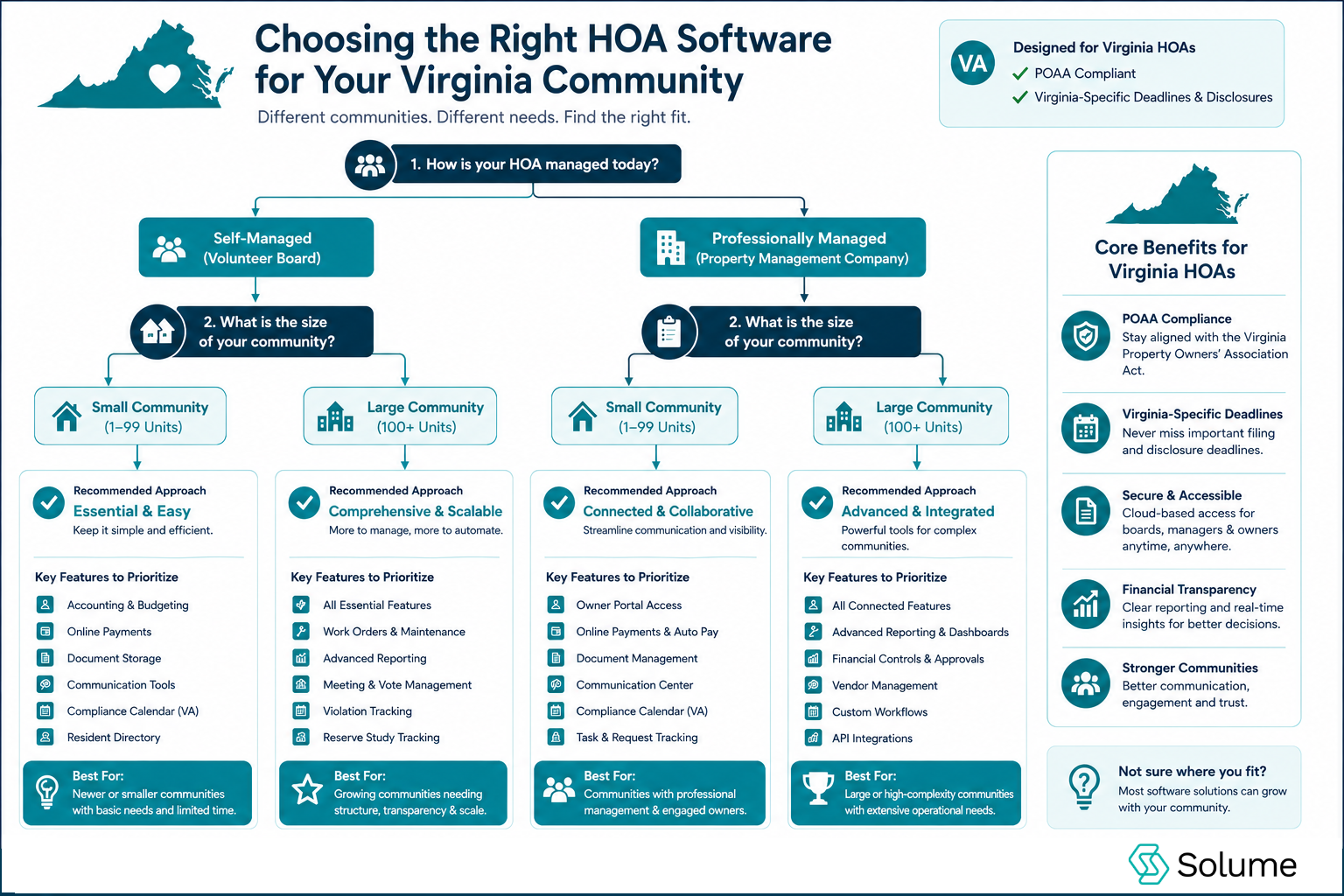
- Self-managed HOA boards require intuitive platforms with strong financial management and homeowner portal features, while professionally-managed communities need vendor management and compliance tracking
- AI assistant tools now help boards interpret Virginia's governing documents and track compliance requirements without legal expertise
- Reserve study integration separates modern community management software from legacy accounting platforms
- Board members should prioritize transparency, financial reporting, and communication tools over feature lists when evaluating platforms
- Small associations often see the fastest ROI from HOA management software because they eliminate the most manual work
Key Features to Look for in HOA Management Software
The right HOA software for Virginia communities depends on what problems you're actually trying to solve. Most boards start shopping after a crisis: a special assessment, a compliance violation, or a treasurer who quits mid-term.
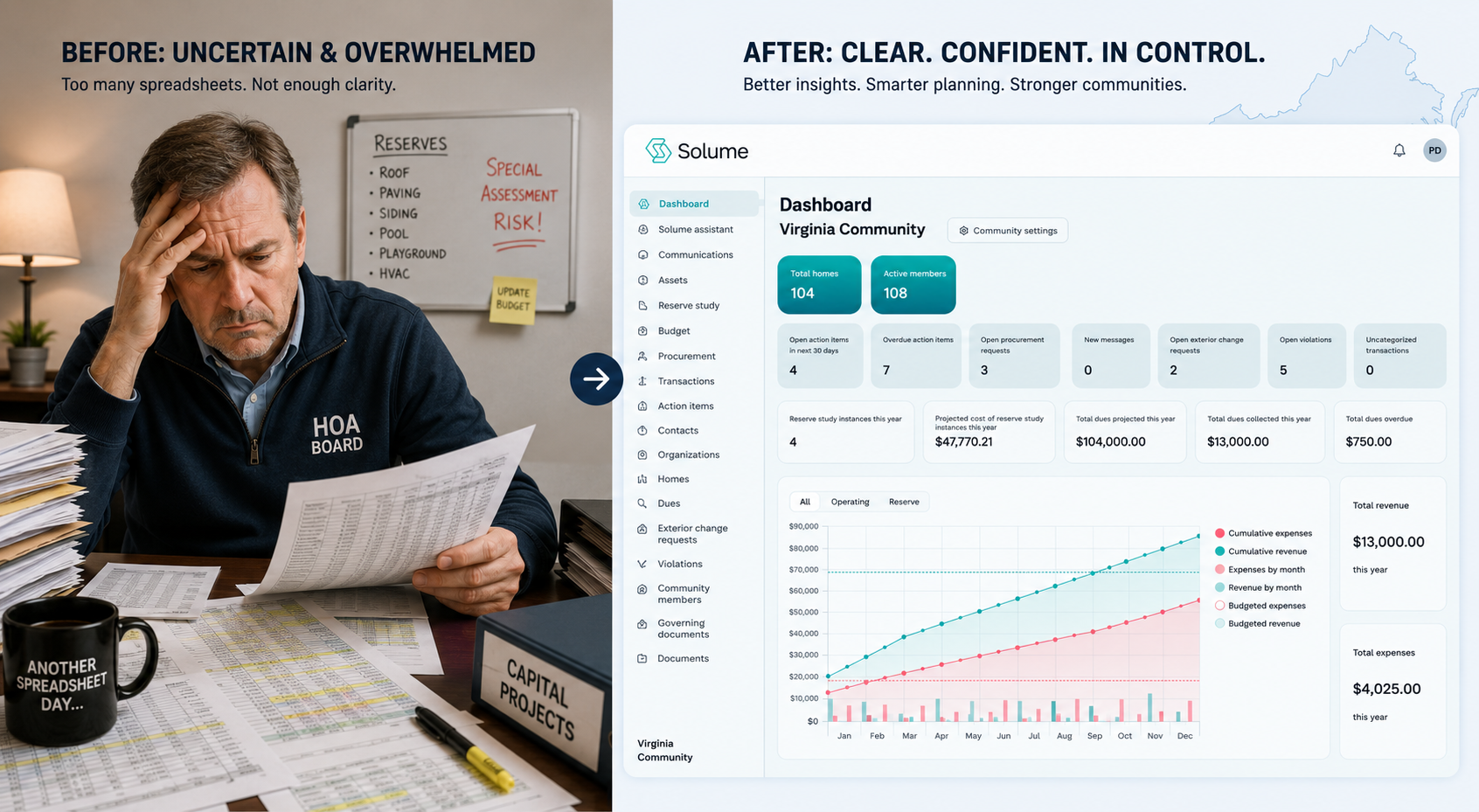
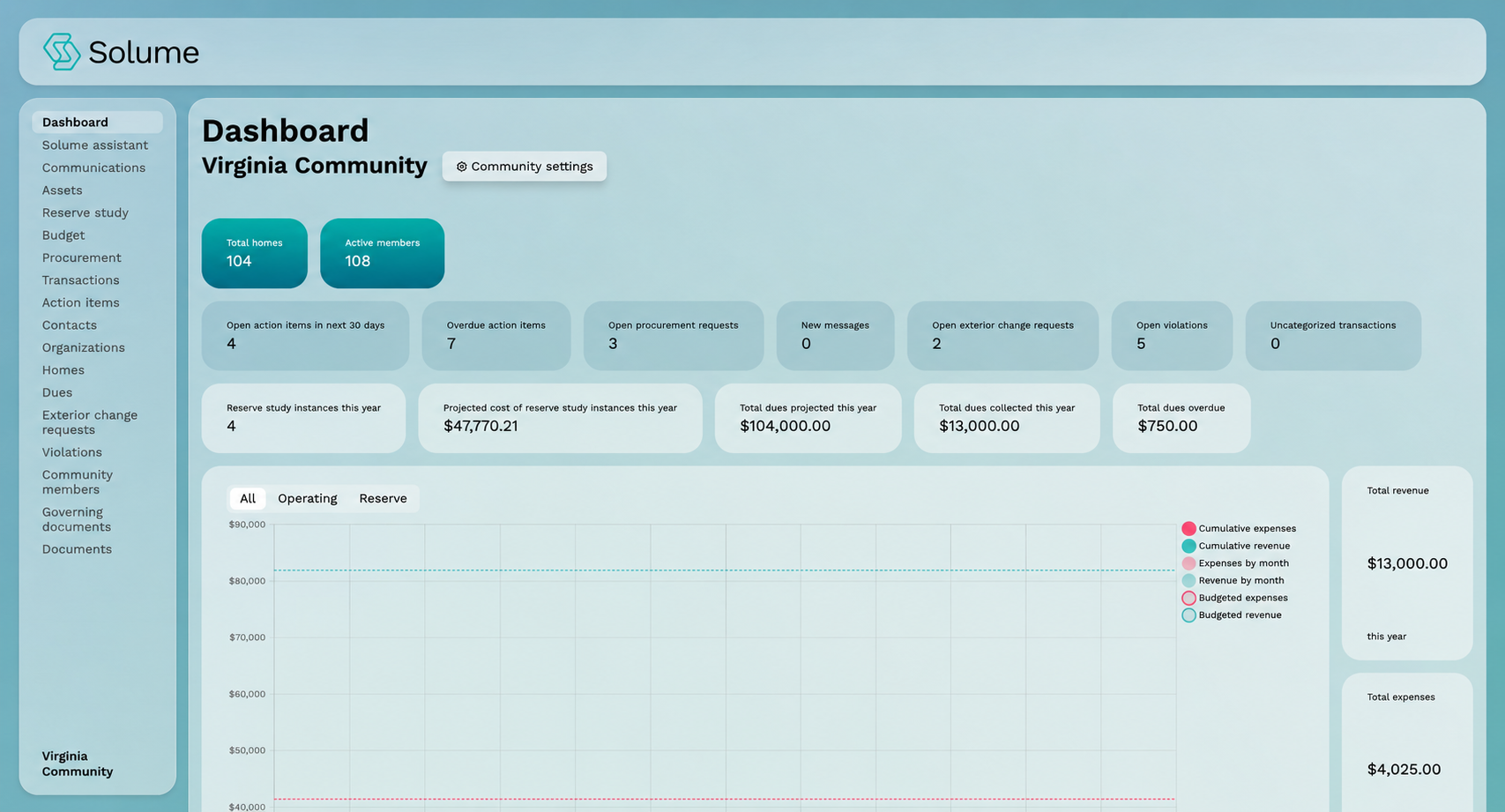
Financial management tools are non-negotiable. Your platform needs to handle dues collection, generate financial reporting that homeowners can understand, and track expenses by category. Understanding HOA accounting fundamentals is essential when evaluating whether a platform meets your community's needs. Basic accounting tools don't connect current spending to future obligations. That's where reserve study integration becomes critical, because boards need to see whether today's funding decisions will prevent or trigger special assessments five years from now.
A homeowner portal reduces the board's workload by allowing residents to submit architectural review requests, view documents, and make online payments without emailing the treasurer. If homeowners can't see financial reports or understand how their fees are spent, you'll spend board meetings defending decisions instead of making them.
Communication tools should let you send announcements, manage violation notices, and keep a record of what was communicated and when. Your HOA software should preserve institutional knowledge.
Document storage needs version control. Boards often discover they've been referencing outdated governing documents or incomplete reserve studies. Centralized storage prevents that problem.
Vendor management becomes essential as communities age. You need a system that tracks maintenance requests, stores vendor bids, and connects repair work to your reserve study line items.
Compliance tracking is where Virginia boards run into trouble. State laws around reserve studies, meeting notices, and financial disclosures are tightening. Your platform should flag deadlines and requirements before you miss them, especially regarding regulations from the Virginia Department of Professional and Occupational Regulation.
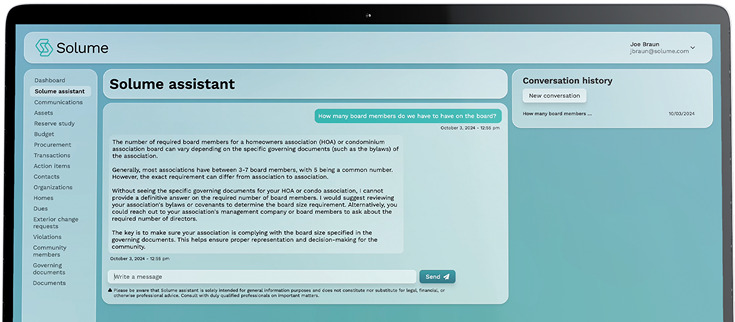
Modern platforms now include AI assistant features that interpret your governing documents and answer compliance questions in plain language. It's a practical tool that prevents boards from making expensive mistakes.
Self-Managed vs Professionally-Managed HOA Software Needs in Virginia
A self-managed HOA board and a professionally-managed homeowners association need different things from their software. Most platforms are built for property management companies, which creates problems for boards trying to manage their own communities.
Self-managed communities need intuitive financial management that doesn't require accounting expertise. The treasurer is usually a volunteer with a full-time job. Understanding the challenges self-managed communities face helps boards identify which software features will provide the most value. A self-managed HOA also needs robust homeowner portal features because it doesn't have office staff to field questions. Residents should be able to find governing documents, submit requests, and view financial reports without contacting a board member.
Reserve study integration is critical for self-managed communities because they don't have a property manager tracking capital planning. Cloud-based software needs to show what's funded, what's not, and when major expenses are coming due.
Professionally-managed communities need vendor management and compliance tracking that their management company can actually use. The risk most boards overlook is that their management company controls access to all community data. Choose HOA management software where the HOA board owns the account, not the property management firm.
Professionally-managed boards should also have direct access to financial reporting and communication tools. If you can't see real-time access to financial data or communicate with homeowners without going through a third party, you've outsourced control, not just operations.
AI and Automation Features in Modern Community Management Software
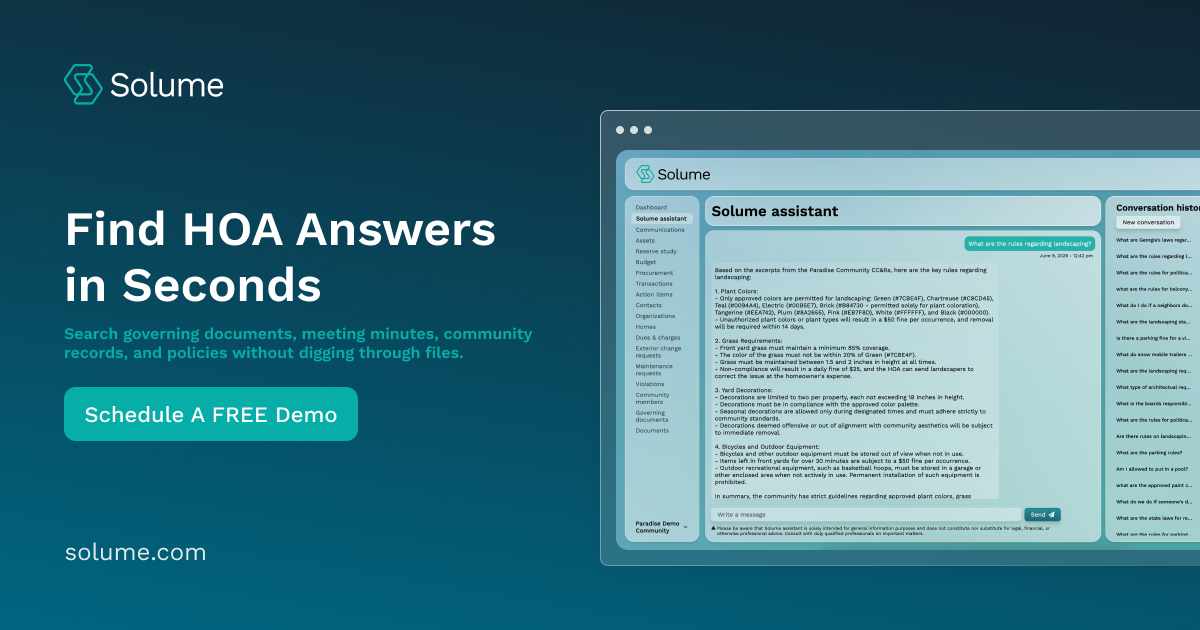
AI tools in HOA software are solving problems that once required hiring professionals. Most boards need answers to specific questions, such as "Does our governing document allow short-term rentals?" or "What does Virginia law require for reserve study funding?"
AI assistant tools now read your governing documents, state statutes, and community policies, then answer questions in plain language. It's about helping volunteer board members understand what rules apply before they make a decision.
Automation features handle repetitive tasks that burn out treasurers. Automated dues collection reminders, late fee calculations, and financial reporting generation eliminate hours of manual work each month. Small community associations see the biggest impact because they're often running everything through spreadsheets.
Compliance tracking automation flags deadlines for annual meetings, reserve study updates, and state filing requirements. Missing a compliance deadline can trigger fines or legal challenges from homeowners.
Document analysis tools can scan your reserve study and flag components that are underfunded or approaching their replacement date. That turns a static PDF into actionable data your board can actually use for long-term planning.
Virginia-Specific HOA Compliance and Regulatory Considerations
Virginia HOA boards operate under the Virginia Property Owners' Association Act and the Virginia Condominium Act, depending on their community type. Most boards assume compliance is simple until they face a homeowner dispute or a state inquiry.
Reserve study requirements in Virginia aren't as prescriptive as Florida's SIRS law, but that doesn't mean boards can ignore capital planning. Virginia courts have held boards liable for failing to maintain common elements, meaning that underfunded reserves create legal exposure even without explicit statutory mandates. Understanding Virginia's reserve study requirements helps boards stay compliant and avoid liability. A current reserve study provides documentation that your board is planning responsibly.
Meeting notice requirements vary by your governing documents, but Virginia law sets minimum standards for annual meetings and board elections. Your HOA software should track notice deadlines and maintain records of what was sent and when.
Financial disclosure obligations require boards to provide financial reports to homeowners on request. If your financial management system can't generate a clear report that homeowners can understand, you'll spend time defending numbers instead of discussing strategy. This is also critical for protecting your community from financial fraud by maintaining transparency and accountability.
Architectural review processes must follow your governing documents exactly. HOA management software with architectural review workflow tracking ensures you follow your own procedures, and streamlining architectural review requests can significantly reduce board workload.
Condo association boards in Virginia have additional requirements under the Condominium Act, including specific rules around reserve funding and resale disclosures. A property owners' association or condo association must track these obligations carefully.
Software Selection Criteria for Virginia Communities
Virginia boards waste time evaluating HOA software by comparing feature lists instead of solving actual problems. Start with what's broken in your community right now.
If your board spends hours each month answering the same homeowner questions, you need a strong homeowner portal with self-service access to documents, financial reports, and request submission.
If your treasurer is overwhelmed or you've had trouble filling the role, prioritize intuitive financial management and accounting tools that don't require professional expertise.
If your community faces deferred maintenance or you're worried about special assessments, reserve study integration is non-negotiable. Your software needs to connect current financial management to long-term capital planning.
If your board members aren't tech-savvy, choose a platform with live support and a simple interface. Software that requires training won't get used.
If you're self-managed or considering bringing operations in-house, make sure the platform is designed for boards, not just property management companies. When comparing HOA management software options for 2026, focus on platforms that prioritize board usability and transparency.
Software cost matters, but not the way most boards think. A $200/month platform that eliminates a $500/month management company fee is a net savings. Compare the total cost of operations, not just the software subscription.
Vendor management becomes important as your community ages. Your platform should store vendor contacts, bid history, and work orders in one place.
Reserve Study Integration and Long-Term Capital Planning
Reserve study integration separates modern HOA software from basic accounting platforms. Most boards treat their reserve study as a document they commission every few years, then file away. In reality, your reserve study should drive every major financial decision your board makes.
A reserve study identifies every major component your community is responsible for, estimates its remaining useful life, and calculates how much you need to fund annually to replace it without a special assessment.
Reserve study integration in HOA software means your financial management system tracks funding levels against projected expenses in real time. You see what's fully funded, what's underfunded, and what major expenses are coming in the next 1, 5, and 10 years.
A Fairfax County townhome association delayed repaving its parking lot for 2 years to avoid raising fees. Their reserve study showed the delay would increase the total project cost by 18% due to deterioration, but the board never reviewed the data because it was in a PDF. Reserve study integration surfaces this information before boards make decisions that cost the community money.
Transparency around reserve funding builds trust with homeowners. When residents see that their fees are funding future repairs, not disappearing into opaque accounts, they're more likely to support necessary increases.
Solume integrates reserve study data directly into financial management, so boards see capital planning alongside operating budgets. That's not standard in most HOA management software.
Most boards assume reserve studies are only required in states like Florida or Nevada. Virginia doesn't mandate them by statute, but your governing documents might, and your fiduciary duty to maintain common elements effectively requires long-term planning.
Choosing the right HOA software for Virginia communities determines whether your board spends time on strategy or drowns in administrative work. Reserve study integration, transparent financial reporting, and compliance tracking separate platforms that solve problems from those that just digitize paperwork.
Ready to see how Solume can help your Virginia community? If your board wants a clearer way to manage finances, reserve planning, and vendor oversight, you can explore your options to see if Solume is a good fit for your community.
Frequently Asked Questions
What features should Virginia HOA boards prioritize when choosing management software?
Financial management, reserve study integration, and a homeowner portal are the three essentials. If your platform doesn't connect current spending to long-term capital planning, you're just digitizing paperwork instead of solving problems.
Is HOA software really worth it for small, self-managed communities?
Small associations see the fastest return because they eliminate the most manual work. If your treasurer is tracking dues in a spreadsheet and emailing financial reports, software saves hours each month and reduces errors.
Do Virginia HOAs have different software needs than communities in other states?
Virginia communities need the same core features as other states, but compliance tracking should reflect Virginia's Property Owners' Association Act and Condominium Act. Reserve study integration matters more in Virginia because state law doesn't mandate it, so boards often skip capital planning until a crisis forces action.
What if our board members aren't tech-savvy, will we actually use the software?
Choose a web-based platform designed for volunteer board members, not property management professionals. Solume's mobile app interface requires no training because it's built for boards who need answers, not software experts.
Can HOA software handle both accounting and architectural review requests?
Yes, modern community management software combines financial management, architectural review workflow, and communication tools in one platform. Solume handles both accounting and architectural review so boards don't need separate systems.
What's the biggest mistake Virginia boards make when selecting software?
Boards choose platforms based on feature lists instead of solving actual problems. Start with what's broken in your community, whether that's financial reporting, homeowner communication, or reserve planning, then find software that fixes that specific issue.