A homeowner fights a fence-height ruling for six months. He quotes the HOA bylaws in every email, only to lose because fence rules live in the CC&Rs, not the bylaws. Boards make the same mistake in reverse. They try to run a board election off a rule buried in the covenants. Here's the hard truth: mixing up these two documents doesn't just cause confusion. It produces unenforceable HOA rules and hands homeowners grounds to challenge board decisions. This article breaks down what each governing document actually controls, which one wins in a conflict, and how to stop confusing them.
Key Takeaways
- HOA bylaws govern how the association operates internally: board elections, meetings, voting, and financial oversight - not what homeowners can do with their property.
- Bylaws sit below the Articles of Incorporation and CC&Rs in the document hierarchy and can never conflict with those higher-level documents or state law.
- Buying into an HOA creates a binding contractual obligation to follow the bylaws, and state statutes like Florida Chapter 720 make that compliance legally enforceable for both boards and members.
- Amending bylaws requires following the built-in amendment clause: proper notice, quorum, and the specified vote threshold before any change becomes valid.
- When a board ignores its own bylaws, homeowners can demand compliance or pursue breach-of-contract and enforcement action under state law.

What HOA bylaws are and what they govern
Bylaws are the operating manual for the homeowners association as a corporate entity. They don't tell you what color to paint your shutters. They tell the association how to function: how the board of directors is elected, how many members form a quorum, how often board meetings happen, what officer duties the president and treasurer carry, and how financial oversight works.
Think of bylaws as the rules that keep the day-to-day operations running. Most set out membership requirements, term lengths, voting procedures, how committees form, and the process for special meetings. Because nearly every homeowners association is organized as a nonprofit corporation, the bylaws also have to satisfy your state's nonprofit corporation statute.
Here's why this matters. Bylaws govern the *people running* the association, not the land, so a board that tries to enforce a landscaping rule using a bylaw provision is reaching for the wrong tool and will likely lose the moment the homeowner points to the covenants. For a plain-English overview of how these documents fit together, the Community Associations Institute publishes guidance written for volunteer board members, not lawyers. The Community Associations Institute fact book also offers broader data on how associations are structured nationwide.
What CC&Rs are and what they govern
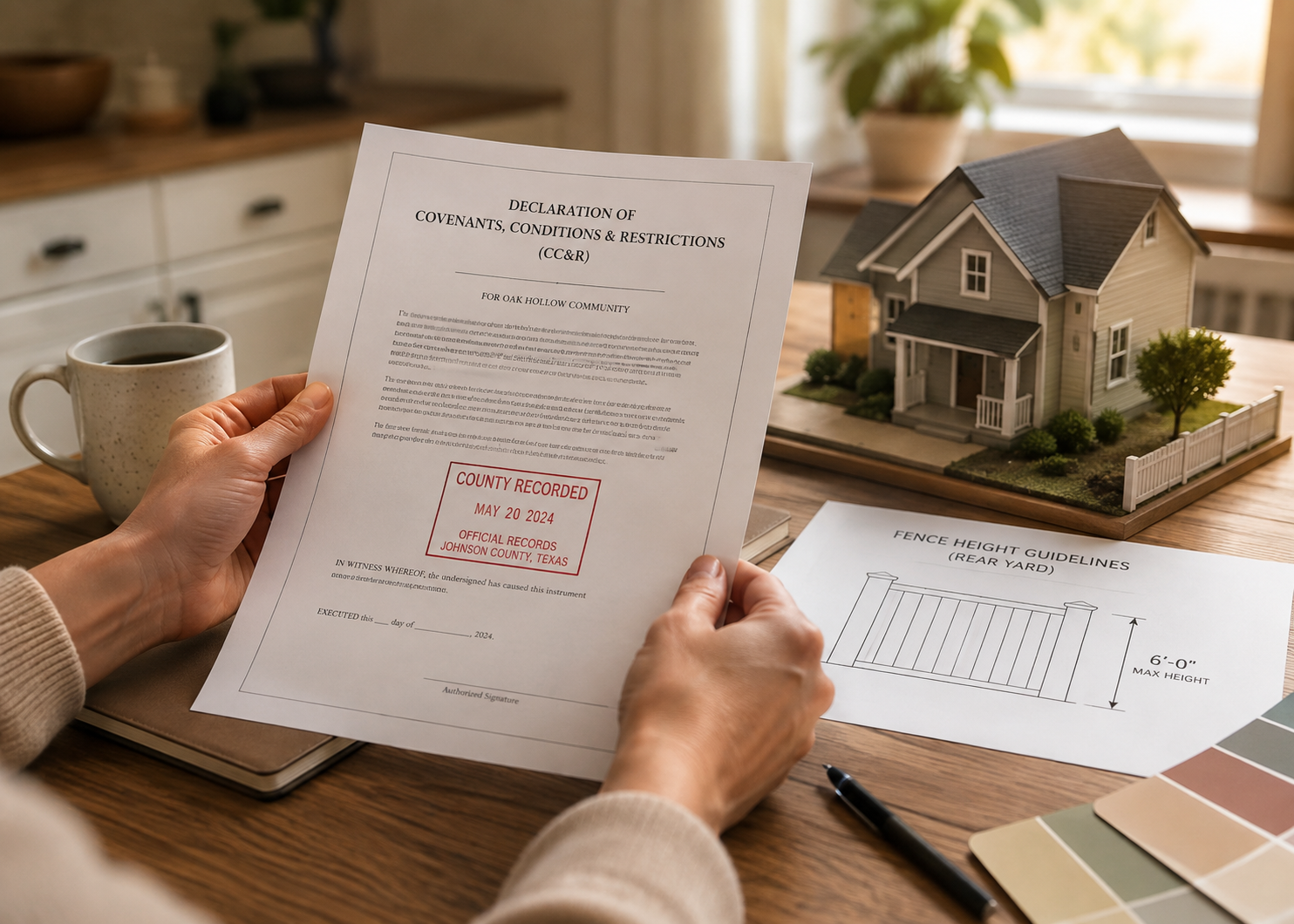
CC&Rs stand for covenants, conditions, and restrictions. Unlike bylaws, these are recorded documents filed with the county, and they attach to the land itself. That recording makes them run with the property: whoever owns the lot is bound, even if they never read the paperwork at closing.
CC&Rs control what homeowners can and cannot do with their property. Exterior paint colors, fence heights, roofing materials, rental restrictions, parking, pets, and architectural review all live here. So do assessments. The legal authority to charge HOA fees and levy special assessments comes from the covenants, not the bylaws. This is where property restrictions get their teeth.
Because CC&Rs are recorded, they're generally treated as public. The U.S. Department of Housing and Urban Development explains how deed restrictions and covenants bind buyers through the HUD housing resources, useful context for owners who feel blindsided by a rule. Sorting out which HOA rules are actually enforceable starts with knowing whether a restriction lives in the covenants at all. In reality, these covenants are usually the most powerful governing documents for controlling behavior on individual lots. That's exactly why boards can't confuse them with bylaws.
The core difference between bylaws and CC&Rs
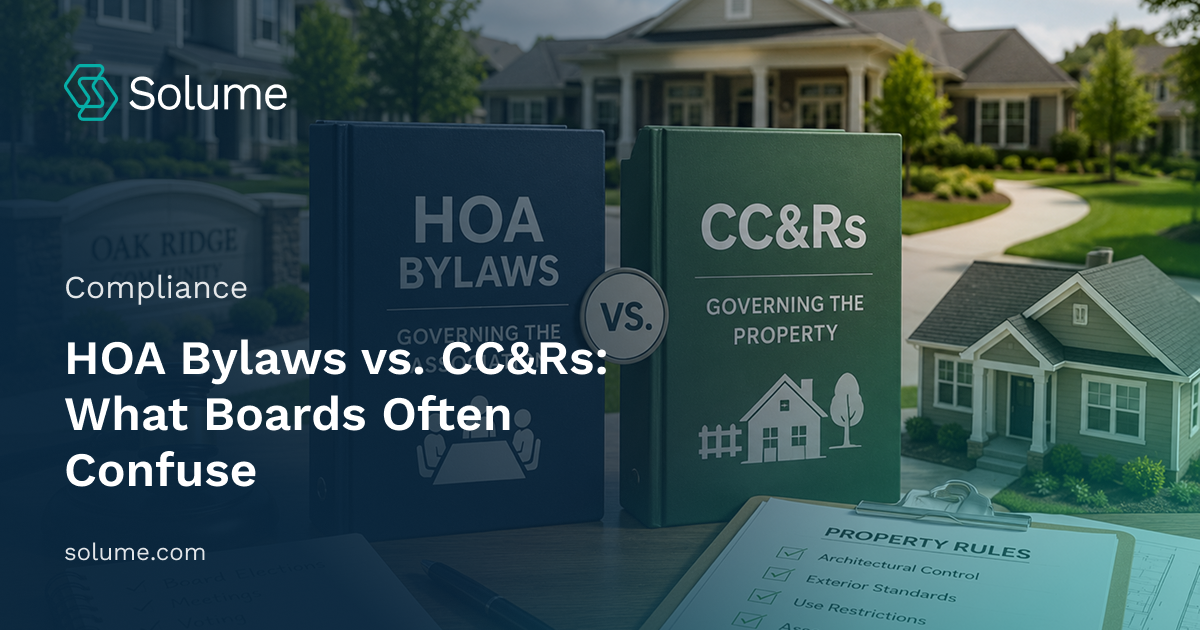
The cleanest way to hold the HOA bylaws vs CC&Rs distinction in your head: bylaws govern the organization, CC&Rs govern the property. One controls the corporation. The other controls the land.
Here's the head-to-head comparison.
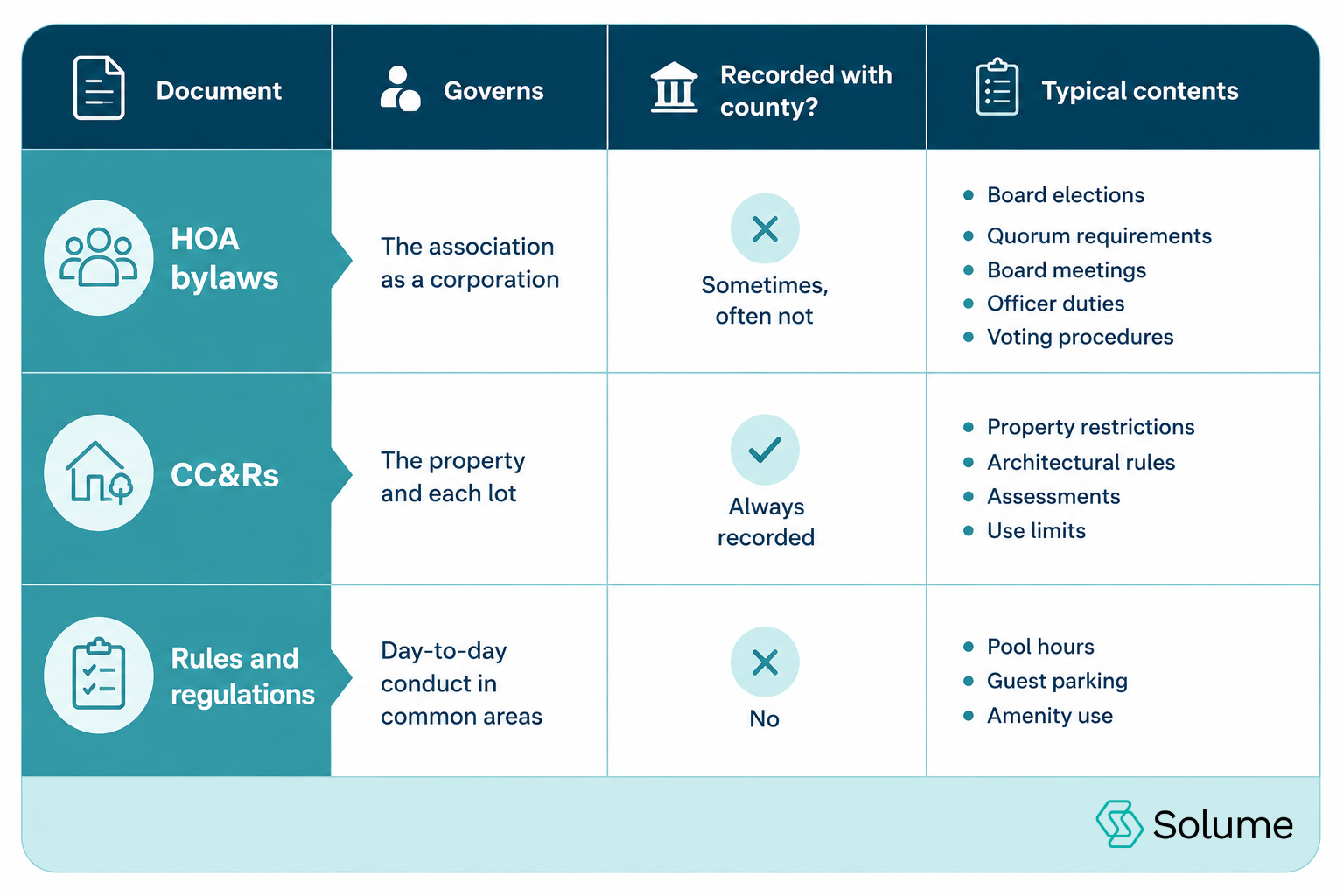
Many board members assume bylaws are the "main" document because they read them most often. In reality, the covenants usually carry more legal weight over homeowners because they're recorded and tied to the deed. The HOA bylaws vs CC&Rs question isn't about which is more important overall. It's about which applies to the situation in front of you. An election dispute is a bylaws question. A prohibited backyard shed is a covenants question.
How bylaws interact with state law and which controls
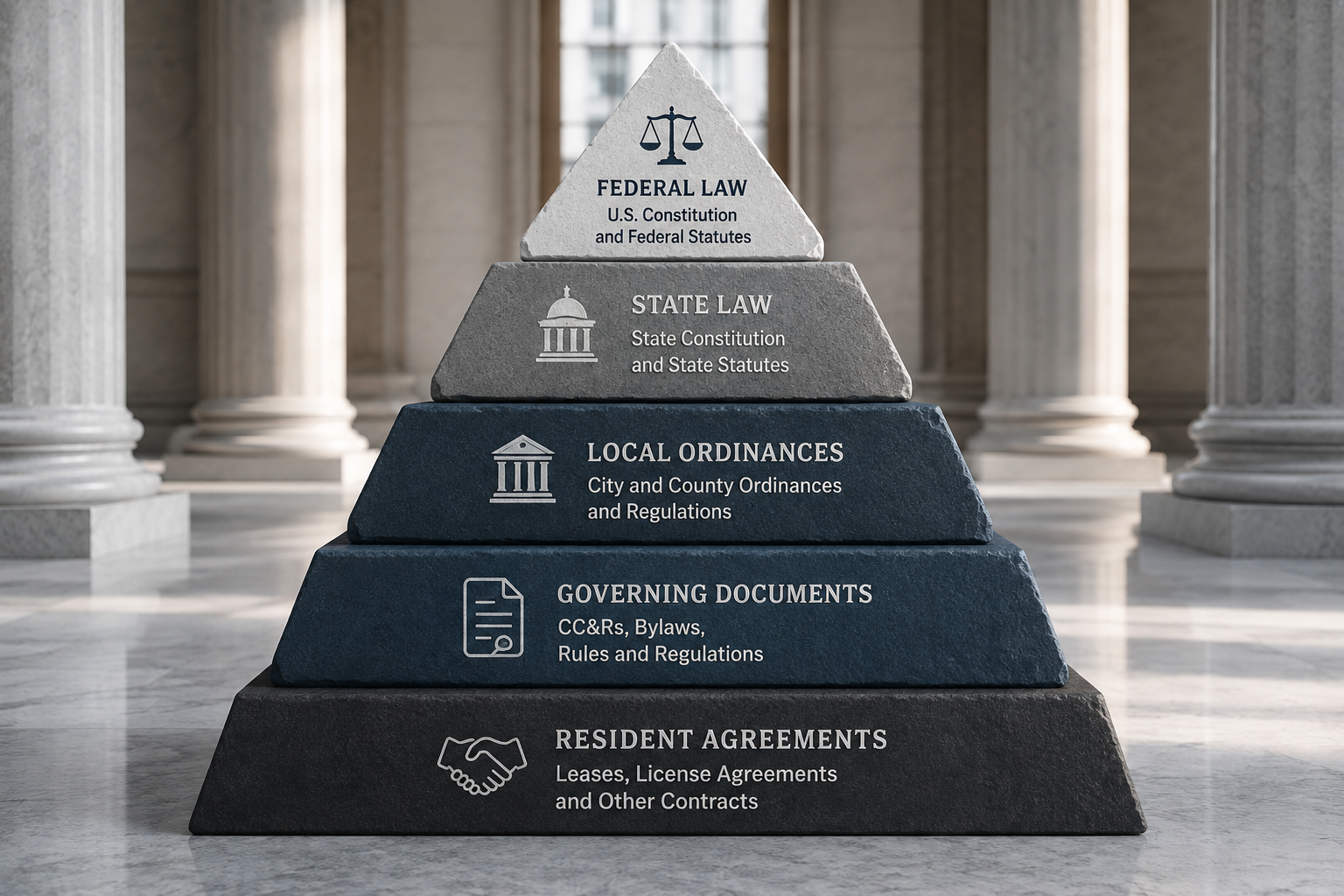
Governing documents don't operate in a vacuum. Every HOA sits within a legal hierarchy, and state law sits at the top. Below state law come the Articles of Incorporation, then the CC&Rs, then the bylaws, then the rules and regulations. When two documents conflict, the higher one generally controls.
What happens when a bylaw contradicts state law is generally straightforward: the bylaw loses. A provision that violates your state's nonprofit corporation act or HOA statute may be an unenforceable HOA rule, no matter how many members voted for it. Statutes set a floor no association can vote itself below, which is why boards can't quietly write around statutory requirements for notice or open board meetings.
HOA law varies significantly by state, so check your state's HOA statute or planned community act before relying on any single provision. Florida governs community associations under Chapter 720, California under California's Davis-Stirling Common Interest Development Act. Other states have their own frameworks with different quorum and disclosure rules. Boards should consult their attorney for legal interpretation rather than guessing, and knowing when to bring in an HOA attorney can save a board from a costly misstep. The authority you're looking for comes from your state's HOA or condominium statute and your general nonprofit corporation law.
Key elements typically included in bylaws
If you pull up a solid set of bylaws, you'll find a predictable structure. Knowing what belongs here helps you spot when a board is improvising board governance on the fly.
Most bylaws address: membership requirements and how members qualify; the number of directors and their terms; how the board of directors is elected and removed; officer duties for the president, secretary, and treasurer; quorum requirements for both member meetings and board meetings; notice periods; how committees like the architectural review committee are formed; and the amendment process. Financial oversight provisions like budget approval, reserve handling, and audit rules often live here too.
What many communities don't realize: vague or missing bylaw provisions create compliance risk long before a lawsuit. If your bylaws don't clearly state a quorum number, a single contested vote can stall the community because, without a defined threshold, there's no objective way to prove a decision was valid. Self-managed communities feel this most, because no management company backs the process. This is a common challenge self-managed boards face, and it compounds quickly without clear procedures. Solume's financial management and record-keeping tools help self-managed boards keep budgets, member records, and meeting documentation organized so board responsibility doesn't turn into board burnout. If you don't have a starting point, a reputable bylaws template reviewed by a local attorney beats writing from scratch.
How to amend bylaws and CC&Rs
You cannot amend either document by consensus in a hallway conversation. Both have built-in amendment clauses, and skipping them makes the change void.
Amending bylaws usually requires the board or a set percentage of members to propose the change. Next comes written notice, a meeting that hits quorum, and a vote at the threshold the bylaws specify, sometimes a simple majority, sometimes a supermajority. The root cause of most failed amendments is a missed notice or quorum step, not a lack of votes.
Amending CC&Rs is harder by design. Because they're recorded documents that bind the property, changes typically need a higher owner-approval percentage, often two-thirds or 75%. The amendment must also be recorded with the county to take effect. Some states impose extra requirements for covenant changes, so verify against your state statute before you start collecting ballots.
One rule holds for both: an amendment can't conflict with a higher document. A bylaw amendment that contradicts the CC&Rs or the Articles of Incorporation is dead on arrival. Check the hierarchy first, then amend.

How to find and access your HOA's governing documents
If you can't find your governing documents, you can't follow them. Start with the closing packet from when you bought the home. CC&Rs and bylaws are usually included there.
If that packet is long gone, you have a few options. CC&Rs are recorded documents, so the county recorder's or clerk's office where the property sits will have them on file, sometimes searchable online by parcel or subdivision name. Bylaws are trickier because they aren't always recorded. Request them directly from the association or its management. Most states give members a statutory right to inspect and copy governing documents, so a written request should produce them.
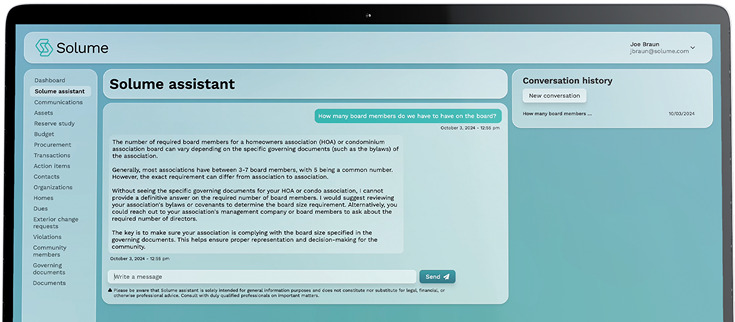
The practical problem for a self-managed community is that documents live in three people's email inboxes, and nobody can find the current version. That's how compliance risk builds quietly. A centralized document hub, one of the things Solume gives boards and residents, means members can find HOA documents without emailing the treasurer at midnight. When homeowners can find HOA documents on their own, transparency stops being a talking point and becomes routine, which goes a long way toward reducing homeowner complaints before they escalate.
Common mistakes boards make: confusing the two documents
The most expensive mistake is enforcing the wrong document. A board that cites bylaws to justify a landscaping fine is enforcing a rule that lives in the covenants, and a challenged homeowner can get the whole action tossed. Getting the source document wrong is a common way enforcement actions collapse.
Picture a self-managed condominium association that tries to fine an owner for an unapproved patio using a bylaw provision. The owner's attorney points out the architectural restriction actually sits in the CC&Rs. The board followed the wrong non-compliance procedures, and the fine gets reversed. The association eats several thousand dollars in legal fees for HOA violations it could have enforced correctly the first time.
Other frequent errors: assuming bylaws override recorded covenants; ignoring the amendment clause when updating rules; and treating rules and regulations as if they carry the same weight as CC&Rs. They don't. Rules sit at the bottom of the hierarchy and can't expand restrictions the covenants don't authorize. To enforce HOA bylaws and covenants that are legally binding, match the violation to the document that actually controls it, then follow that document's stated procedures. Getting the document wrong is how enforceable rules become unenforceable.
If your board wants a clearer way to manage governing documents, dues, reserve planning, and compliance tracking without a management company, you can see if Solume fits your community on a 15-minute call. It's built for self-managed boards that want transparency and long-term stability, not another expensive tool.
Frequently Asked Questions
What should HOA bylaws actually include?
Bylaws cover the internal mechanics of running the association: how board members are elected, how meetings and quorums work, voting thresholds, officer duties, and financial oversight procedures. They do not govern what you can do with your property: that's the job of the CC&Rs recorded in county land records.
How are HOA bylaws different from CC&Rs?
CC&Rs are recorded with the county and bind the property itself, controlling things like landscaping, exterior changes, rentals, and assessments. Bylaws are internal operating rules for the HOA as a corporate entity, and they cannot conflict with the CC&Rs or the Articles of Incorporation, which sit higher in the document hierarchy.
Are HOA bylaws legally enforceable?
Yes: when you buy into an HOA, you enter a binding contractual relationship to follow its governing documents, and state statutes reinforce that. Under Florida Statute Chapter 720, for example, both the association and its members must comply with the community's documents and rules.
How do I actually change or amend our bylaws?
Start with the amendment clause in your current bylaws, which specifies who can propose changes, notice periods, quorum, and the vote threshold (often a simple majority or supermajority). Any amendment must still comply with your CC&Rs, Articles of Incorporation, and state law, so verify it doesn't conflict with a higher document before you vote.
What happens if our HOA board doesn't follow its own bylaws?
Because governing documents function like a contract, homeowners can pursue remedies ranging from demanding compliance to filing a breach-of-contract or enforcement lawsuit. Many states, including Florida under Chapter 720, legally require HOAs to follow their own documents, so violations can trigger formal legal action.
Are HOA bylaws public, and how do I get a copy?
Bylaws are often recorded in public land records alongside the CC&Rs, and most states give members a legal right to request a copy from the association. You can also check with your property manager, the county recorder's office, or your association's document portal.
Do I really need to read the bylaws if I'm just a homeowner?
Yes: state property law generally assumes you were put on notice the moment you purchased, whether or not you read the documents. Understanding the bylaws is how you know your voting rights, how to run for the board, and whether the board is following required procedures.