
Skipping a single reserve study can cost a community millions. In 2021, the Champlain Towers South collapse in Surfside, Florida killed 98 people. Investigators pointed to years of deferred maintenance and underfunded repairs that the board never resolved.
That is the extreme end of the stakes, but it makes the point: HOA board members are not just volunteers picking paint colors. They carry real legal and financial weight for everyone who owns a home in the community. This article breaks down who sits on an HOA board of directors, what HOA board member duties look like, and how the roles function day to day. Understanding the common challenges HOA boards face is a good starting point before diving into the specific roles.
Key Takeaways
- HOA board members carry legally binding fiduciary duties of care, loyalty, and authority that go far beyond a typical volunteer role.
- Most board seats are unpaid, with officer positions like treasurer demanding the heaviest time commitment during budget and audit periods.
- A dysfunctional board is usually identifiable through inconsistent rule enforcement and an outdated or missing reserve study, not just personality conflicts.
- Eligibility to serve is defined by each association's CC&Rs and bylaws, commonly requiring good standing on dues and no open violations.
- Unlike a property management company, the board retains final decision-making authority and personal legal exposure for the community's financial health.

What is an HOA board of directors?
New homeowners often ask what an HOA board actually is. The short answer: it is the elected governing body of a homeowners association, legally responsible for running the community's affairs. Understanding what an HOA board is starts with seeing it as a small nonprofit board, since in most states that is exactly what an HOA is.
The board makes decisions individual owners cannot make alone: setting the annual budget, approving contracts, enforcing rules, and planning major repairs. These powers come from the community's governing documents (the CC&Rs and bylaws) and from state law, much of which draws on frameworks like the Uniform Common Interest Ownership Act that many states have adopted in some form. This HOA board of directors exists so authority and accountability sit together in the same seat, protecting community stability over time. That pairing matters because owners cannot sue each other into fixing a leaking roof, so the law concentrates both the power to act and the responsibility for acting in one elected body.
The Community Associations Institute, the main trade organization for community associations, offers a useful overview of board member roles and responsibilities for volunteers stepping into these positions. Rules vary by state, so boards should confirm their obligations against their own state statutes and consult their own attorney for guidance specific to their situation.

Who the board members are: elected volunteer homeowners
Here is the part that surprises people: HOA board members are almost always unpaid, elected volunteers who happen to live in the community. They are retirees, working parents, and homeowners squeezing board duties around full-time jobs, and most have no accounting or legal background.
The same person balancing a six-figure reserve fund on Tuesday night might be a schoolteacher or a nurse by day. The homeowners association elects these volunteers to the HOA board of directors at an annual meeting. Eligibility for these HOA board member roles is usually spelled out in the bylaws: current on dues, no open violations, and an owner of record in good standing.
The AARP maintains a helpful primer on what to know before joining an HOA board, including how many older homeowners end up serving. Because these are elected volunteers rather than paid staff, stability depends on residents stepping up and on the board staying transparent so neighbors trust the people they voted in. Boards that skip this step often run into the same problems the solutions for self-managed HOA boards address: unclear expectations and inconsistent turnover.
HOA board officer positions (president, vice president, secretary, treasurer)
Once elected, the board fills specific HOA board positions, usually four officer roles defined in the bylaws that clarify who answers for what.
The president runs meetings, signs contracts, and acts as the primary point of authority. HOA president duties also include setting the agenda and representing the association to vendors and members, which often shapes the board's public image. The HOA vice president fills in when the president is absent, and this seat often takes on a specific project or committee, sometimes doubling as a committee chair in smaller communities.
HOA secretary duties center on records: keeping accurate meeting minutes, maintaining the association's books, and handling official correspondence. Those minutes are not busywork, since they are the legal record a court or homeowner relies on to confirm the board followed its own process. The treasurer carries the heaviest financial load. HOA treasurer responsibilities include tracking income and expenses, preparing budgets, and reporting on reserve funding, and these typically demand the most hours of any seat. Boards may also seat a member-at-large, a director without a titled role who votes and takes assignments as needed. Together, these positions divide HOA board member duties so no single person carries everything.

Core board duties: enforcing governing documents and rules
Enforcing rules and regulations is where boards get into the most trouble, and it is rarely about the rules themselves. Inconsistency is the root cause of most disputes. When a board fines one homeowner for a fence but ignores three others, it undermines enforcement and can expose the association to a discrimination or selective-enforcement claim.
The governing documents (the CC&Rs, bylaws, and adopted rules) define what the board can enforce. Members do not invent rules on the fly. Core HOA board member duties include enforcing rules and regulations exactly as written, following the process the documents require, including notice, a hearing opportunity, and fair application.
Consider a board that lets a popular neighbor slide on an unapproved shed while fining a newer owner for the same thing. The next time the board tries to enforce that rule, the fined owner points to the shed, and the association's whole enforcement record starts to look arbitrary in front of a judge. One inconsistent decision can undercut years of legitimate rulings.
Many owners assume the board can enforce anything a majority dislikes. In reality, an unwritten preference isn't enforceable, and acting on it invites legal challenge. Handling disputes fairly, applying the same standard to every homeowner, and documenting each step in the minutes keep enforcement defensible and protect the board from personal liability. The lessons from the Las Vegas HOA transparency scandal show just how far things can unravel when enforcement and financial oversight both go unchecked.
Managing HOA finances, budgets, and assessments
Managing finances is the duty with the sharpest teeth. A board that mishandles money can trigger special assessments, lawsuits, and years of eroded trust. Among the most demanding HOA treasurer responsibilities are building an annual budget, collecting dues, and keeping accurate books that any homeowner can review.
Budgets and assessments are connected. When the operating budget falls short, or the reserve fund runs dry, the board must levy special assessments, sometimes thousands of dollars per unit, to cover the gap. Communities hate these surprises, and underfunding this year quietly guarantees a painful bill later. The mechanism is simple: reserves only grow if the budget deliberately sets money aside for aging components, so a budget that ignores the reserve study is really just deferring a debt to future owners.
Transparency is the safeguard. When homeowners see where their money goes, disputes drop, and confidence rises. Self-managed boards without an accountant often struggle with managing finances cleanly on their own. This is where budgeting and reporting tools built for volunteer boards, like Solume's financial features, help boards stay organized and accountable. Clean, readable reporting on budgets and assessments is one of the clearest signs of a healthy homeowners association. Boards should also review the IRS guidance for homeowners associations and consult a qualified tax professional when filing annual returns, since misclassifying income or exemptions can create unnecessary complications.
Maintaining common areas
Maintaining common areas is the duty homeowners actually see: the pool, the roofs, the private roads, the landscaping, the elevators. The board keeps these in working order, and failure here is not just cosmetic. Deferred maintenance turns small problems into structural ones.
Most boards do not defer maintenance out of neglect. They delay it to avoid raising dues or triggering an assessment, trying to protect homeowners in the short term. But a $5,000 roof repair postponed for three years can become a $40,000 replacement, and the community pays either way.
This is why reserve planning ties directly to maintaining common areas. A funded reserve means the board can replace a failing component on schedule instead of scrambling for a special assessment. Boards should track upcoming maintenance against their reserve study so deferred work does not quietly accumulate. Keeping common areas safe is one of the most visible duties, and it directly supports property values and community stability.

Fiduciary duty and the business judgment rule
Every director owes the association a fiduciary duty, which separates a board seat from a casual volunteer gig. Fiduciary duty means acting in the community's best interest, not your own. It breaks into three parts: a duty of care (get informed before you vote), a duty of loyalty (no self-dealing or conflicts of interest), and a duty to act within your granted authority.
The business judgment rule protects directors who take fiduciary duty seriously. If a board member makes an informed, good-faith decision within their authority, courts generally will not second-guess the outcome even if it turns out badly. That protection disappears the moment a director acts carelessly or for personal gain.
Many assume board members are personally on the hook for every unpopular decision. In reality, following process and honoring fiduciary duty limits personal liability. State law defines the specifics, so boards should confirm their exact standard against their own state statutes and consult a qualified attorney rather than assuming the general rule applies uniformly. Knowing when a board should consult an HOA lawyer before a decision, rather than after a dispute, is often what keeps a fiduciary breach from turning into a lawsuit.
How many board members an HOA should have
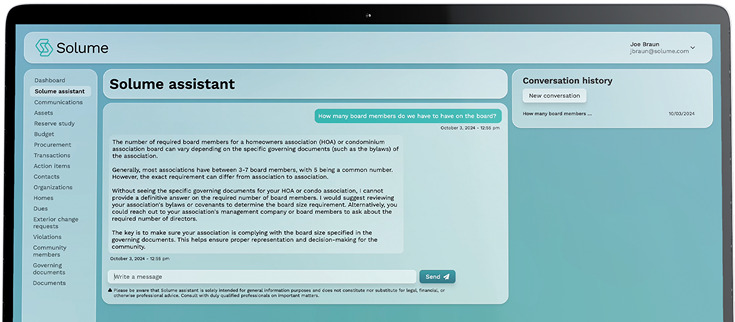
A frequent question from new communities is how many people should sit on the HOA board of directors. The answer lives in the bylaws, not a universal rule. Most homeowners associations seat between three and seven directors, and the count should always be odd to avoid tie votes.
Three is the practical minimum, since you need enough people to fill the core HOA board positions of president, secretary, and treasurer. Smaller communities often run lean with three, while larger associations with pools, multiple buildings, and committees benefit from five or seven to spread duties and avoid burnout.
Board burnout is real, and it is worse on undersized boards where one or two volunteers absorb everything. When deciding how many board members to seat, match the count to the community's complexity and the number of willing volunteers. Check your governing documents first: they usually set a minimum and maximum, and changing that number typically requires a formal amendment approved by the membership.
Term length, elections, and compensation
The bylaws set board term length, and most associations use one, two, or three-year terms. Many stagger terms so the entire board doesn't turn over at once, protecting institutional memory and stability. Elections happen at the annual meeting, where homeowners vote for open seats among self-nominated volunteers.
Now the question everyone asks: do HOA board members get paid? Almost never. They serve as unpaid volunteers, and treating a board seat as a paycheck is a red flag. Some bylaws allow reimbursement for documented expenses or a small officer stipend, but compensation is rare and always governed by the community's documents and state law.
Paying directors is uncommon for a reason. Compensation can complicate fiduciary duty and even the liability protections unpaid volunteers rely on, because many state statutes extend liability shields specifically to uncompensated directors and withdraw them once someone is paid. If your board is considering payment, confirm what your state statutes and CC&Rs allow, and consult an attorney for guidance specific to your association. For most communities, keeping board service voluntary keeps incentives clean and transparency intact.

How self-managed boards handle duties without a management company
Self-managed communities skip the management company and keep every duty in-house. The volunteer board handles dues collection, reserve planning, vendor coordination, communicating with residents about issues that affect them, and legal compliance directly. The upside is money: dues that would have gone to a management fee stay in the community and get reinvested.
The tradeoff is workload and risk. Self-managed boards carry full responsibility without professional staff, and gaps in reserve planning or record-keeping show up fast. Self-management is entirely doable with the right systems. The problem is usually disorganized tools, not incapable volunteers, and one of the clearest traits of a good board member is knowing when to adopt better ones.
Picture a self-managed board tracking dues in one spreadsheet, reserve balances in another, and resident complaints across three inboxes. When the treasurer resigns mid-year, half that history walks out the door, and the new volunteer inherits a reserve fund nobody can fully reconstruct. That handoff gap, not a lack of effort, is what quietly sinks small boards.
Purpose-built software closes that gap. Centralizing communication with residents, automating dues collection, and tying reserve planning to the budget lets small boards operate professionally while staying on top of legal compliance. Solume is built specifically for self-managed communities, giving volunteer boards financial tracking, reserve tools, and a communication hub in one place so running a homeowners association stays manageable and transparent. When a board member steps down, the records stay put instead of disappearing with them.
If your board wants a clearer way to handle finances, reserve planning, and vendor oversight without a management company, you can see if Solume fits your community on a quick 15-minute call. It is a straightforward way to find out whether self-management can work for your HOA board members before committing to anything.
Frequently Asked Questions
What exactly do HOA board members do?
HOA board members govern the association: approving budgets, enforcing the CC&Rs, maintaining common areas, and overseeing reserve funding. They typically fill officer roles: president, vice president, treasurer, and secretary, each with distinct legal and financial duties.
What are the three main legal duties of an HOA board member?
Board members owe the association a duty of care (making informed decisions before voting), a duty of loyalty (avoiding conflicts of interest and personal gain), and a duty to act within the authority granted by governing documents and state law. Breaching any of these can expose a board to legal liability.
Do HOA board members get paid for their time?
Most HOA board members are unpaid volunteers, not employees or contractors. Some associations reimburse specific expenses or offer small stipends to officers like the treasurer, but the community's bylaws set this, and it varies by state.
How much time does serving on an HOA board actually take?
In a well-run association, at-large board members typically spend 4-10 hours per month on meetings, resident inquiries, and paperwork. Officers like treasurers or presidents often spend significantly more, especially during budget season or when handling vendor disputes.
What are the warning signs of a dysfunctional HOA board?
Common red flags include selective rule enforcement, missing or unreadable financial reports, no reserve study or an outdated one, and board members who avoid answering direct questions from homeowners. Frequent turnover and unexplained special assessments are also signals that governance has broken down.
Is joining an HOA board even worth the risk and effort?
It depends on the community; boards with clear financial systems and reserve planning tend to see manageable, predictable workloads, while underfunded or disorganized associations can turn into unpaid full-time jobs with real legal exposure. Homeowners weighing a seat should ask to review the last three years of financials and the current reserve study before agreeing to serve.
What happens if a board member ignores their fiduciary duty?
Ignoring fiduciary duty, for example, approving a budget without reviewing it or steering a contract to a friend's company, can result in personal liability, a lawsuit from homeowners, or removal from the board. Most state laws and governing documents outline specific grounds and procedures for holding a board member accountable.
How is an HOA board different from a property management company?
The board is made up of elected homeowner volunteers who set policy, approve budgets, and hold final decision-making authority over the community. A property management company, if hired, handles day-to-day administrative tasks under the board's direction but does not carry the same legal or fiduciary responsibility.